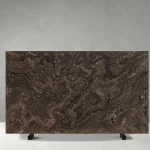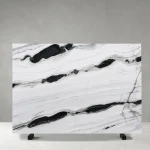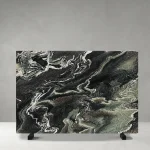
Natural Stone Vanity Tops for Luxury Hotels: Materials, Cut-Outs, Mitred Edges & Fabrication
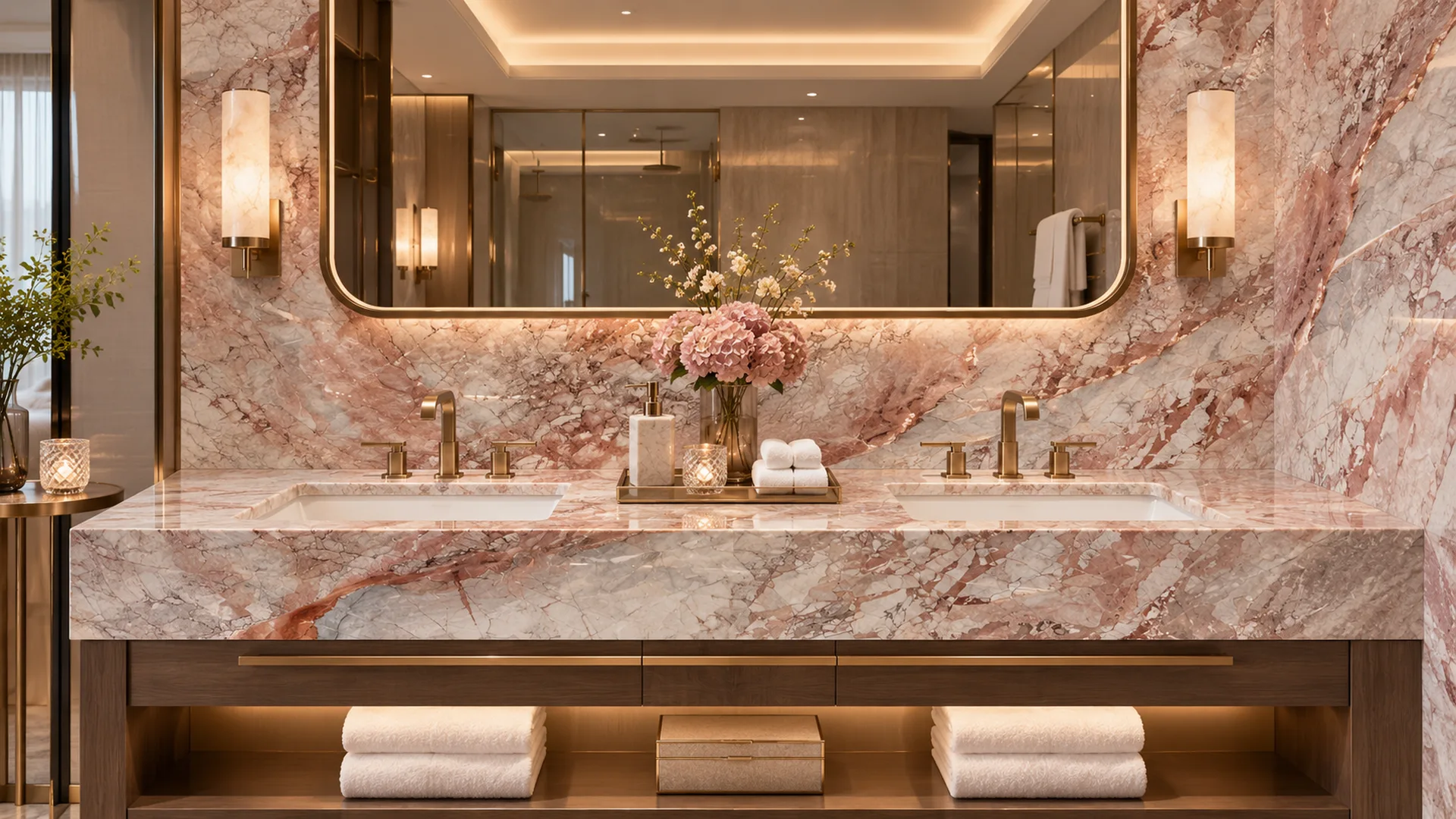
Natural stone vanity tops are an important design and fabrication element in luxury hotel bathrooms. They combine the visual character of natural materials with the practical requirements of daily hospitality use, including sink integration, water exposure, countertop support, storage coordination and maintenance.
Unlike standard residential vanity countertops, hotel vanity packages may involve dozens or hundreds of repeated units across different room types, floors and bathroom configurations. A successful project therefore requires more than selecting an attractive marble slab. Every vanity top must be coordinated with its dimensions, sink type, tap position, cabinet structure, edge profile and installation sequence.
Marble, quartzite and travertine each offer different aesthetic possibilities. White and beige stones can create a calm, understated bathroom environment, while dramatic veining and distinctive colours can introduce a stronger design statement.
For international hotel projects, natural stone vanity tops should be planned as coordinated fabricated components. The process connects material selection, shop drawings, cutting, edge finishing, dry lay, quality inspection, numbering and export packing.
Show Stone supports custom natural stone vanity fabrication for hotels, hospitality developments, luxury residential projects and commercial interiors, with production and coordination services tailored to project drawings and specifications.
Why Natural Stone Vanity Tops Matter in Luxury Hotels
Hotel bathroom vanity tops are among the most frequently used stone surfaces in guest rooms. Their appearance, dimensions and fabrication quality contribute directly to the overall bathroom experience.
Compared with standard prefabricated countertops, custom natural stone vanity tops offer greater flexibility in:
- Stone colour and natural pattern selection
- Single and double vanity configurations
- Custom countertop lengths and depths
- Undermount, drop-in and vessel sink arrangements
- Integrated stone basin designs
- Mitred edges and built-up aprons
- Backsplashes and side splashes
- Custom thickness and edge profiles
- Room-by-room material coordination
For hospitality projects, these details should be established before fabrication rather than adjusted after the stone has been cut. This is particularly important when multiple bathroom layouts are included in one hotel development.
Choosing the Best Natural Stone for Hotel Vanity Tops
The appropriate stone depends on the hotel’s design direction, expected use, maintenance strategy, availability and project specifications. No single natural stone is ideal for every bathroom configuration.
Crema Marfil Marble: Warm and Timeless Beige Tones
Crema Marfil Marble is a classic beige marble option for hotel bathrooms that require a warm and understated appearance.
Its soft beige background and natural variations can complement:
- Warm-toned bathroom cabinetry
- Brushed brass and bronze fittings
- Neutral porcelain wall tiles
- Light wood bathroom furniture
- Traditional and contemporary hotel interiors
Crema Marfil can be considered for single and double vanity tops, side splashes and coordinated bathroom stone components.
As with other marble materials, the selected finish, sealing strategy and cleaning requirements should be considered because marble can be affected by acidic substances and staining agents.
Arabescato Marble: Distinctive Veining for Feature Vanities
Arabescato Marble offers a more expressive appearance through its contrasting natural veining.
It is particularly suitable for projects where the vanity top is intended to become a visual feature rather than simply a functional countertop.
Potential applications include:
- Luxury hotel suites
- Feature powder rooms
- Premium double vanities
- Custom bathroom countertops
- Coordinated marble wall and vanity packages
For prominent veining, slab selection and cutting orientation are important. The position of the sink opening should be reviewed against the natural pattern to avoid unnecessarily interrupting visually important areas.
Taj Mahal Quartzite: Subtle Movement and Neutral Appearance
Taj Mahal Quartzite is a popular design direction for luxury interiors that favour warm neutral colours and relatively understated natural movement.
Its appearance can work with:
- Contemporary hotel bathroom cabinetry
- Light beige and cream interiors
- Natural wood finishes
- Brushed metal bathroom fittings
- Large vanity countertops and matching wall details
Quartzite selection should still be based on the actual material supplied. Natural variations, slab appearance and finish should be reviewed before production.
Madeirus Quartzite: A Distinctive Natural Stone Option
Madeirus Quartzite provides another material option for hotel vanity projects seeking a distinctive natural stone appearance.
Before finalizing the material, project teams should review actual slab photographs, background colour, pattern movement, available dimensions and the relationship between the stone and the bathroom’s other finishes.
Where several vanity units are required, batch selection should be coordinated to maintain an appropriate visual relationship across guest rooms.
Roma Classico Travertine: Natural Texture and Warm Character
Roma Classico Travertine can introduce a warm, naturally textured appearance to hotel bathroom interiors.
Travertine may be considered for:
- Warm contemporary bathrooms
- Mediterranean-inspired hotel interiors
- Natural material palettes
- Vanity countertops and matching stone details
Travertine requires particular attention to surface treatment, pore filling where applicable, sealing and maintenance. The selected finish should be evaluated against the intended bathroom use.
Four Season Pink Marble: A Decorative Statement
Four Season Pink Marble provides an alternative for hospitality interiors that use distinctive colour as part of their design identity.
Pink marble can work particularly well in:
- Signature hotel suites
- Decorative powder rooms
- Boutique hospitality interiors
- Feature vanity countertops
- Custom furniture and bathroom stone details
For this type of decorative stone, the selected slab should be reviewed carefully for colour distribution and natural pattern before the cutting layout is approved.
Single Vanity vs Double Vanity: Planning the Countertop Dimensions
The number of basins and the available bathroom space influence the overall countertop configuration.
A single vanity generally provides one basin position with surrounding countertop space. A double vanity requires two coordinated basin positions, sufficient separation and a practical arrangement of taps and storage.
The dimensions of natural stone vanity tops should be developed around the approved basin layout, cabinet configuration and available bathroom space.
Before fabrication, the project team should confirm:
- Overall countertop length and depth
- Finished countertop height
- Number and position of basins
- Distance between sink openings
- Tap and mixer positions
- Backsplash height
- Cabinet dimensions
- Overhang and edge details
These dimensions should come from approved project drawings rather than assumptions based on standard residential vanity sizes.
Wall-Hung vs Cabinet-Mounted Vanity Tops
Vanity mounting configuration affects the relationship between the stone countertop, cabinet and supporting structure.
Wall-hung vanity tops create a floating appearance and may leave more visible wall and floor space. The project team should coordinate the stone dimensions, cabinet fixing positions and specified support system before fabrication.
Cabinet-mounted vanity tops sit on or within a cabinet structure. Their fabrication needs to consider the cabinet footprint, countertop overhang, backsplash and any side panels.
Show Stone can coordinate stone-to-cabinet, stone-to-wall and stone-to-metal interfaces using project drawings and the appointed contractor’s requirements. Structural engineering and final support-system design remain the responsibility of the relevant project professionals.
Undermount, Drop-In and Vessel Sinks: Understanding the Differences
The sink configuration determines the type of cut-out, edge finishing and countertop coordination required. Natural stone vanity tops with different sink arrangements need to be fabricated according to the actual basin model rather than estimated opening dimensions.
| Sink Type | Fabrication Requirements |
|---|---|
| Undermount Sink | Accurate opening dimensions, polished internal edges and coordinated sink mounting details. |
| Drop-In Sink | Opening dimensions and rim overlap must match the specified basin. |
| Vessel Sink | Drain opening, basin footprint, tap position and countertop clearances must be coordinated. |
| Integrated Stone Sink | Custom basin geometry, internal slopes, drainage position, joints and surface finishing must be considered. |
Undermount Sink Cut-Outs
Undermount sinks are installed below the countertop surface, leaving the stone edge visible around the basin opening.
Important fabrication considerations include:
- Exact sink model and dimensions
- Opening shape and corner radius
- Internal edge polishing
- Stone thickness
- Sink mounting clearance
- Tap and drain alignment
The cut-out should be checked against the actual sink specification before cutting. Small dimensional differences can affect the final fit and installation process.
Drop-In Sink Cut-Outs
Drop-in sinks sit within a countertop opening and typically have a visible rim resting on the stone surface.
The opening must match the manufacturer’s specified dimensions, including any required overlap or clearance. The drawing should clearly identify the basin model, cut-out dimensions and countertop position.
Vessel Sink Applications
Vessel sinks sit above the countertop and are often selected for decorative hotel bathroom designs.
The stone top generally requires a drain opening and may require additional tap or mixer holes depending on the selected fixture arrangement.
Because the basin is visible above the surface, countertop height and basin height should be reviewed together to achieve a comfortable finished installation.
Integrated Stone Sink Fabrication
Integrated natural stone vanity tops and basins require careful coordination of geometry, drainage and surface finishing.
Depending on the approved design, fabrication may include:
- Custom basin geometry
- Internal basin slopes
- Drainage openings
- Internal corner finishing
- Surface polishing or honing
- Joint and connection detailing where required
Material selection is especially important for integrated stone sinks because the basin introduces more complex geometry and continuous exposure to water and cleaning products.
The proposed design, stone characteristics and maintenance requirements should be reviewed before production.
Tap Holes, Mixer Holes and Drain Openings
Tap and drainage positions are small details that can have a significant effect on vanity fabrication accuracy.
Before cutting, the following information should be confirmed:
- Deck-mounted or wall-mounted tap arrangement
- Number of tap holes
- Hole diameters
- Distance from the sink opening
- Distance from the countertop edge
- Drain opening position
- Faucet manufacturer’s installation requirements
For wall-mounted mixers, the countertop may not require tap holes, but the position of the wall outlet and basin should still be coordinated with the architectural drawings.
Show Stone can coordinate the stone fabrication drawings with the approved fixture specifications before production.
Backsplashes and Side Splashes
Backsplashes and side splashes complete the vanity assembly and help create a coordinated visual transition between the countertop and surrounding walls.
Common configurations include:
- Full-length backsplash
- Short backsplash
- Side splash at one or both ends
- Matching stone wall panels
- Custom-height splash pieces
Dimensions should be coordinated with the wall finish, mirror position, cabinet design and tap configuration.
Where the same stone is used for both the countertop and backsplash, the project team should also consider colour and vein continuity.
Mitred Edges and Built-Up Vanity Aprons
Edge design changes the visual thickness and overall appearance of a natural stone vanity top. Mitred edges can give natural stone vanity tops a thicker visual profile while maintaining a coordinated countertop design.
Mitred Edges
A mitred edge joins stone pieces at an angled cut to create a visually continuous corner or thicker-looking profile.
Mitred edges can be used for:
- Vanity front edges
- Side returns
- Waterfall-style details
- Decorative countertop profiles
Fabrication requires accurate cutting angles, consistent edge alignment and careful finishing at the visible joints.
Mitred Aprons
A mitred apron creates the appearance of a thicker stone countertop by joining a vertical stone fascia beneath the top surface.
This approach can provide a substantial visual profile without requiring the entire countertop to be manufactured from one solid thick stone block.
The drawing should identify the finished visible thickness, apron height, mitre position and corner arrangement.
Built-Up Edges
Built-up edges use additional stone sections to create a thicker-looking countertop profile. The final appearance depends on the selected stone, joint position, edge finishing and fabrication quality.
Custom Edge Profiles
Depending on the project design, vanity edges may also use custom profiles such as:
- Eased edges
- Small bevels
- Rounded profiles
- Decorative edge details
- Custom CNC-shaped profiles
The edge specification should be approved before fabrication, particularly when the same vanity design is repeated throughout a hotel.
20mm vs 30mm Natural Stone Vanity Tops
Stone thickness affects the visual proportions, weight and fabrication details of a vanity countertop.
| Specification | 20mm Stone | 30mm Stone |
|---|---|---|
| Visual Appearance | Slim and contemporary | More substantial appearance |
| Typical Application | Modern vanity countertops | Premium vanity tops and thicker profiles |
| Edge Design | Straight or mitred build-up | Solid or custom edge profiles |
| Fabrication | Requires coordinated cut-outs and support details | Requires coordinated weight and support considerations |
Show Stone commonly supports 20mm and 30mm vanity top fabrication. Other thicknesses can be discussed through custom cutting arrangements.
The final thickness should be selected according to the stone type, countertop dimensions, sink configuration, edge design, support conditions and project specifications.
For a more detailed explanation, see Natural Stone Thickness Guide: How to Choose 16mm, 18mm, 20mm or 30mm.
Vanity Shop Drawings: What Must Be Confirmed Before Fabrication?
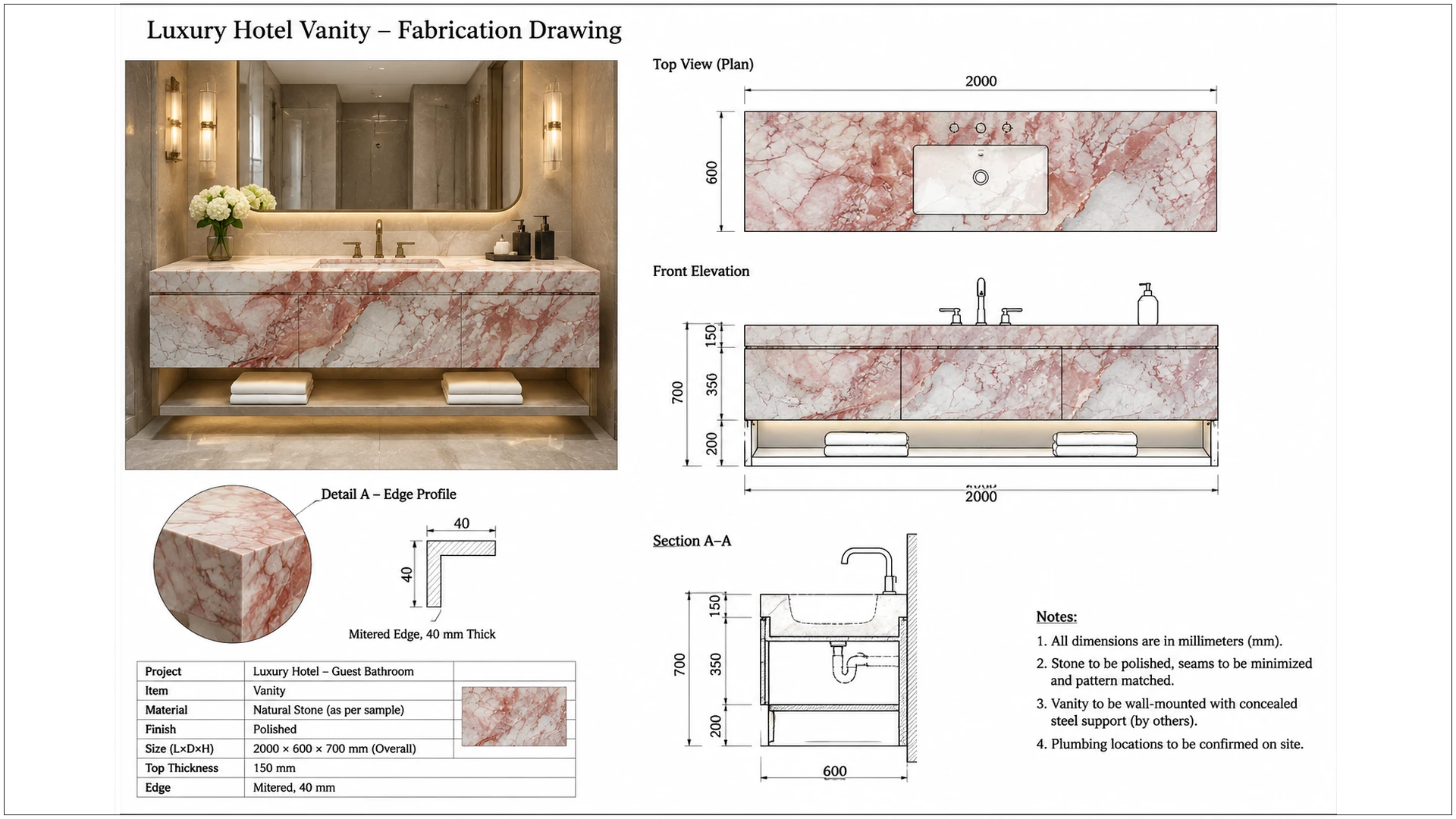
Shop drawings are essential for translating the architectural design into accurate finished stone components. Shop drawings for natural stone vanity tops should identify every cut-out, tap position, finished dimension and edge detail.
Before production, the vanity drawing should identify:
- Overall countertop length, width and thickness
- Finished countertop height
- Sink type and exact model
- Sink opening dimensions and position
- Tap and mixer hole positions
- Drain opening dimensions
- Backsplash and side splash dimensions
- Mitred edge and apron details
- Cabinet footprint and overhang
- Wall and side-return interfaces
- Stone finish and visible surfaces
- Room and floor identification
For projects with repeated vanity units, a typical approved drawing should be established for each bathroom type before batch production begins.
Show Stone provides shop drawing review and coordination for stone fabrication. Structural engineering, building support calculations and final installation design remain with the appointed project professionals.
For further information, see Natural Stone Shop Drawings Explained: What to Check Before Fabrication.
CNC and Waterjet Fabrication for Custom Vanity Tops
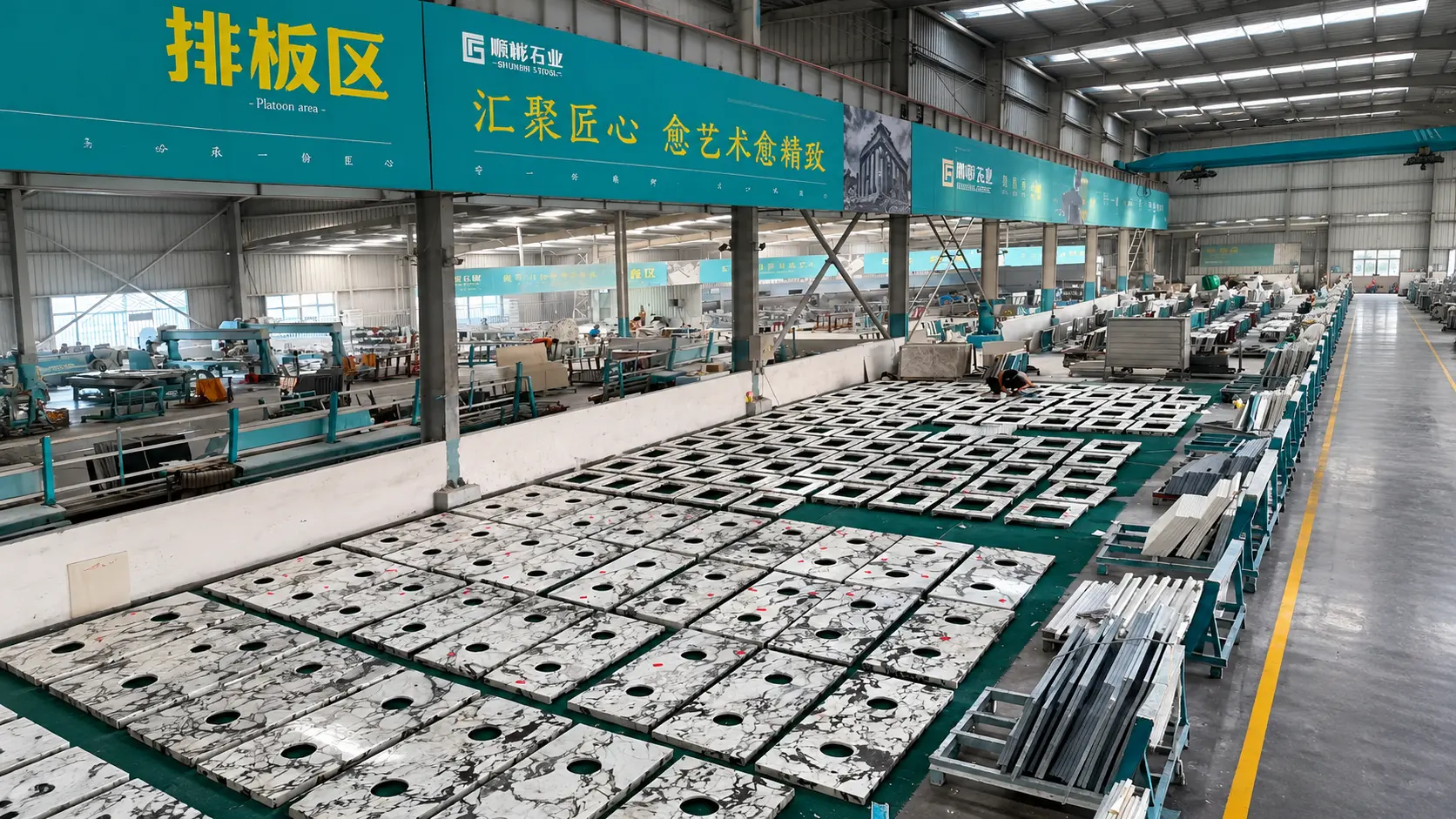
Modern natural stone vanity fabrication combines digital planning with specialized cutting and finishing equipment.
Different production methods can be selected according to the shape, dimensions and detail requirements of each component.
Precision Cutting
Bridge cutting and precision cutting equipment are used to produce countertop blanks and straight components according to approved dimensions.
Waterjet Cutting
Waterjet processing is suitable for selected custom shapes, openings and detailed stone components where the project geometry requires it.
CNC Processing
CNC fabrication supports custom edge profiles, shaped components and selected detailed processing operations.
Sink Opening and Edge Finishing
After cutting, sink openings and exposed edges require appropriate finishing according to the specified sink configuration and visible surface requirements.
For hotel projects with repeated vanity units, the same approved fabrication specifications should be maintained throughout the production batch.
Digital slab planning can also help coordinate component placement and material utilization. For related production planning information, see Stone Slab Yield Optimization: How Digital Cutting Layouts Reduce Waste and Cost.
Polishing and Surface Finishing for Vanity Tops
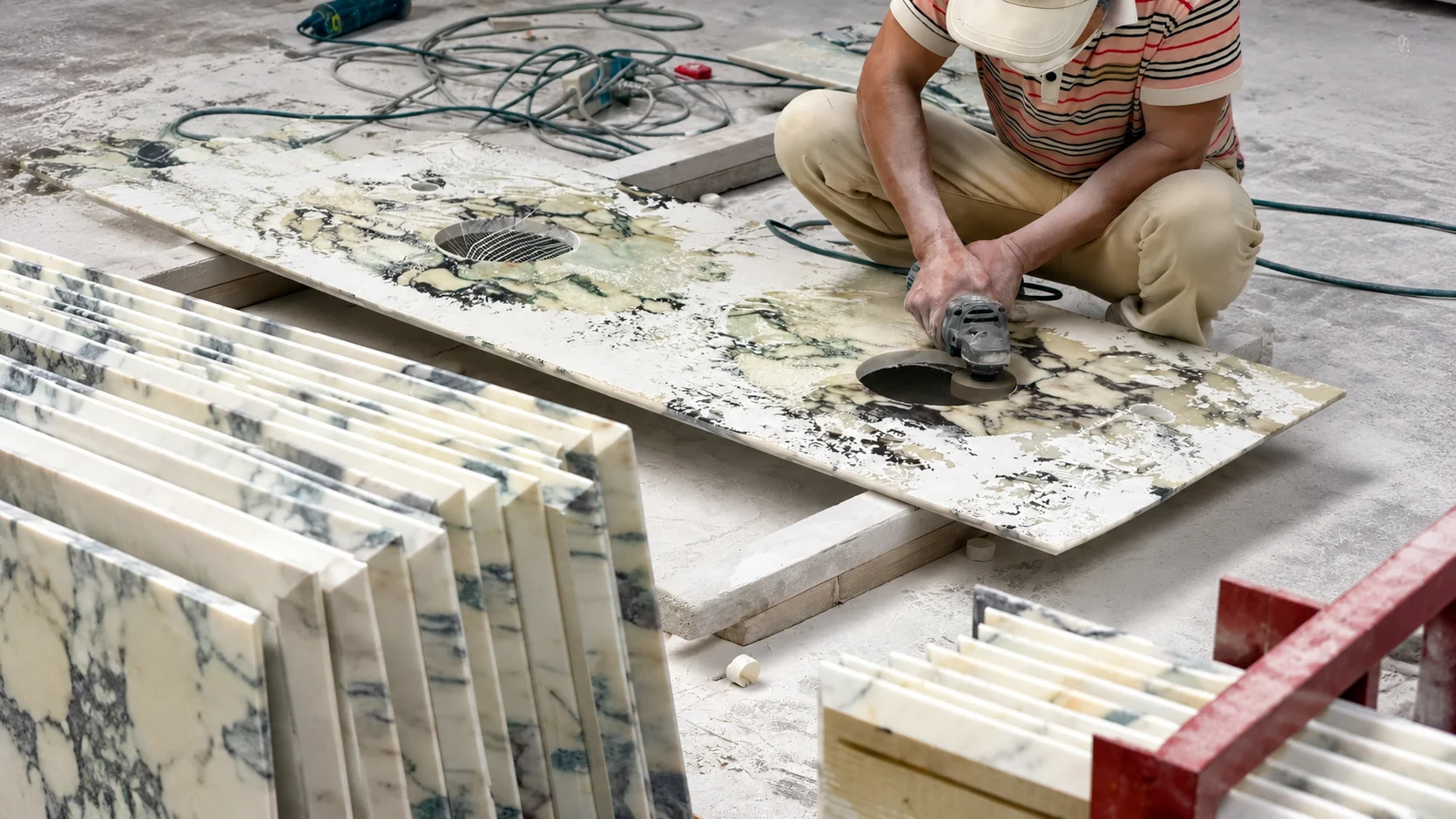
The selected surface finish influences the appearance, reflectivity and maintenance requirements of a vanity countertop.
Common finishes include:
- Polished: A reflective surface that highlights natural colour and veining.
- Honed: A smooth, matte appearance with reduced surface reflection.
- Leathered: A textured surface that emphasizes the stone’s natural character where suitable.
Edge polishing is particularly important around undermount sink openings, exposed countertop edges and mitred joints.
The finish should be confirmed during material approval and maintained consistently throughout the project batch.
Stone maintenance should be based on the actual material and finish. The Natural Stone Institute’s Care and Cleaning Guide explains appropriate cleaning practices and warns that acidic products can etch certain natural stones.
Sealing requirements also vary by stone type. According to the Natural Stone Institute’s guidance on sealing natural stone countertops, sealing can increase resistance to staining, but it does not make stone completely stain-proof. Buyers should follow recommendations appropriate to the selected material and its intended application.
Dry Lay and Quality Control for Hotel Vanity Packages

Quality control should cover both the finished stone component and its relationship with the approved project drawings. Before shipment, natural stone vanity tops should be checked against approved drawings for dimensional accuracy, surface finish and fabrication quality.
Important inspection points include:
- Overall countertop dimensions
- Stone thickness
- Sink opening dimensions
- Tap and drain hole positions
- Internal sink cut-out finishing
- Mitred edge alignment
- Apron dimensions
- Surface finish consistency
- Visible natural defects and approved material characteristics
- Backsplash and side splash dimensions
Dry lay or trial assembly can be arranged where required to review component relationships before shipment.
For projects with multiple connected stone components, this step is particularly useful for checking joint alignment, edge continuity and the relationship between the vanity top and associated pieces.
The Natural Stone Institute’s countertop fabrication and installation standards address topics including sink cut-outs, overhangs, joint widths, seam placement and fabrication tolerances. These are useful reference points when preparing project-specific quality requirements.
For a broader QC reference, see Natural Stone Fabrication Tolerances: Dimensions, Thickness, Joints & Quality Control.
Room Numbering and Batch Coordination for Hotel Projects
Hotel vanity packages often contain many similar-looking components that belong to different rooms, floors and bathroom configurations.
Without a clear identification system, the receiving contractor may spend unnecessary time sorting and checking the delivered materials.
Show Stone can coordinate piece numbering using project references such as:
- Building or tower
- Floor number
- Guest room number
- Bathroom type
- Vanity type
- Piece identification
- Installation sequence
This helps connect the fabricated stone components with the approved drawings and the project’s delivery and installation plan.
Export Packing for Natural Stone Vanity Tops
Custom vanity tops require suitable export protection because countertop edges, sink openings and mitred details can be vulnerable during handling and transportation.
Show Stone can coordinate packing using protective materials and export wooden crates.
For larger hotel projects, packing can be organized according to:
- Floor
- Room number
- Bathroom type
- Vanity configuration
- Installation sequence
Clear package identification helps international buyers and appointed contractors manage incoming stone components more efficiently.
For additional information, see Natural Stone Packing and Crating for International Projects: A Buyer’s Guide.
Common Mistakes When Ordering Hotel Vanity Tops
1. Ordering stone before confirming the sink model. Sink dimensions and mounting requirements directly affect cut-out geometry.
2. Providing only overall countertop dimensions. Tap holes, drain positions, backsplash heights and edge profiles also need to be documented.
3. Ignoring cabinet interfaces. Cabinet footprints, overhangs and support requirements should be coordinated before fabrication.
4. Choosing a mitred edge without a detailed drawing. The visible thickness, apron height and corner details should be approved in advance.
5. Treating all marble and quartzite as having identical maintenance requirements. Different stone types and finishes require material-specific cleaning and care instructions.
6. Failing to review natural stone batch variation. Repeated vanity units should be coordinated through actual slab selection and material approval.
7. Skipping cut-out inspection. Sink openings and tap positions should be checked against the approved drawings.
8. Not organizing room-by-room identification. Hotel packages need clear numbering and packing references to reduce sorting difficulties at the destination.
Buyer Checklist Before Ordering Natural Stone Vanity Tops
- Material: Confirm the stone type, colour, finish and approved slab selection.
- Dimensions: Provide overall countertop length, depth and thickness.
- Vanity Type: Confirm single, double, wall-hung or cabinet-mounted configuration.
- Sink: Provide the actual sink model and technical dimensions.
- Cut-Outs: Confirm sink opening shape, dimensions and position.
- Tap Holes: Provide tap, mixer and drain specifications.
- Edges: Confirm mitred edges, aprons, built-up profiles or other details.
- Backsplash: Specify height, thickness and length.
- Cabinet Coordination: Provide cabinet drawings and interface requirements.
- Finish: Approve polished, honed or other specified finishes.
- Shop Drawings: Review and approve fabrication drawings before cutting.
- Quality Control: Confirm dimensional, cut-out and edge inspection requirements.
- Numbering: Provide room and floor references.
- Packing: Confirm export wooden crate requirements and package identification.
- Delivery: Confirm project destination and delivery schedule.
Frequently Asked Questions
What is the best natural stone for luxury hotel vanity tops?
Marble, quartzite and travertine are all potential choices. The best material depends on the desired appearance, bathroom use, maintenance requirements, slab availability and project specifications. Actual slabs should be reviewed before final approval.
Are marble vanity tops suitable for hotel bathrooms?
Yes. Marble is widely used in luxury bathroom interiors because of its natural colour and veining. However, marble can be sensitive to acidic substances and staining, so the finish, sealing and maintenance strategy should be considered.
What is the difference between 20mm and 30mm vanity tops?
20mm stone creates a slimmer appearance, while 30mm stone provides a more substantial profile. The appropriate thickness depends on the material, countertop dimensions, sink configuration, edge design and support requirements.
Can Show Stone fabricate integrated stone sinks?
Yes. Show Stone supports custom integrated stone sink fabrication, including basin geometry, drainage openings, internal finishing and coordinated countertop details, subject to the approved design and material requirements.
Can natural stone vanity tops be fabricated for undermount and vessel sinks?
Yes. Show Stone supports undermount, drop-in and vessel sink applications. Cut-out dimensions, drainage positions and tap configurations should be confirmed using the approved sink specifications before fabrication.
Can Show Stone produce mitred edges and built-up vanity aprons?
Yes. Custom vanity fabrication can include mitred edges, mitred aprons, built-up edges and other specified edge profiles. Finished thickness, apron height and joint details should be confirmed in the shop drawings.
Can vanity tops be customized for different hotel room types?
Yes. Vanity tops can be produced in customized dimensions and configurations for different room types, bathroom layouts and project requirements. Room and floor identification can also be coordinated for batch production and packing.
Does Show Stone provide shop drawing coordination?
Yes. Show Stone supports shop drawing review and coordination for stone dimensions, sink openings, tap positions, edge details and interfaces with cabinets, walls and metal components. Structural engineering remains the responsibility of the appointed project professionals.
How long does it take to fabricate natural stone vanity tops?
The typical production lead time is approximately four weeks after material, dimensions, drawings and fabrication details are confirmed. Actual timing depends on project quantity, complexity and approval schedules.
Does Show Stone provide on-site installation?
No. Show Stone provides stone fabrication, quality control, dry lay where required, piece numbering, export packing and installation coordination. Final on-site installation is carried out by the client’s appointed contractor.
Why Global Buyers Choose Show Stone
Show Stone supports international hotel groups, developers, architects, interior designers and contractors with custom natural stone supply and fabrication for hospitality projects.
Our capabilities connect material selection with detailed fabrication and export coordination.
- Natural marble, quartzite and travertine selection
- Custom single and double vanity fabrication
- Integrated stone sink production
- Undermount, drop-in and vessel sink applications
- Custom tap and drain openings
- Mitred edges and built-up aprons
- CNC and waterjet processing
- Custom thickness and edge profiles
- Shop drawing review and coordination
- Cabinet, wall and metal interface coordination
- Dry lay and dimensional inspection
- Cut-out and mitre quality control
- Room and floor piece numbering
- Protective export wooden crate packing
- International project delivery coordination
Our typical minimum order quantity starts from 1 piece, with a standard production lead time of approximately four weeks after confirmation. Custom dimensions and other thickness requirements can be discussed according to the project scope.
Show Stone does not undertake on-site installation or structural engineering, but can coordinate with the appointed project team to support fabrication documentation and installation preparation.
Final Recommendation
Natural stone vanity tops for luxury hotels should be planned as coordinated fabricated components rather than isolated countertop products.
Material selection, sink configuration, tap positions, edge details, thickness, cabinet interfaces and room numbering all influence the final result.
For international hospitality projects, the most reliable approach is to approve the actual stone, confirm the vanity shop drawings, coordinate all cut-outs and edge profiles, and complete the required factory inspection before export.
With a coordinated workflow from slab selection to fabrication, dry lay, numbering and packing, Show Stone helps project teams manage custom natural stone vanity packages with greater dimensional control and production consistency.
To discuss your next hotel bathroom project, contact Show Stone with your vanity drawings, BOQ, selected material, sink specifications and project delivery requirements.