Natural Stone Thickness Guide: How to Choose 16mm, 18mm, 20mm or 30mm
Natural stone thickness is one of the first technical decisions buyers should confirm before requesting a detailed quotation or releasing stone for fabrication. It affects raw material selection, finished weight, edge design, cut-outs, reinforcement, packing and coordination with adjacent materials.
There is no single thickness that is automatically correct for every marble, quartzite, travertine, onyx or granite project. A 16mm translucent onyx panel, an 18mm marble wall panel, a 20mm vanity top and a 30mm quartzite island may all be appropriate within different project conditions.
The correct specification should consider the actual stone, finished dimensions, application, substrate or support conditions, fabrication method and approved project drawings together.
Show Stone can supply and fabricate natural stone in common project thicknesses as well as custom thicknesses where required, with digital planning, custom cutting, thickness inspection, reinforcement, dry lay, numbering and export packing available as part of the project workflow.
What Is Natural Stone Thickness?
Natural stone thickness refers to the finished depth of a slab, tile, panel or fabricated stone component measured from one face to the opposite face.
Typical project specifications may include:
- 16mm
- 18mm
- 20mm
- 30mm
- Other custom thicknesses
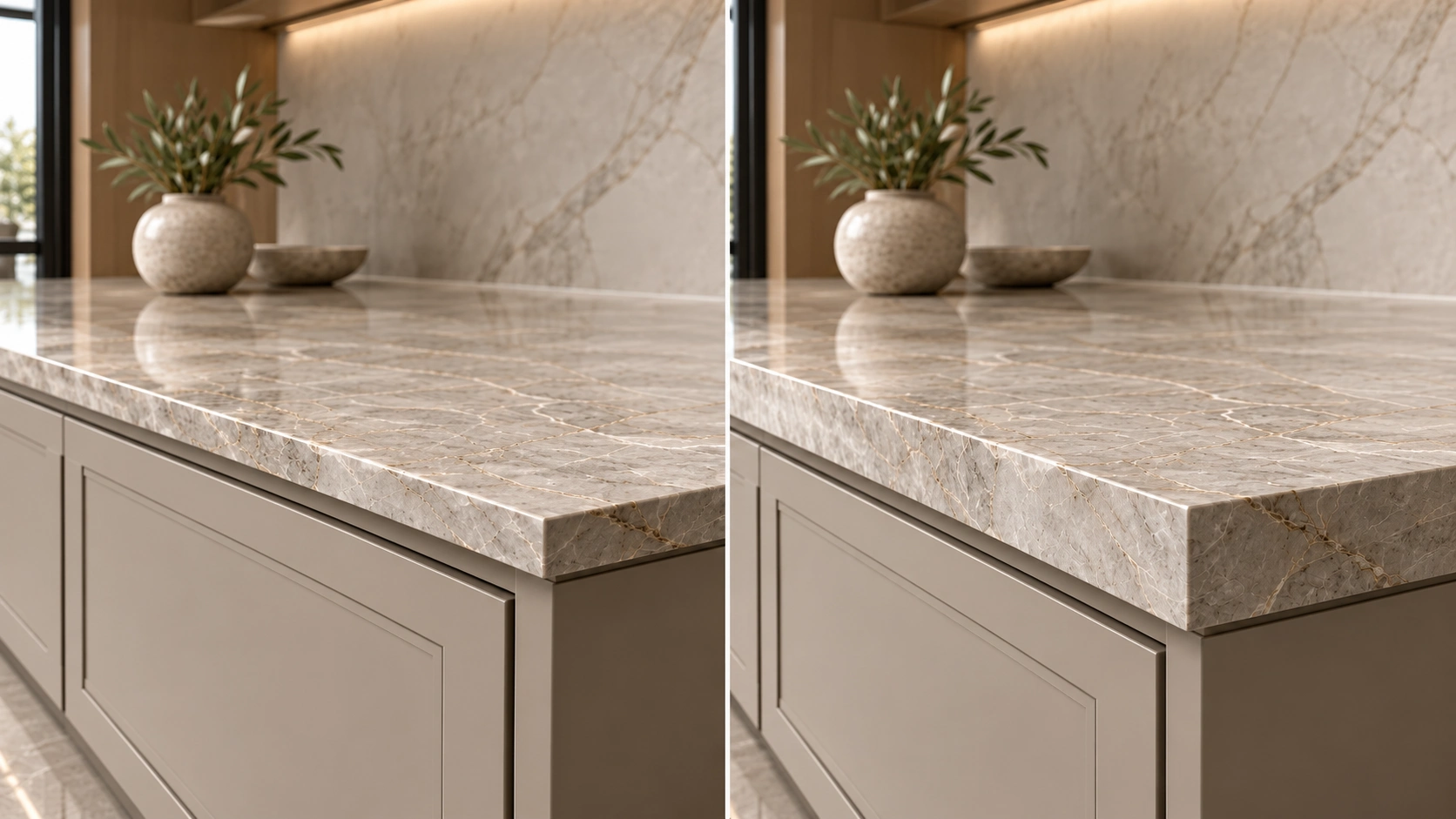
However, the nominal thickness alone does not describe the complete finished component. A countertop fabricated from 20mm material, for example, may use a mitred return to create the appearance of a much thicker edge.
This distinction between actual material thickness and visual finished thickness is important when architects, designers and buyers prepare stone drawings and RFQs.
Why Natural Stone Thickness Matters
Thickness affects several parts of the project simultaneously.
It can influence:
- Finished component weight
- Panel handling
- Edge profiles
- Mitred build-up details
- Sink and cooktop cut-outs
- Stone-to-metal interfaces
- Stone-to-joinery interfaces
- Reinforcement requirements
- Crate size and shipping weight
- Material yield
The final thickness should therefore be confirmed before cutting layouts and fabrication details are approved.
Natural Stone Thickness at a Glance
| Thickness | Typical Project Use | Important Considerations |
|---|---|---|
| 16mm | Selected onyx and decorative panels | Stone selection, translucency, support and panel dimensions |
| 18mm | Marble, travertine, wall panels, flooring and risers | Application, panel size, support and fabrication details |
| 20mm | Wall panels, flooring, vanities, counters, islands and stairs | Widely used for custom cut-to-size project fabrication |
| 30mm | Countertops, islands, vanity tops, stair treads and selected granite components | Higher component weight and different edge/fabrication considerations |
| Custom | CNC work, carved stone, special architectural components | Confirm according to approved drawings and component design |
These are common Show Stone project specifications rather than universal engineering rules. Final thickness should always be confirmed according to the selected material, component dimensions, project design, support conditions and applicable technical requirements.
16mm Natural Stone: When Is It Used?
16mm is commonly used by Show Stone for selected onyx applications.
Onice Rosa Onyx can be considered for decorative and translucent interior applications where stone thickness, light transmission and supporting construction need to be coordinated together.
Possible applications include:
- Backlit wall panels
- Decorative feature panels
- Reception features
- Backlit counters
- Luxury retail features
Other thicknesses can also be custom produced according to the project requirements.
For backlit applications, thickness should not be considered independently from:
- Natural translucency
- Panel dimensions
- Backing system
- Lighting arrangement
- Joint position
- Stone reinforcement
Show Stone can coordinate stone-related fabrication information based on approved project details, while lighting engineering, supporting systems and final installation remain with the appointed project specialists.
18mm Natural Stone: A Common Project Specification
18mm is a common thickness for many natural stone project applications, especially marble and travertine panels.
Typical uses can include:
- Wall panels
- Interior flooring
- Stair risers
- Fireplace surround panels
- Decorative cladding
- Custom cut-to-size pieces
Himalayan Gray Marble and Blue Crystal Marble can be fabricated for interior project applications where 18mm or 20mm material is appropriate to the approved design.
For wall panels, the final thickness should also be coordinated with panel dimensions, substrate conditions and the intended fixing method.
20mm Natural Stone: A Versatile Fabrication Thickness
20mm is one of the most versatile natural stone thicknesses used across project fabrication.
It can be specified for:
- Wall panels
- Flooring
- Vanity tops
- Countertops
- Kitchen islands
- Stair treads
- Stair landings
- Fireplace surrounds
20mm material also works well with mitred edge fabrication where a thicker visual profile is required without using the same full solid thickness throughout the component.
This can be useful for vanity tops, islands, reception counters and other architectural surfaces where the designer wants a more substantial appearance.
30mm Natural Stone: Where Is It Common?
30mm material is commonly used for selected horizontal or fabricated elements where the project calls for a thicker solid section.
Common applications include:
- Countertops
- Kitchen islands
- Vanity tops
- Stair treads
- Stair landings
- Selected granite components
Taj Mahal Quartzite can be fabricated in 20mm or 30mm for countertop and island applications according to the project requirements.
Lemurian Blue Granite can also be supplied in 18mm, 20mm or 30mm depending on the application.
A thicker component is also heavier, so support, handling, lifting and packing should be considered during project planning.
Marble Thickness
For Show Stone marble projects, common thicknesses include 18mm and 20mm, with other thicknesses available by custom order.
Applications may include:
- Hotel wall panels
- Residential flooring
- Bathroom walls
- Fireplace surrounds
- Stair risers
- Decorative features
Himalayan Gray Marble can support contemporary grey interior applications, while Blue Crystal Marble can be considered where a more decorative crystalline appearance is required.
The actual marble characteristics, panel dimensions and project application should still be reviewed before the final thickness is confirmed.
Quartzite Thickness
Quartzite project thickness depends strongly on the intended application.
Common Show Stone specifications include:
- 18mm / 20mm for panels where applicable
- 20mm / 30mm for countertops
- 20mm / 30mm for kitchen islands
- Custom thickness where required
Taj Mahal Quartzite is frequently considered for premium kitchen and hospitality surfaces where finished dimensions, cut-outs, edge profiles and vein layout should all be reviewed together.
Travertine Thickness
For travertine, common project thicknesses include 18mm and 20mm, with other thicknesses available for custom architectural work.
Roma Classico Travertine can be used for:
- Walls
- Floors
- Stair components
- Architectural profiles
- Custom carved components
Thicker custom sections may be required for selected carved or CNC-fabricated pieces depending on the approved design.
Onyx Thickness
Show Stone commonly works with 16mm onyx for selected applications, with other thicknesses available according to project requirements.
Onyx thickness can influence:
- Translucency
- Panel weight
- Fabrication method
- Backing requirements
- Lighting effect
For backlit Onice Rosa Onyx, it is useful to review the actual material and lighting-related mock-up before full production where the project requires controlled translucency.
Granite Thickness
For Show Stone granite projects, 18mm, 20mm and 30mm can be supplied depending on the application.
Possible uses include:
- Wall panels
- Flooring
- Countertops
- Stair treads
- Heavy custom components
For larger pieces, component weight should be considered together with crate construction, handling and the approved supporting system.
Natural Stone Thickness for Wall Panels
18mm and 20mm are common Show Stone specifications for many interior wall-panel applications.
However, panel thickness should not be chosen from thickness alone.
The project team should also consider:
- Panel height and width
- Stone type
- Openings
- Edge condition
- Substrate
- Fixing method
- Backing or reinforcement
For large panels, see Large Format Natural Stone Wall Panels: Specification, Vein Matching & Installation.
Show Stone can coordinate stone-specific mechanical or adhesive installation details based on approved project information, but does not provide structural engineering or final on-site installation.
Natural Stone Thickness for Flooring
18mm and 20mm are common project thicknesses for many interior natural stone flooring applications.
Final specification should also consider:
- Stone type
- Tile or panel dimensions
- Substrate
- Traffic requirements
- Transitions to adjacent flooring
- Approved installation system
Thickness alone should not be used to determine structural suitability or slip resistance.
Natural Stone Thickness for Vanity Tops
20mm and 30mm are common Show Stone thicknesses for vanity tops.
Hotel and residential vanity fabrication may also involve:
- Sink cut-outs
- Tap holes
- Mitred aprons
- Backsplashes
- Side splashes
- Custom edges
A 20mm stone top can be fabricated with a mitred apron to create a thicker visual profile where required by the design.
For hotel bathroom applications, see Marble Bathrooms for Luxury Hotels: Stone Selection, Finishes & Fabrication.
Natural Stone Thickness for Countertops and Kitchen Islands
20mm and 30mm are common countertop and kitchen-island specifications.
The final decision should consider:
- Stone type
- Countertop dimensions
- Support conditions
- Sink cut-outs
- Cooktop openings
- Overhangs
- Edge design
- Waterfall ends
For a large island, the choice between 20mm and 30mm should be coordinated with the overall design rather than selected only according to appearance.
Natural Stone Thickness for Staircases
For custom natural stone staircases, Show Stone commonly uses:
- Treads: 20mm / 30mm
- Risers: 18mm / 20mm
- Landings: 20mm / 30mm
Other thicknesses can be custom produced according to approved project requirements.
Stair thickness should be coordinated with:
- Concrete or metal substrate
- Nosing detail
- Mitred edge design
- Step geometry
- Anti-slip details
For more detail, see Natural Stone Staircases for Luxury Interiors.
Natural Stone Thickness for Fireplace Surrounds
18mm and 20mm are common thicknesses for marble fireplace surround panels.
Traditional carved fireplace components may use different custom sections because mantels, jambs and decorative profiles can require deeper stone dimensions than flat wall panels.
Thickness should also be coordinated with the approved fireplace system, supporting construction and fire-safety requirements supplied by the responsible project professionals.
Actual Thickness vs Visual Thickness
One of the most important concepts for designers and buyers is that the visible edge depth does not always equal the thickness of the entire stone component.
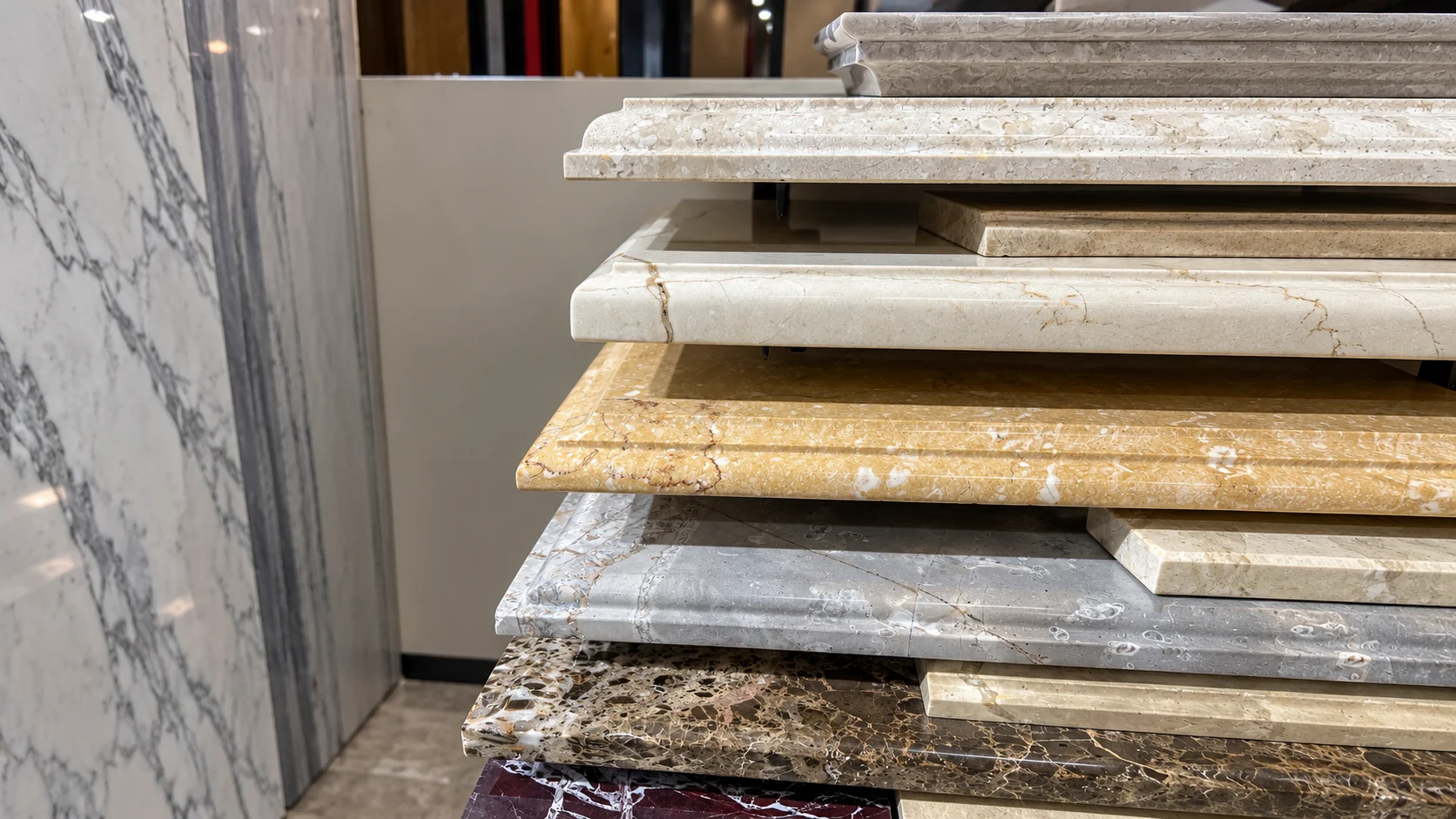
For example, a 20mm countertop can use a mitred front return to create the appearance of a thicker edge.
This approach can be used for:
- Kitchen islands
- Vanity tops
- Reception counters
- Bar counters
- Display fixtures
Possible benefits include greater design flexibility and the ability to create substantial architectural edges without using the same full thickness across the entire component.
The mitre geometry, adhesive system, support and final assembly should all follow approved project details.
Custom Stone Thickness and Calibration
Not every project should be limited to standard slab thicknesses.
Show Stone can support custom cutting and thickness calibration where required by the project.
This can be useful for:
- Custom CNC components
- Carved profiles
- Stone strips
- Transitions
- Replacement pieces
- Components that need to coordinate with adjacent materials
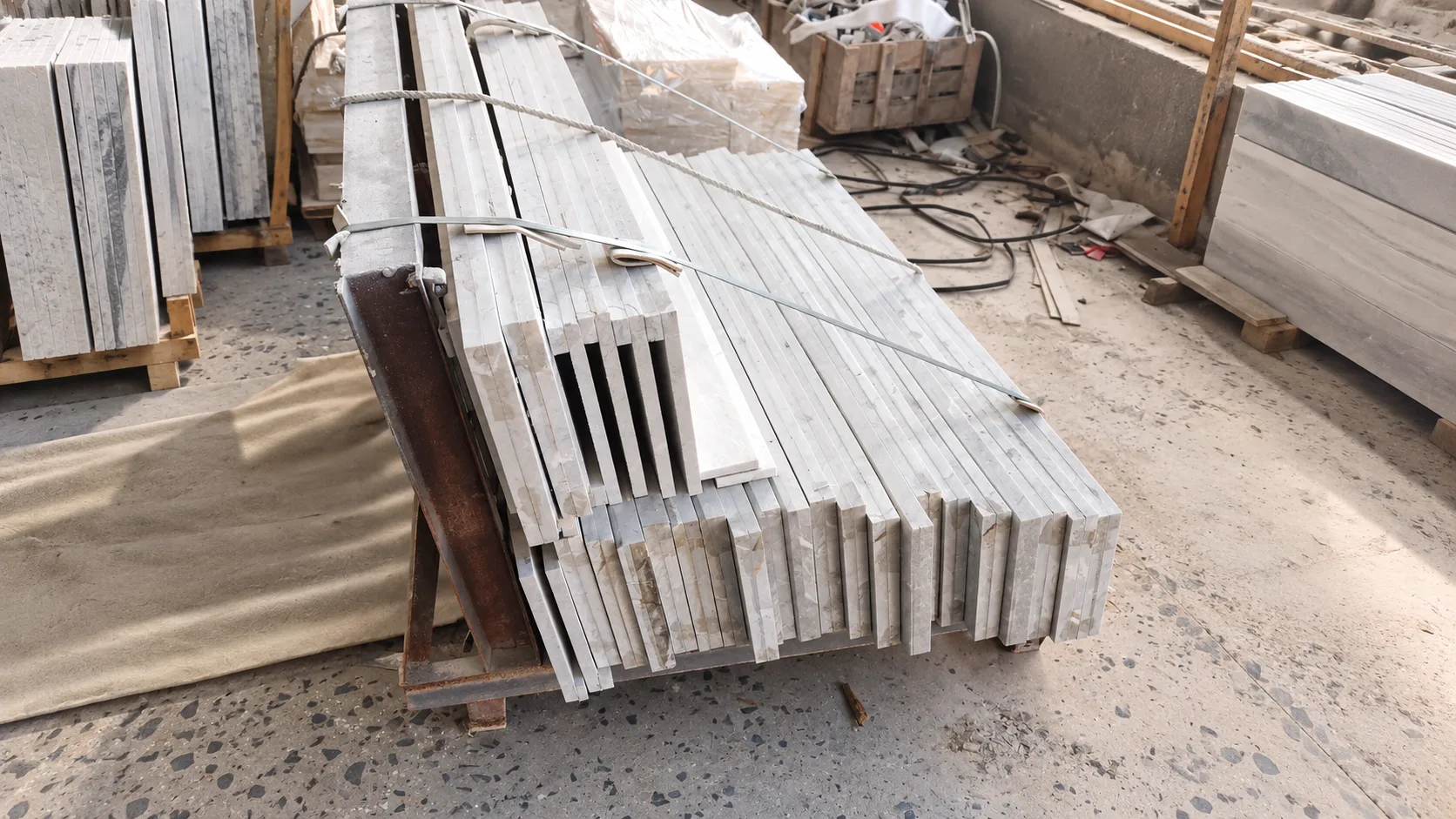
Stone Weight and Panel Size
Increasing thickness also increases the amount of stone in the finished component and therefore affects weight.
This matters for:
- Wall-panel handling
- Large-format pieces
- Countertop lifting
- Stair components
- Crate design
- Container loading
A thicker panel should not automatically be assumed to be the better solution. Panel size, stone properties, backing, supports and the approved fixing system should be reviewed together.
Reinforcement and Backing
Some natural stone components may require reinforcement according to the stone characteristics and project application.
Show Stone can support:
- Fiberglass mesh reinforcement
- Resin reinforcement
- Honeycomb backing when the project requires it
These systems should be selected according to the component design and project requirements.
Backing and reinforcement do not replace structural engineering. Structural design and final fixing-system engineering remain the responsibility of the appointed consultants and engineers.
Thickness Inspection During Factory QC
Stone thickness should be checked during the fabrication and quality-control process.
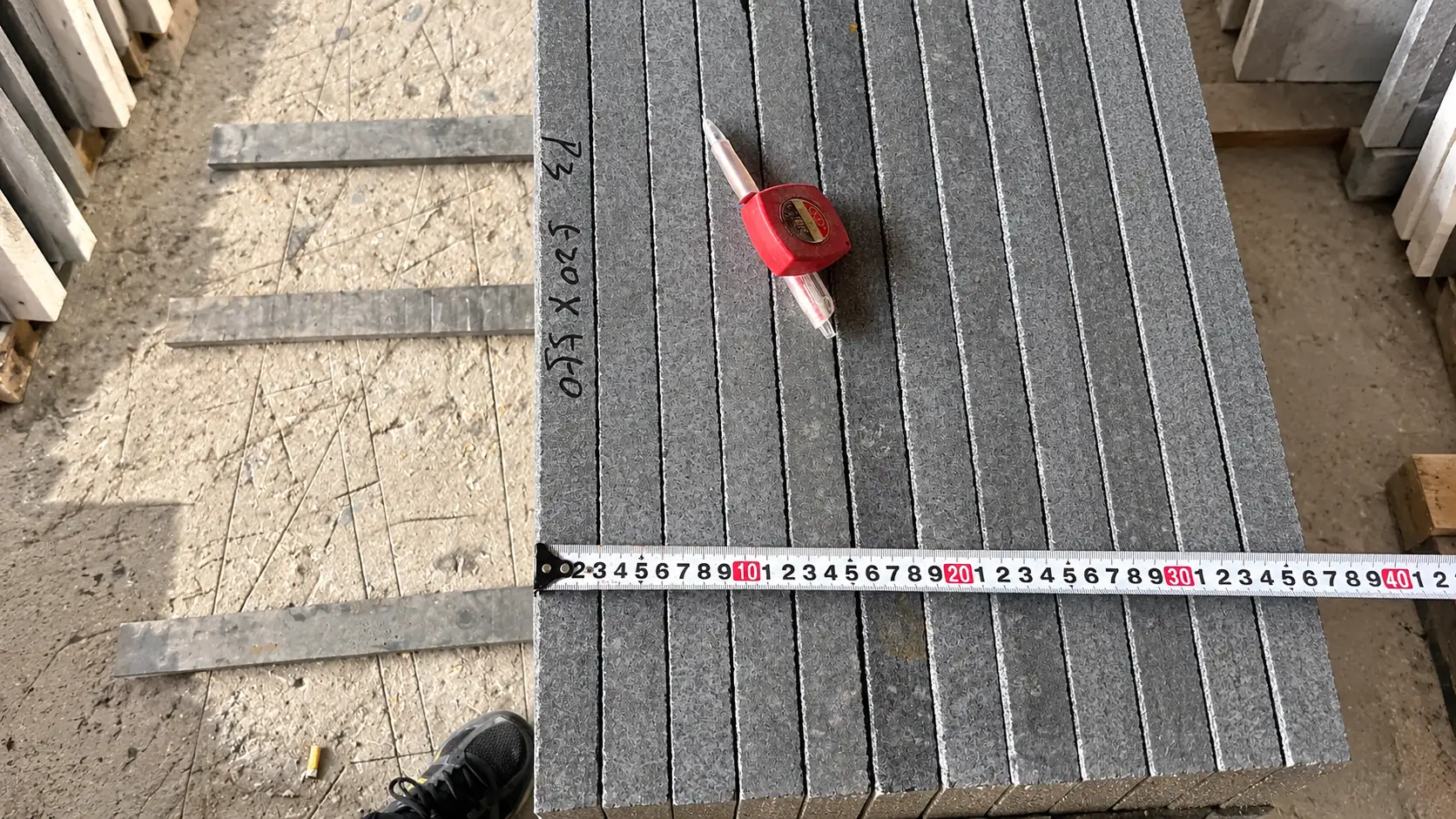
QC can include checks for:
- Stone thickness
- Finished length
- Finished width
- Edge dimensions
- Groove dimensions
- Cut-outs
- Profiles
Digital measuring tools and calipers can be used to inspect finished components against approved project information.
How Thickness Affects Material Yield
Thickness can also affect procurement and production planning.
Different thickness requirements may influence:
- Available slab inventory
- Block cutting
- Material allocation
- Custom calibration
- Finished weight
- Packing requirements
If one project requires several thicknesses of the same stone, those requirements should be identified during the RFQ stage rather than after slab selection.
For quotation preparation, see Natural Stone RFQ Checklist: What Buyers Should Send Before Requesting a Quote.
Common Mistakes When Selecting Natural Stone Thickness
Assuming Thicker Stone Is Always Better
Extra thickness also adds weight and may change handling, support, fabrication and packing requirements. The appropriate specification depends on the complete component design.
Choosing Thickness Only From Appearance
A visually thick edge can often be created with a mitred build-up rather than using a full solid thickness throughout the component.
Ignoring Stone Type
Different marble, quartzite, travertine, onyx and granite materials can have different characteristics. Thickness should be reviewed with the actual stone.
Ignoring Finished Panel Size
A small stone piece and a large-format panel should not automatically use the same thickness logic without considering dimensions and support.
Changing Thickness After Drawings Are Approved
A thickness change can affect edges, joints, interfaces, cut-outs, weight and packing. It should be coordinated before fabrication.
Forgetting Adjacent Materials
Stone thickness can affect alignment with metal trims, timber joinery, glass, doors and surrounding floor finishes.
Ignoring Packing Weight
Thicker stone can increase component and crate weight, which should be considered for international project logistics.
Treating Standard Thickness as an Engineering Decision
Common fabrication thicknesses are useful starting points, but structural suitability, support design and final installation requirements must be confirmed by the responsible project professionals.
Buyer Checklist Before Ordering
- Stone Type: Confirm marble, quartzite, travertine, onyx, granite or another natural stone.
- Application: Identify wall, floor, vanity, countertop, island, staircase, fireplace or decorative component.
- Thickness: Confirm 16mm, 18mm, 20mm, 30mm or custom thickness.
- Finished Size: Provide actual component dimensions.
- Edge Design: Confirm standard, bullnose, bevel, mitred or other custom edge profiles.
- Visual Thickness: Confirm whether a mitred build-up edge is required.
- Cut-Outs: Provide sink, cooktop, tap, drain and service-opening details.
- Support: Provide relevant approved substrate or supporting-system information.
- Backing: Identify any required honeycomb backing or reinforcement.
- Adjacent Materials: Confirm interfaces with metal, glass, timber or other finishes.
- Custom Calibration: Identify special thickness requirements before fabrication.
- QC: Confirm dimensional and thickness inspection requirements.
- Numbering: Define piece references for project cut-to-size components.
- Packing: Consider weight, component geometry and export-crate requirements.
- Engineering: Confirm structural and fixing requirements with the appointed consultants where applicable.
Frequently Asked Questions
What is the most common natural stone thickness?
18mm and 20mm are common Show Stone specifications for many marble, travertine, wall and flooring applications, while 20mm and 30mm are commonly used for countertops, vanity tops, kitchen islands and stair treads.
Is 20mm or 30mm better for a countertop?
Neither is automatically better for every project. The choice should consider the stone, countertop dimensions, support conditions, cut-outs, edge design, weight and approved project requirements.
Can 20mm stone look thicker than 20mm?
Yes. A mitred build-up edge can create a visually thicker countertop, vanity or island edge while the main stone component remains at its specified thickness.
What thickness is commonly used for marble wall panels?
18mm and 20mm are common Show Stone specifications for many interior marble wall-panel applications, although final thickness should be coordinated with panel size, stone type, backing, support and fixing requirements.
What thickness is commonly used for natural stone vanity tops?
20mm and 30mm are common vanity-top thicknesses, with mitred aprons or built-up edges available when a thicker visual appearance is required.
What thickness is commonly used for onyx?
Show Stone commonly works with 16mm onyx for selected applications, including decorative and backlit projects, while other thicknesses can be supplied according to project requirements.
Can natural stone be fabricated to a custom thickness?
Yes. Custom cutting and thickness calibration can be provided when the project requires special stone strips, profiles, CNC components, transitions or other non-standard fabricated pieces.
Does thicker stone always mean stronger stone?
No. Thickness is only one factor. Stone type, natural characteristics, component dimensions, cut-outs, support conditions, reinforcement and installation design should all be considered together.
Can natural stone thickness be checked before shipment?
Yes. Thickness and dimensions can be inspected during factory quality control using measuring tools and compared with the approved project requirements before packing.
Does Show Stone determine structural stone thickness for the project?
No. Show Stone can support stone selection, fabrication and thickness coordination based on approved project information, while structural design, fixing-system engineering and final site installation remain with the appointed project professionals.
Why Project Buyers Work With Show Stone
Show Stone supports architects, designers, contractors, hotel groups, retailers and international stone buyers from material selection through fabrication, QC and export packing.
Our thickness and fabrication support can include:
- Full-slab photography and video approval
- Material selection
- 18mm and 20mm marble fabrication
- 20mm and 30mm countertop fabrication
- 16mm onyx fabrication
- 18mm / 20mm / 30mm granite fabrication according to application
- Custom thickness fabrication
- Thickness calibration
- Custom cut-to-size pieces
- Mitred build-up edges
- Custom edge profiles
- Waterjet fabrication
- CNC fabrication
- Fiberglass mesh reinforcement
- Resin reinforcement
- Honeycomb backing when required by the project
- Digital slab scanning
- Digital cutting layouts
- Material-yield planning
- Thickness inspection
- Dimensional QC
- Dry-lay inspection
- Piece numbering
- Foam protection
- Export wooden crates
- International shipment coordination
Show Stone does not undertake structural engineering or final on-site installation. Structural design, supporting systems, fixing-system engineering and site installation remain the responsibility of the appointed consultants, engineers and contractors.
Project teams can review materials including Himalayan Gray Marble, Taj Mahal Quartzite, Roma Classico Travertine, Onice Rosa Onyx, Lemurian Blue Granite and Blue Crystal Marble.
For a broader understanding of cutting, CNC processing and project QC, see Natural Stone Fabrication Process for Hotel and Retail Projects.
For independent natural-stone design and specification information, project teams can also review the Natural Stone Institute resources for design professionals.
Final Recommendation
Natural stone thickness should be treated as part of the complete component design rather than selected from one universal rule. 16mm, 18mm, 20mm and 30mm can each be appropriate when matched to the correct stone, application, finished dimensions, edge design, support system and fabrication method.
For walls and floors, 18mm and 20mm are common project specifications. For countertops, vanity tops, islands and stair treads, 20mm and 30mm are commonly used. Selected onyx projects may use 16mm, while carved, CNC and architectural components can require custom thicknesses.
Where a visually thicker edge is required, mitred build-up fabrication can often achieve the architectural appearance without using the same full solid thickness across the entire component.
To confirm the appropriate natural stone thickness for your project quotation, contact Show Stone with your material reference, drawings, finished dimensions, application, required thickness, quantity and delivery destination.