Natural Stone Finishes Guide: Polished, Honed, Brushed, Leathered, Flamed & Tumbled
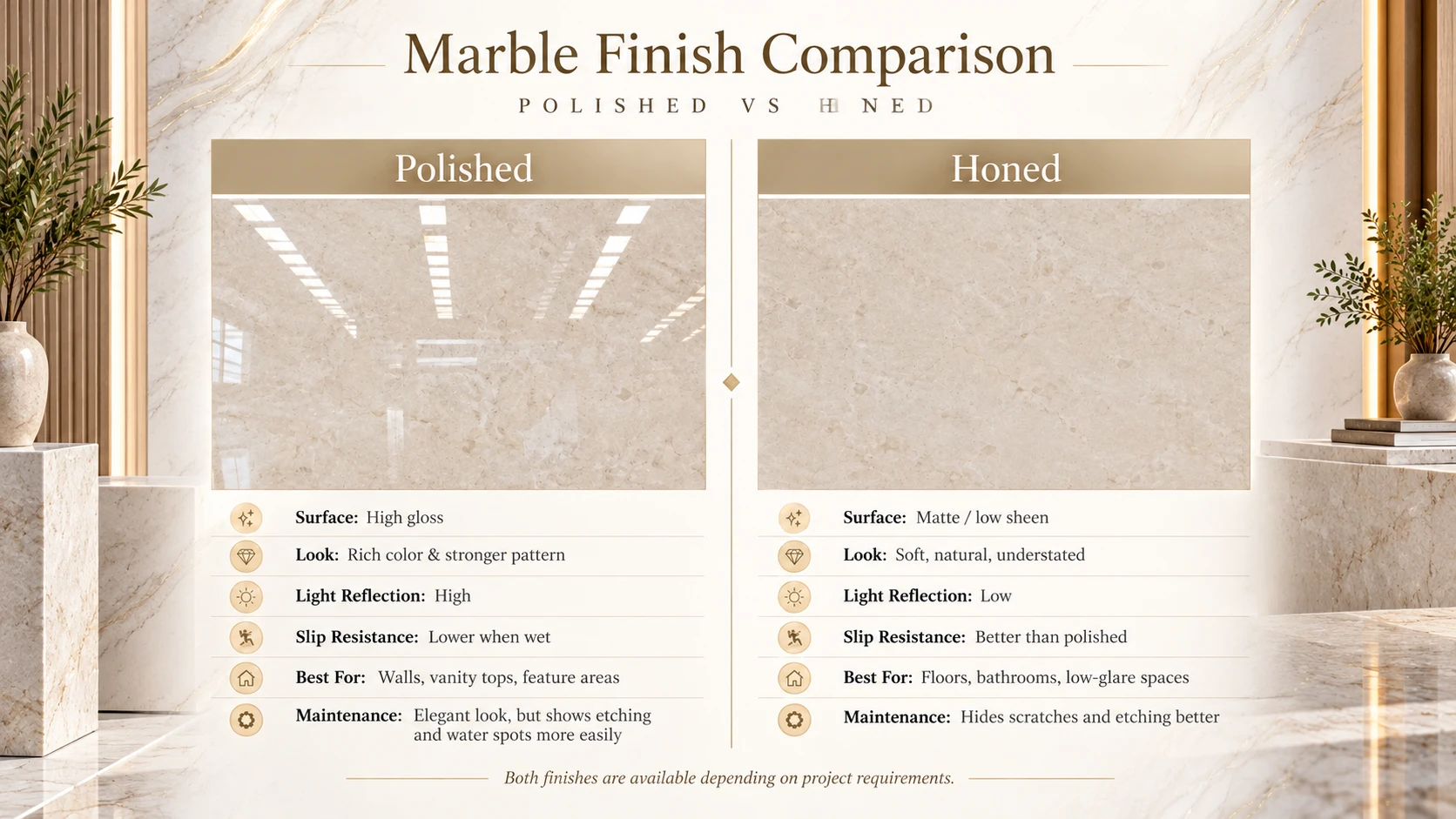
Natural stone finishes influence much more than whether a surface looks glossy or matte. The selected finish affects how the stone reflects light, how strongly its colour and veining are expressed, how the surface feels, how easily minor marks may be visible and how the material works within the overall interior or architectural design.
For architects, designers, contractors and buyers, choosing between polished, honed, brushed, leathered, flamed and tumbled finishes should begin with the actual stone and application rather than selecting a finish by name alone.
A polished dark granite may become dramatically reflective, while a honed red marble can appear softer and more architectural. A brushed travertine may emphasize its natural texture, while a leathered quartzite can provide a lower-sheen tactile finish that differs significantly from a polished slab.
Show Stone can provide multiple natural stone finishes, finish samples and mock-up approval, production finish comparison, photo or video review and factory surface-finish inspection before packing.
What Are Natural Stone Finishes?
Natural stone finishes are surface treatments applied to marble, granite, quartzite, travertine and other stones to change their appearance and texture.
Common finishes include:
- Polished
- Honed
- Brushed
- Leathered
- Flamed
- Tumbled
Each finish interacts differently with the natural mineral structure of the stone. A finish that looks attractive on one granite may produce a very different effect on a travertine or marble.
The final selection should therefore consider:
- Stone type
- Colour
- Vein pattern
- Application
- Lighting
- Expected maintenance
- Wet or dry conditions
- Required project performance
Why Natural Stone Finishes Matter
The same slab can appear significantly different after changing its surface finish.
The finish can influence:
- Colour depth
- Reflection
- Texture
- Perceived vein contrast
- Visual softness
- Maintenance appearance
- Relationship with lighting
- Overall architectural character
Finish selection should therefore happen before large-scale fabrication rather than being treated as a final cosmetic decision.
Thickness and finish should also be coordinated together where required. For more information, see Natural Stone Thickness Guide: How to Choose 16mm, 18mm, 20mm or 30mm.
1. Polished Natural Stone Finish
A polished finish creates a smooth, reflective surface that tends to increase colour depth and highlight natural veining.
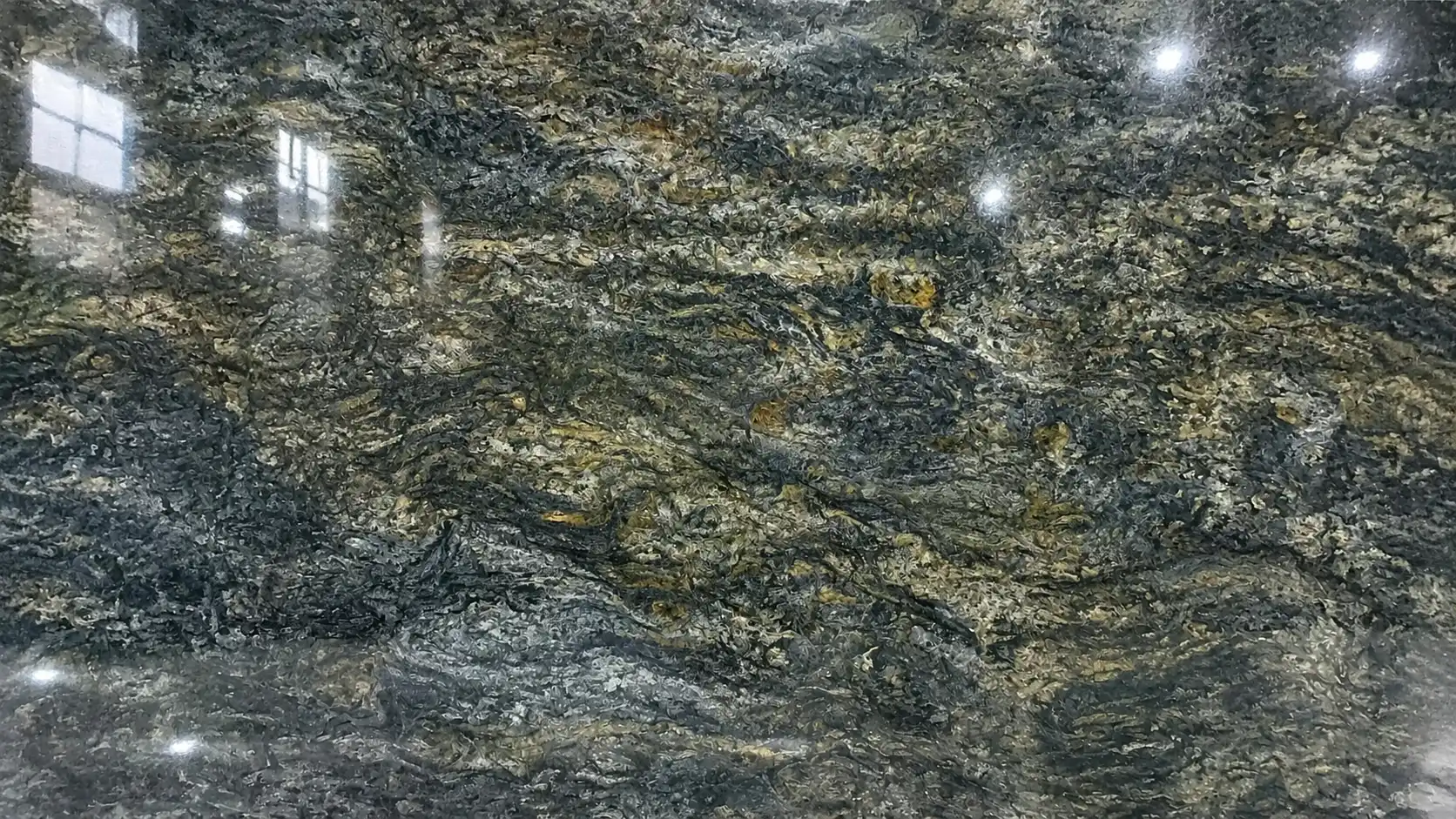
Polished surfaces are commonly used where the design calls for a refined or luxurious appearance.
Typical applications can include:
- Wall panels
- Reception desks
- Vanity tops
- Countertops
- Fireplace surrounds
- Decorative feature walls
- Selected flooring applications
Kozmus Black Granite can develop a strong visual depth when polished, especially in interiors where dark reflective surfaces are part of the design concept.
Polished finishes can also be used on suitable marble and quartzite materials.
2. Honed Natural Stone Finish
A honed finish creates a smoother surface with lower reflectivity than polished stone.
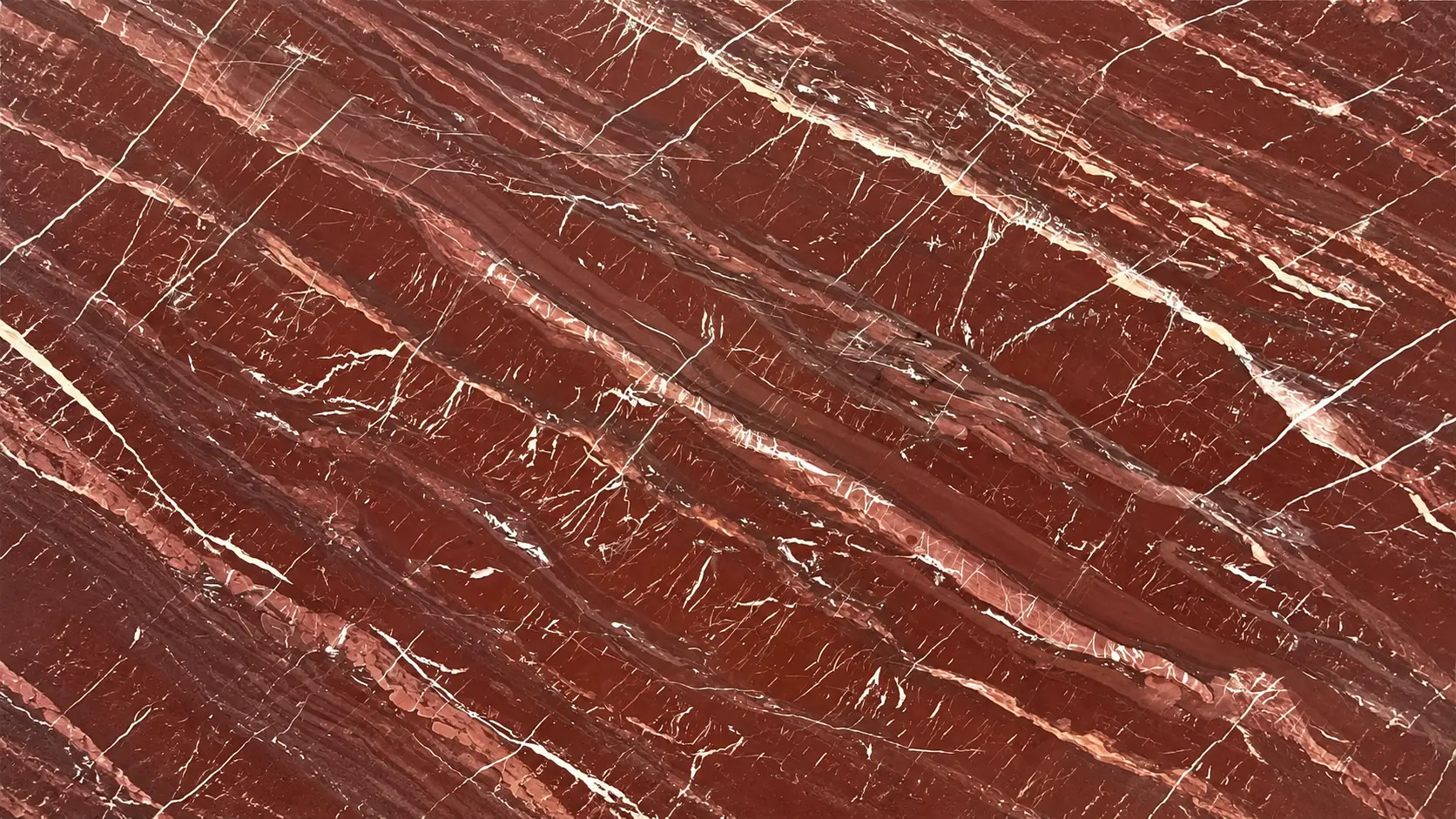
Compared with a polished surface, a honed finish usually appears:
- More matte
- Less reflective
- Softer in colour contrast
- More understated
Honed stone is often used in contemporary hotel, residential and retail interiors where the designer prefers a quieter surface.
Red Jasper Marble can take on a substantially different architectural character when honed compared with a high-gloss polished finish.
3. Brushed Natural Stone Finish
A brushed finish introduces texture to the stone while generally retaining a softer and less aggressive appearance than very rough finishes.
It can work especially well with travertine and selected natural stones where the design intends to emphasize texture.
Typical applications may include:
- Interior flooring
- Feature walls
- Travertine cladding
- Architectural details
- Hospitality interiors
Roma Classico Travertine can be supplied in brushed finishes where a warmer, more tactile architectural appearance is preferred.
Brushing does not create one universal level of texture across every stone. The result depends on the stone structure and the exact finishing process.
4. Leathered Natural Stone Finish
A leathered finish creates a textured, tactile surface with generally lower reflection than a full polish.
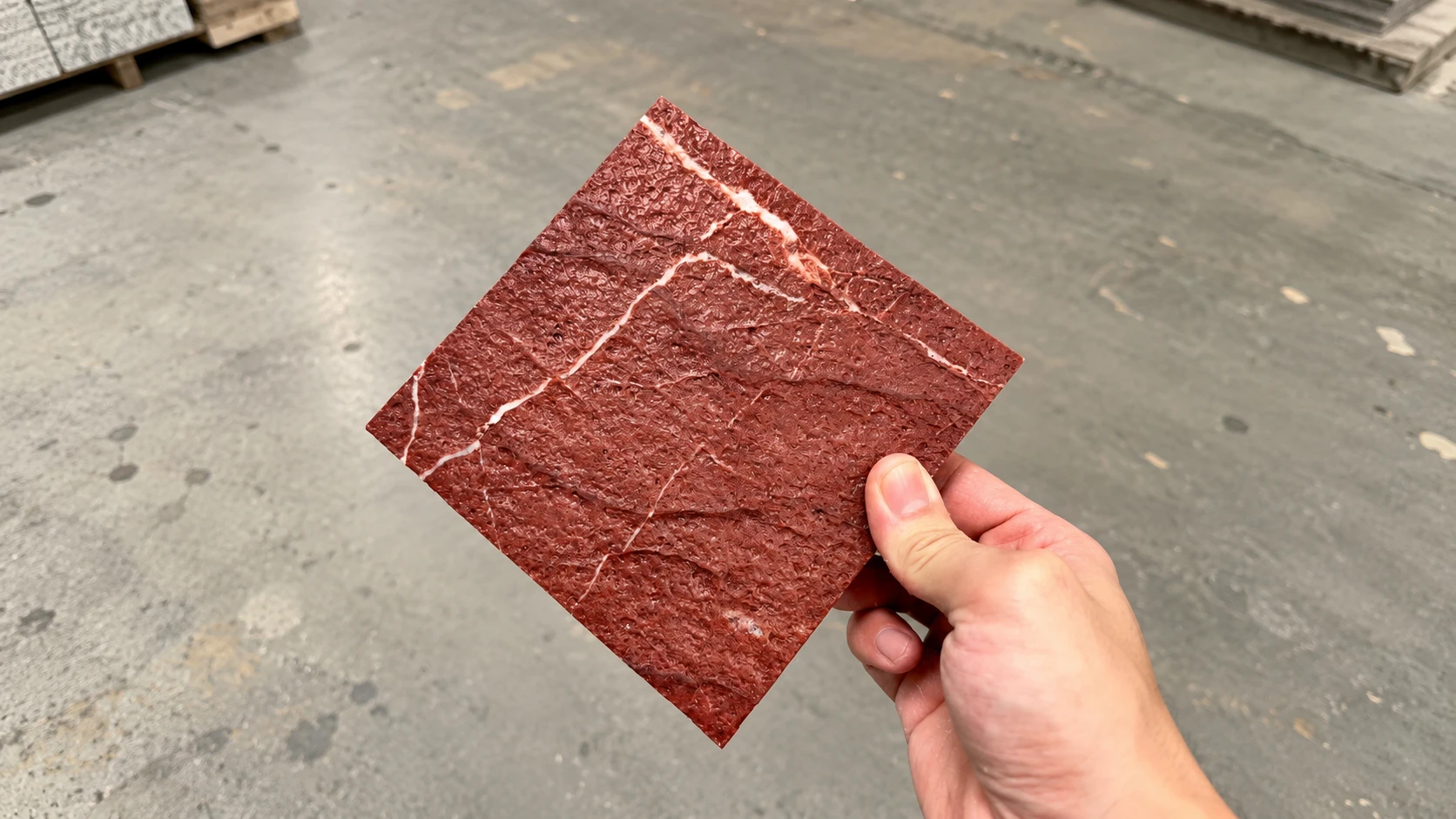
Leathering can be particularly effective on:
- Granite
- Quartzite
- Selected marble
Possible applications include:
- Countertops
- Vanity tops
- Feature walls
- Reception counters
- Selected flooring applications
French Red Marble can be used to demonstrate how textured finishes can change the appearance of coloured natural stone.
Taj Mahal Quartzite can also be supplied with polished, honed or leathered finishes depending on the approved project requirements.
5. Flamed Natural Stone Finish
A flamed finish creates a visibly rougher texture on suitable stones, particularly granite.
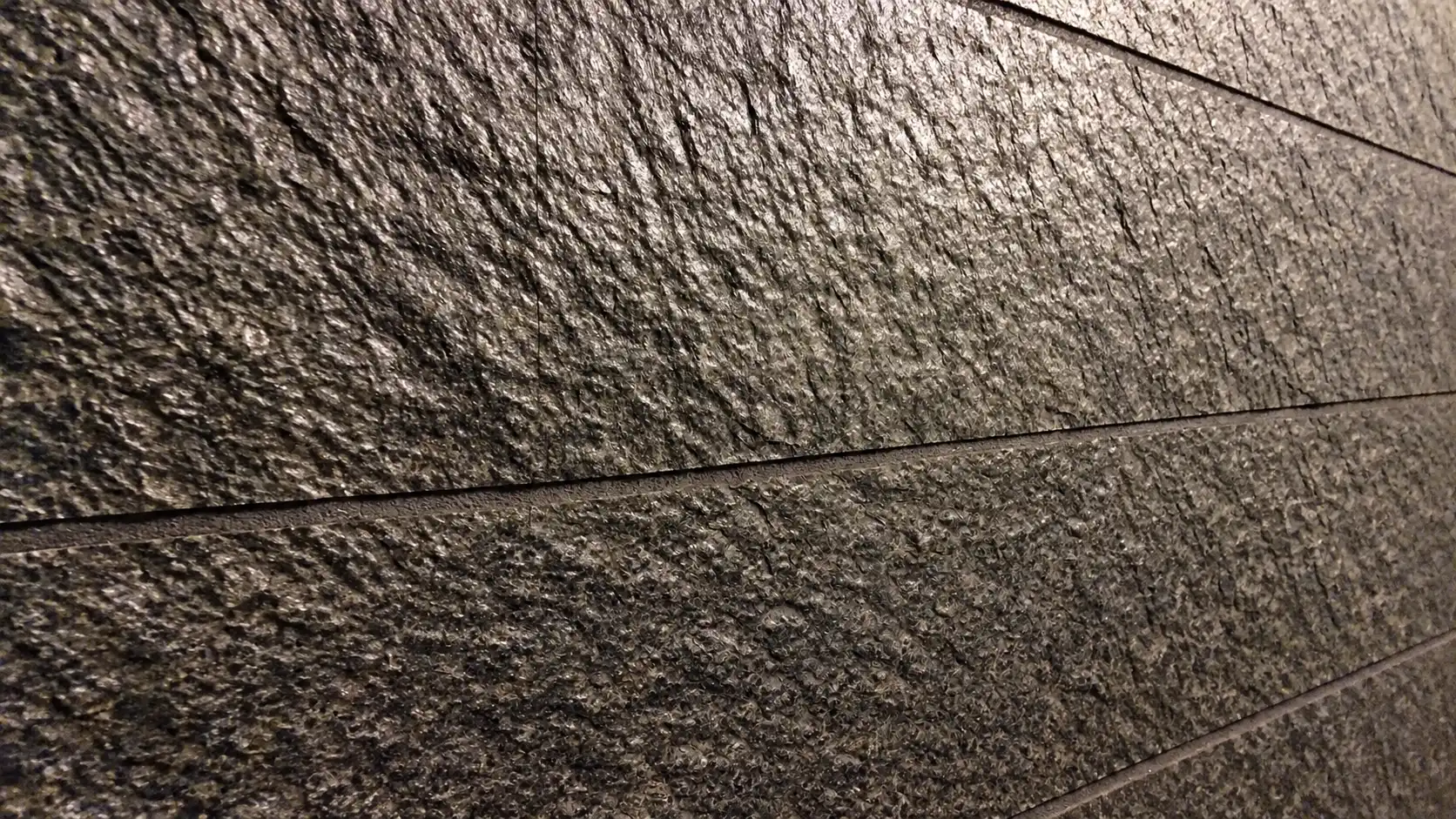
Flamed finishes can be used for selected:
- Flooring
- Wall cladding
- Architectural surfaces
- Exterior applications where appropriate
Lemurian Blue Granite and other suitable granites can be considered for flamed surface treatments depending on the project application.
A flamed finish should not automatically be treated as having one fixed slip-resistance rating. Actual performance depends on the selected stone, finishing process, test method and project conditions.
6. Tumbled Natural Stone Finish
Tumbling creates a softer, aged or weathered appearance by reducing sharpness at the stone surface and edges.
This finish is especially associated with:
- Travertine
- Classic interiors
- Traditional floors
- Decorative wall applications
Tumbled stone can provide a more relaxed appearance than a precisely polished or honed surface.
Roma Classico Travertine can be supplied in tumbled, brushed, honed or polished finishes depending on the required design direction.
Natural Stone Finishes Comparison
| Finish | Appearance | Surface Character | Typical Applications |
|---|---|---|---|
| Polished | Reflective and colour-rich | Smooth | Walls, counters, vanities, decorative interiors |
| Honed | Matte / low sheen | Smooth and understated | Floors, walls, bathrooms, counters |
| Brushed | Soft textured appearance | Tactile texture | Travertine floors, walls, architectural surfaces |
| Leathered | Low sheen with texture | Textured / tactile | Granite, quartzite, counters, feature surfaces |
| Flamed | Rougher architectural appearance | Pronounced texture | Selected granite floors and cladding |
| Tumbled | Aged / softened | Soft irregular texture | Travertine, classic floors and traditional interiors |
Marble Finishes
Marble is commonly supplied with polished and honed finishes, although selected materials can also receive more textured treatments where appropriate.
Red Jasper Marble demonstrates how honing can soften a strong red marble, while French Red Marble can be used with more textured finish directions.
For marble, finish selection can significantly affect:
- Colour intensity
- Vein contrast
- Reflection
- Architectural mood
Quartzite Finishes
Quartzite can commonly be supplied in polished, honed and leathered finishes depending on the selected stone.
Polished quartzite emphasizes colour and crystalline movement, while leathered quartzite can create a more tactile, lower-sheen surface.
Taj Mahal Quartzite can be specified according to the desired design character for countertops, islands and other premium interior surfaces.
Granite Finishes
Granite offers one of the broadest finish ranges.
Depending on the material, it can be:
- Polished
- Honed
- Leathered
- Flamed
Kozmus Black Granite can create a strong polished appearance, while Lemurian Blue Granite can be considered for polished, leathered or flamed applications depending on the project.
Travertine Finishes
Travertine works particularly well with a broad range of softer architectural finishes.
Options can include:
- Polished
- Honed
- Brushed
- Tumbled
The combination of natural voids, directional movement and finish can significantly change the final character of the material.
Roma Classico Travertine can be adapted for both contemporary and more traditional interiors depending on the approved surface treatment.
Natural Stone Finishes for Flooring
Flooring finish should be selected according to the stone, project design and required performance.
Depending on the material and application, Show Stone can provide:
- Polished
- Honed
- Brushed
- Tumbled
- Flamed
- Leathered
For hotel flooring, see Natural Stone Flooring for Hotels: Materials, Finishes, Layout & Maintenance.
Slip-resistance requirements should be confirmed according to the application, selected stone and finish, local code and approved test data.
Natural Stone Finishes for Wall Panels
Wall panels allow more freedom to use finishes primarily for visual and tactile effect.
Common options include:
- Polished
- Honed
- Brushed
- Leathered
Polished walls can create stronger reflections and dramatic stone patterns, while honed or brushed surfaces may provide a calmer architectural appearance.
For large-format applications, see Large Format Natural Stone Wall Panels: Specification, Vein Matching & Installation.
Natural Stone Finishes for Countertops and Vanity Tops
Countertops and vanity tops commonly use polished, honed or leathered finishes depending on the selected stone.
The finish should be considered together with:
- Stone type
- Colour
- Edge profile
- Lighting
- Maintenance expectations
- Design concept
Polished finishes provide greater reflection, while honed and leathered finishes create a softer appearance.
Natural Stone Finishes for Staircases
Staircase finish selection requires both visual and project-performance consideration.
Polished, honed and other approved finishes may be used depending on the stone and staircase location.
However, no single finish should automatically be assumed to provide a universal slip-performance level.
Slip-resistance requirements should be confirmed according to the staircase location, selected stone and finish, local code and approved test data.
For staircase fabrication, see Natural Stone Staircases for Luxury Interiors.
Natural Stone Finishes for Bathrooms and Wet Areas
Bathrooms require additional attention because some surfaces may regularly be exposed to water.
Finish selection should consider:
- Wall vs floor location
- Wet vs dry zone
- Selected stone
- Surface texture
- Maintenance requirements
- Applicable slip-resistance requirements
A polished vanity top and a shower floor do not necessarily require the same surface finish.
For hotel bathroom stonework, see Marble Bathrooms for Luxury Hotels: Stone Selection, Finishes & Fabrication.
Slip-Resistance Considerations
Natural stone finish terminology should not be used as a substitute for project-specific slip-performance information.
Show Stone does not assign one universal R-rating or DCOF value to every polished, honed, brushed, flamed, leathered or tumbled surface.
Actual performance can vary according to:
- Stone type
- Finish process
- Surface texture
- Wet or dry conditions
- Maintenance condition
- Testing method
Slip-resistance requirements should be confirmed according to the application, selected stone and finish, local code and approved test data.
Finish Samples and Mock-Ups Before Production
A finish name alone may not provide enough information for final project approval.
A physical sample can help the designer and buyer review:
- Colour depth
- Reflection
- Texture
- Vein visibility
- Surface feel
- Lighting interaction
Show Stone can prepare custom finish samples and mock-ups before production.
Approval may be completed through:
- Physical sample review
- Photography
- Video
- Remote approval
For a broader mock-up workflow, see Natural Stone Mock-Ups for Hotel and Retail Projects.
Factory QC for Natural Stone Finishes
Surface finish should be inspected during factory QC rather than checked only after site delivery.
Inspection can include:
- Finish consistency
- Reflection consistency
- Texture consistency
- Polishing quality
- Honing quality
- Surface marks
- Comparison with approved samples
Multiple related pieces can be reviewed together to check whether the finish remains visually consistent across the complete project area.
Photo and video approval can support remote project review before packing.
Maintenance Considerations
The finish can influence how a surface appears during use and maintenance.
For example:
- High-reflection finishes may make certain surface marks more visible.
- Textured finishes may require cleaning methods appropriate to the surface texture.
- Natural stone characteristics vary by material.
- Cleaning products should be compatible with the specific stone.
Maintenance guidance should therefore consider both the stone type and finish rather than treating all natural stone surfaces the same.
Common Mistakes When Selecting Natural Stone Finishes
Choosing the Finish From a Small Online Image
Lighting and photography can significantly affect how polished, honed and textured stone appears. Physical samples provide a stronger approval reference.
Assuming Polished Is Always More Premium
Polished stone can create a luxurious appearance, but honed, brushed or leathered surfaces may better suit a particular architectural concept.
Assuming Honed Means Slip-Safe
A honed finish should not automatically be assigned a specific slip-performance rating without relevant approved test data.
Using the Same Finish Everywhere
Walls, floors, vanity tops, shower areas and exterior applications may require different visual and performance considerations.
Ignoring the Stone Type
A finish can behave differently on marble, granite, quartzite and travertine. The actual stone should be reviewed before approval.
Skipping Finish Samples
For high-visibility hotel and retail projects, approving a representative finish sample can reduce uncertainty before production.
Changing the Finish After Fabrication Planning
Finish changes can affect production workflow, visual approval and QC references and should be coordinated before final production.
Ignoring Maintenance Expectations
Finish selection should consider how the stone will be cleaned and maintained in the intended application.
Buyer Checklist Before Ordering
- Stone: Confirm marble, quartzite, granite, travertine or another natural stone.
- Finish: Specify polished, honed, brushed, leathered, flamed or tumbled.
- Application: Identify floor, wall, countertop, vanity, staircase or other use.
- Wet / Dry Area: Confirm whether the application is regularly exposed to water.
- Appearance: Define the required reflection, texture and colour depth.
- Sample: Request a representative finish sample where needed.
- Mock-Up: Approve important finish details before large-scale production.
- Slip Requirements: Confirm project-specific performance requirements using applicable approved test data.
- Thickness: Coordinate the finish with the required stone thickness and fabrication.
- Edges: Confirm whether exposed edges require the same finish as the stone face.
- Batch: Review finish consistency across related stone pieces.
- QC: Compare production pieces with the approved finish sample.
- Approval: Confirm whether photo, video or physical inspection is required.
- Maintenance: Review cleaning and care requirements for the selected stone and finish.
Frequently Asked Questions
What are the most common natural stone finishes?
Common natural stone finishes include polished, honed, brushed, leathered, flamed and tumbled surfaces, although availability depends on the selected stone and project requirements.
What is the difference between polished and honed stone?
Polished stone has greater reflection and usually stronger colour depth, while honed stone has a lower-sheen, more matte appearance with reduced surface reflection.
Can quartzite have a leathered finish?
Yes. Suitable quartzite can be supplied with polished, honed or leathered finishes depending on the selected material and approved project requirements.
Can granite be flamed?
Yes. Suitable granite can be flamed to create a rougher textured surface for selected flooring, wall cladding and architectural applications.
Can travertine be brushed or tumbled?
Yes. Travertine can be supplied in polished, honed, brushed or tumbled finishes depending on the required architectural appearance.
Is honed natural stone always slip-resistant?
No. A honed finish does not automatically guarantee a specific slip-performance level. Requirements should be confirmed according to the application, selected stone and finish, local code and approved test data.
Can I approve a stone finish before full production?
Yes. Show Stone can prepare finish samples or mock-ups for client or designer review before larger-scale production begins.
Can Show Stone inspect finish consistency before shipment?
Yes. Surface finish, reflection, texture and overall consistency can be reviewed during factory quality control and compared with the approved sample before packing.
Which finish is best for natural stone countertops?
Polished, honed and leathered finishes can all be suitable depending on the selected stone, design intent, maintenance expectations and project requirements.
Does Show Stone install finished stone on site?
No. Show Stone provides stone sourcing, finishing, fabrication, mock-up support, QC, numbering, packing and installation coordination, while final on-site installation is carried out by the client or appointed contractor.
Why Project Buyers Work With Show Stone
Show Stone supports architects, designers, contractors, hotel groups, luxury retailers and international buyers from stone selection and finish development through fabrication, QC and export packing.
Our natural stone finish support can include:
- Polished finishes
- Honed finishes
- Brushed finishes
- Leathered finishes
- Flamed finishes
- Tumbled finishes
- Polished and honed marble
- Polished, honed and leathered quartzite
- Polished, honed, leathered and flamed granite
- Polished, honed, brushed and tumbled travertine
- Finish samples
- Finish mock-ups
- Photo and video approval
- Remote approval
- Production comparison with approved samples
- Surface finish QC
- Finish consistency inspection
- Custom cut-to-size fabrication
- Digital slab planning
- Dry-lay inspection
- Piece numbering
- Foam protection
- Export wooden crates
- International shipment coordination
Show Stone does not undertake final on-site installation. Site conditions, installation methods and final installation remain the responsibility of the client and appointed project contractors.
Project teams can review materials including Red Jasper Marble, French Red Marble, Kozmus Black Granite, Roma Classico Travertine, Taj Mahal Quartzite and Lemurian Blue Granite.
For independent natural-stone design and specification resources, project teams can also review the Natural Stone Institute resources for design professionals.
Final Recommendation
Natural stone finishes should be selected by balancing appearance, texture, application, maintenance and project performance rather than choosing a finish from appearance alone.
Use polished finishes when stronger colour depth and reflection support the design. Use honed finishes for a softer matte appearance. Brushed, leathered, flamed and tumbled surfaces can introduce different levels of texture and architectural character depending on the selected stone.
For important hotel, retail and residential applications, approving a representative finish sample or mock-up before full production provides a stronger reference for both fabrication and factory QC.
To compare natural stone finishes for your project, contact Show Stone with your stone reference, drawings, application, required finish, quantity and delivery destination.