Natural Stone RFQ Checklist: What Buyers Should Send Before Requesting a Quote
A natural stone RFQ checklist can save buyers, architects, contractors and suppliers considerable time during the quotation stage. A request such as “Please quote 500 square metres of marble” may be enough for a rough material discussion, but it is usually not enough for an accurate project quotation.
Natural stone pricing can change according to slab selection, finished dimensions, thickness, finish, material yield, edge profiles, cut-outs, bookmatching, CNC work, dry-lay requirements, piece numbering, packing and delivery destination.
The more complete the RFQ, the easier it is for the supplier to understand what is actually being quoted and identify missing information before production planning begins.
Show Stone can review client-, designer- and contractor-supplied project information for stone fabrication, material selection, digital slab planning, QC, dry lay, numbering and export packing. Show Stone does not undertake final on-site installation.
Buyer Decision Check
- Material: Identify the stone name, preferred colour or reference image.
- Drawings: Send the latest plans, elevations, sections or fabrication-related drawings available.
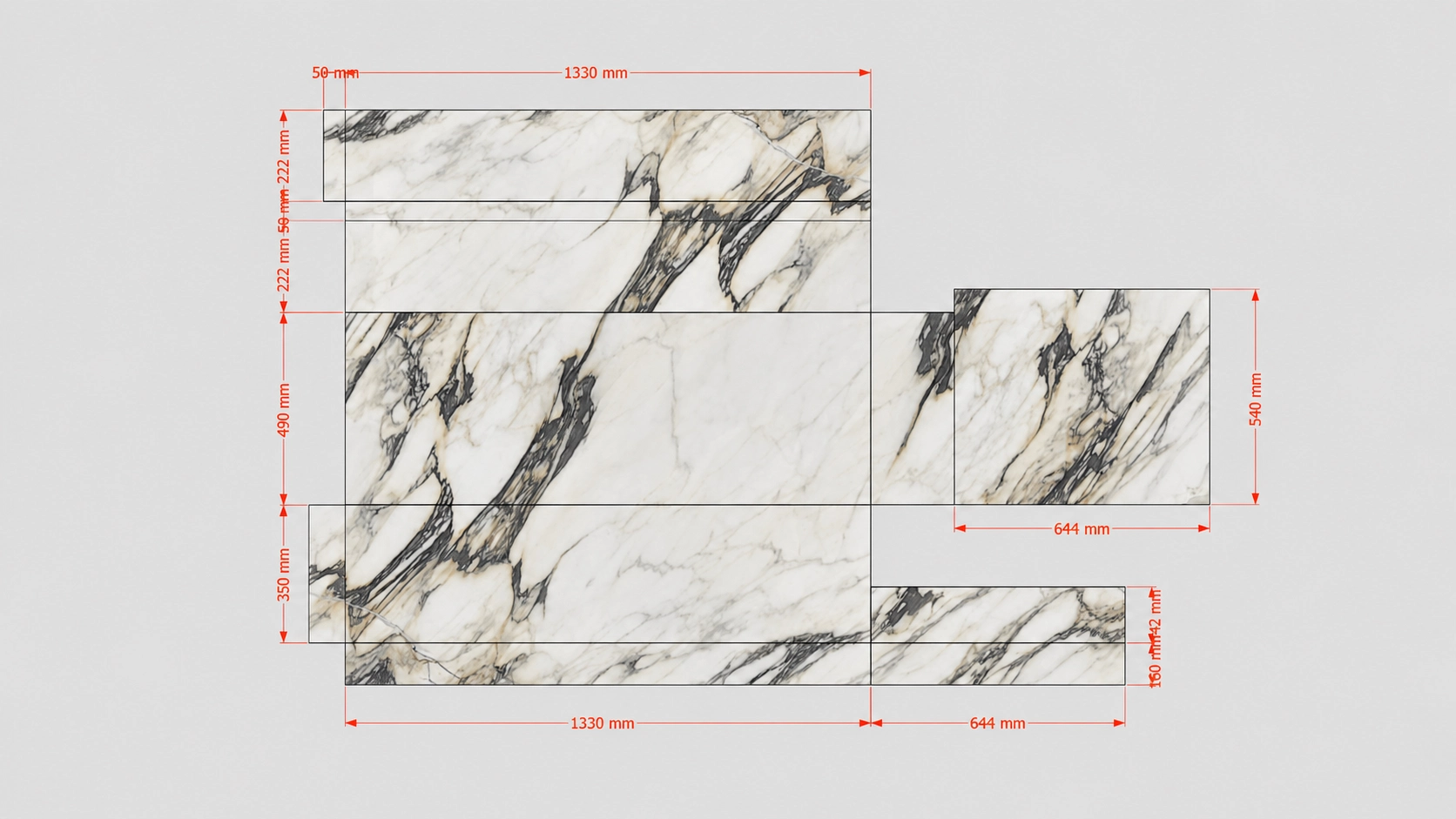
- Dimensions: Provide finished cut sizes rather than only total square metres where possible.
- Fabrication: Define edges, mitres, holes, cut-outs, CNC or waterjet requirements.
- Visual Layout: Confirm whether bookmatching, vein matching or slab selection is required.
- Delivery: Include destination and required project schedule so packing and logistics can be considered.
What Is a Natural Stone RFQ?
RFQ stands for Request for Quotation. In a natural stone project, an RFQ is the information package a buyer sends to a supplier so the supplier can evaluate material, fabrication, quantity, packing and delivery requirements and prepare a quotation.
A simple RFQ may cover standard slabs or tiles. A complex hotel or luxury retail RFQ may also include:
- Architectural drawings
- Shop drawings
- Elevations
- BOQ or cutting lists
- Custom profiles
- Bookmatched elevations
- Vanity or countertop details
- Stair drawings
- Reception desk details
- Dry-lay requirements
- Packing sequence
The objective is not to produce more paperwork. It is to remove assumptions before a price is calculated.
Why Incomplete RFQs Cause Pricing Problems
Natural stone quotations depend on more than the material price per square metre.
For example, the same marble can produce different quotations depending on whether the buyer needs:
- Standard slabs
- 600 × 600 mm tiles
- Large-format wall panels
- Bookmatched panels
- Mitred vanity tops
- CNC-carved pieces
- Curved staircase components
An incomplete RFQ can therefore lead to repeated revisions, exclusions or provisional assumptions.
A stronger request gives the supplier enough information to evaluate the project closer to the actual production scope.
Natural Stone RFQ Checklist: 15 Essential Details
1. Stone Material or Material Name
Start by identifying the preferred stone.
This can be:
- A specific product name
- A stone category
- A colour direction
- A client-approved reference
For example:
If the exact stone has not yet been selected, explain the required colour, appearance, application and project level so suitable alternatives can be reviewed.
2. Stone Reference Photo or Sample
Material names can vary between suppliers and markets, so a visual reference is valuable.
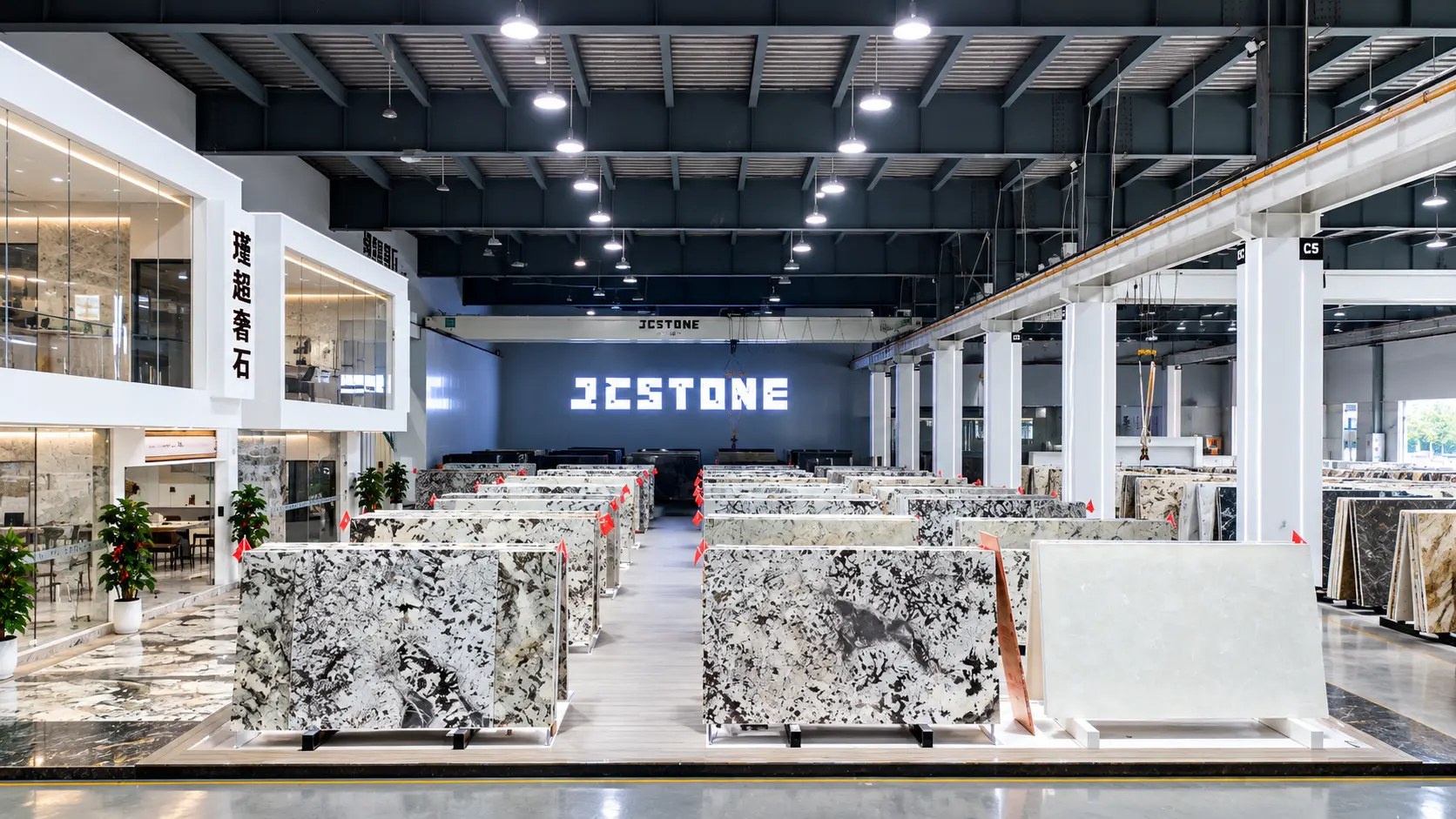
A useful reference can include:
- Full-slab photograph
- Physical sample reference
- Approved designer image
- Previous project reference
- Material board
The reference should be treated as a visual direction unless the exact slab or approved sample has already been selected.
3. Project Drawings
Drawings are one of the most valuable parts of a stone RFQ.
Useful documents may include:
- Plans
- Elevations
- Sections
- Shop drawings
- Interior elevations
- Stair drawings
- Vanity details
- Countertop details
- Wall-panel layouts
Show Stone can review drawings supplied by the client, designer or contractor and develop stone-specific fabrication information when required.
Show Stone does not independently originate the base project design or provide structural engineering.
For a detailed explanation, see Natural Stone Shop Drawings Explained: What to Check Before Fabrication.
4. Finished Dimensions and Cut Sizes
Total square metres alone do not reveal the full fabrication requirement.
Whenever possible, provide individual finished sizes.
Finished dimensions affect:
- Slab yield
- Joint locations
- Cutting layout
- Packing size
- Material quantity
A BOQ or cutting list is especially useful for projects with many repeated components.
5. Thickness
Specify the required finished stone thickness.
Common project examples may include:
- 18mm
- 20mm
- 30mm
- Other custom thicknesses
Onyx projects may use different thicknesses depending on the product and application.
Thickness can affect raw material selection, fabrication, weight and packing.
6. Surface Finish
The RFQ should identify the required finish.
Examples include:
- Polished
- Honed
- Brushed
- Leathered
- Tumbled
- Other approved finishes
If the finish has not yet been selected, samples or mock-ups can be reviewed before final production approval.
7. Quantity
Provide the quantity in the format that best matches the product.
This may include:
- Square metres
- Number of slabs
- Number of tiles
- Number of panels
- Number of countertops
- Number of vanity tops
- Number of custom pieces
Where possible, separate the quantity by room, floor, zone or application rather than supplying only one total figure.
8. Application or Project Area
The same stone can require different fabrication depending on where it will be used.
Identify whether the stone is intended for:
- Flooring
- Wall cladding
- Staircases
- Vanities
- Countertops
- Kitchen islands
- Reception desks
- Fireplaces
- Retail fixtures
- Decorative architectural components
Application information also helps the supplier understand relevant edge, cut-out, matching and packing requirements.
9. Edge Profile Requirements
Edges can significantly affect fabrication time and cost.
Specify requirements such as:
- Straight polished edge
- Mitred edge
- Bullnose
- Bevel
- Chamfer
- Built-up edge
- Custom moulding
- CNC profile
Where the detail is custom, include a section drawing with dimensions.
10. Cut-Outs, Openings and Holes
Cut-outs can change fabrication requirements considerably.
Examples include:
- Sink openings
- Cooktop openings
- Tap holes
- Drain openings
- Electrical openings
- Vent openings
- Service penetrations
- Mechanical fixing holes
Provide dimensions and positions wherever possible.
11. Bookmatching and Vein-Matching Requirements
If the project requires controlled natural patterning, include this in the RFQ before the supplier calculates slab quantity and yield.
Possible requirements include:
- 2-slab bookmatch
- 4-slab bookmatch
- Multi-panel bookmatch
- Horizontal vein matching
- Vertical vein matching
- Continuous vein layout
Bookmatching can require more selective slab use than random cutting.
For more detail, see Vein Matching vs Bookmatching Natural Stone: Which Layout Is Right for Your Project?.
12. Dry-Lay and QC Requirements
If the project requires dry lay, dimensional inspection, photo approval or video approval, include these requirements in the RFQ.
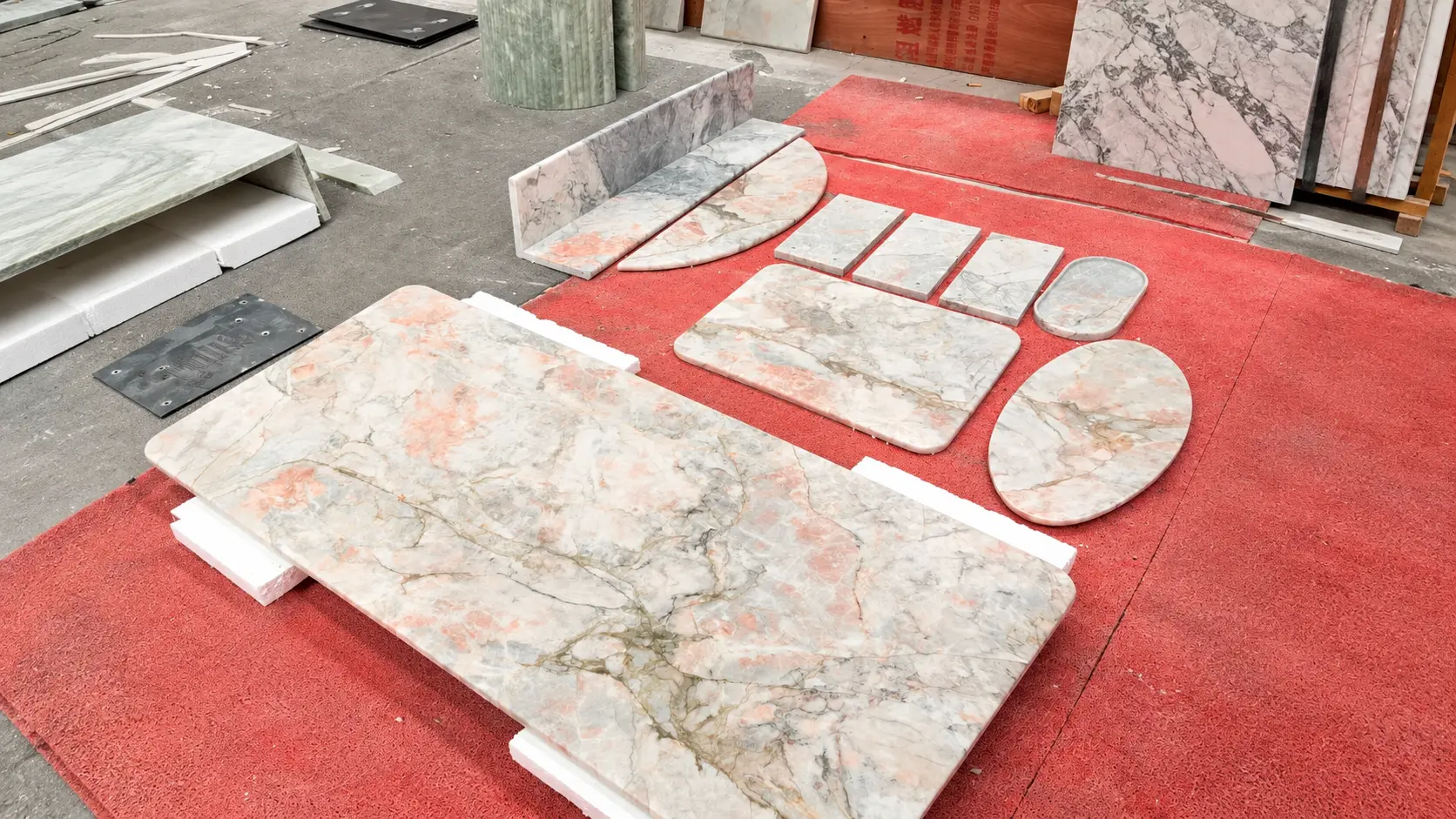
Possible requirements include:
- Colour inspection
- Vein-direction inspection
- Dimension checking
- Joint review
- Mitre inspection
- Cut-out inspection
- Piece numbering
- QC photographs
- QC video
- Remote approval
For the complete process, see Natural Stone Dry Lay Inspection: What to Check Before Shipment.
13. Packing Requirements
Packing should be discussed during quotation rather than only after production.
Tell the supplier if the project requires:
- Foam protection
- Export wooden crates
- Heavy-duty reinforced crates
- Room-based packing
- Floor-based packing
- Elevation-based packing
- Installation-sequence packing
- Shipping marks
For the full packing workflow, see Natural Stone Packing and Crating for International Projects: A Buyer’s Guide.
14. Delivery Destination
Always include the delivery destination in the RFQ.
At minimum, provide:
- Country
- City or port where relevant
- Requested shipping basis if already defined
The destination can affect packing, shipping planning and logistics discussions.
15. Required Delivery Date or Project Schedule
The supplier needs to know when the stone is required.
Provide:
- Required shipment date
- Required delivery date
- Project installation period
- Phased delivery requirements
Show Stone’s typical lead time is approximately four weeks, but actual project timing depends on material availability, approvals, quantity and fabrication complexity.
Initial RFQ vs Detailed Project RFQ
Not every quotation request needs the same amount of information.
| RFQ Stage | Minimum Useful Information | Purpose |
|---|---|---|
| Initial Budget RFQ | Material + approximate quantity + thickness + finish + application + destination | Early budget discussion |
| Detailed Project RFQ | Drawings + cut sizes + quantity + fabrication details + QC + packing + schedule | More accurate project quotation |
| Pre-Order Review | Approved drawings + material + final details + layout + packing references | Production preparation |
What Buyers Often Forget to Include
The following items are often missing from early RFQs but can materially affect the final scope:
- Edge profile
- Mitred corners
- Sink or cooktop cut-outs
- Waterjet work
- CNC carving
- Vein-match requirements
- Bookmatching
- Mock-up requirements
- Dry lay
- Piece numbering
- Installation-sequence packing
- Delivery schedule
A quotation may need to be revised when these requirements are added later.
RFQ for Slabs vs Cut-to-Size Stone
Slab RFQ
A slab RFQ can often be relatively simple.
Useful information includes:
- Stone
- Approximate slab dimensions required
- Thickness
- Finish
- Quantity
- Destination
Cut-to-Size RFQ
Cut-to-size stone requires more detailed information because the supplier needs to calculate slab yield and fabrication.
Provide:
- Finished dimensions
- Quantity by size
- Thickness
- Finish
- Edge treatment
- Cut-outs
- Piece references
- Matching requirements
- QC requirements
- Packing method
RFQ for Hotel Projects
Hotel projects often involve repeated rooms combined with unique public areas.
A useful hotel RFQ may identify:
- Hotel level
- Guestroom type
- Bathroom type
- Public area
- Lobby elevation
- Vanity type
- Floor and wall quantities
Where possible, organise the BOQ according to:
Building → Floor → Room Type → Application → Piece
This can later support production numbering and packing.
RFQ for Luxury Retail Projects
Luxury retail projects may have fewer repeated rooms but more custom interfaces and tighter visual requirements.
The RFQ should clearly identify:
- Store zone
- Stone wall elevations
- Display fixtures
- Reception or transaction counters
- Metal trims
- Joinery interfaces
- Lighting-related details
- Mock-up requirements
For more guidance, see How to Specify Natural Stone for Luxury Retail Interiors.
RFQ for Bookmatched Wall Panels
Strongly veined marble such as Arabescato Marble may require more information than a standard random-layout wall.
Include:
- Elevation drawing
- Finished panel sizes
- Joint positions
- Bookmatch type
- Centre line
- Openings
- Required slab approval process
This allows slab quantity and material yield to be evaluated more realistically.
RFQ for Countertops and Islands
For materials such as Taj Mahal Quartzite, provide:
- Finished countertop dimensions
- 20mm or 30mm thickness
- Sink cut-outs
- Cooktop openings
- Tap holes
- Edge profile
- Mitred build-up
- Waterfall ends
- Backsplash dimensions
A square-metre quantity alone does not provide enough information to accurately evaluate this type of fabrication.
RFQ for Travertine Architectural Components
Travertino Classico may be specified for floors, walls, stairs and custom architectural pieces.
Where CNC or carved profiles are required, provide:
- Section drawings
- Radius
- Profile dimensions
- Finished thickness
- Surface finish
- Piece quantity
RFQ for Backlit Onyx
For China Honey Onyx or other Yellow / Honey Onyx applications, the RFQ should include additional lighting-related information where available.
Useful information may include:
- Panel dimensions
- Thickness
- Application
- Backlighting requirement
- Joint layout
- Supporting structure information
- Mock-up requirement
Show Stone can coordinate stone-related fabrication and backlit sample details based on project information supplied by the relevant designer, lighting consultant or contractor.
RFQ for Heavy Granite Components
Lemurian Blue Granite may be specified for slabs, countertops, architectural surfaces or other custom pieces.
For larger or heavier components, provide accurate:
- Finished size
- Thickness
- Quantity
- Cut-outs
- Edge requirements
- Destination
Weight and dimensions can also affect reinforced packing and shipment planning.
Piece Numbering Should Begin With the Drawings
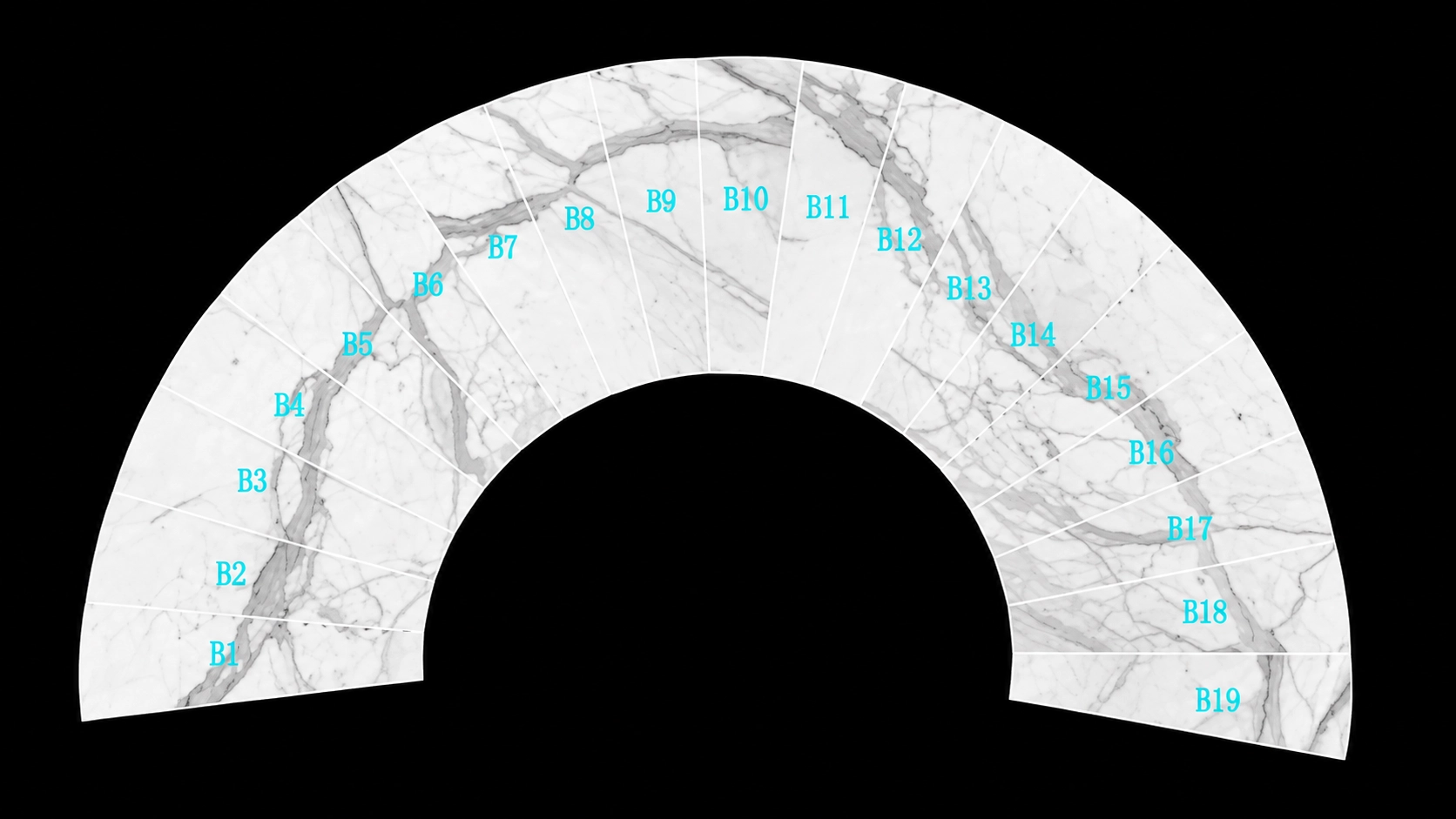
For complex projects, numbering should not be added only after fabrication.
The reference system can begin in the drawing or cutting list:
Project → Building → Floor → Room → Elevation → Piece Number
The same reference can later appear on:
- Shop drawings
- Digital slab layouts
- Finished stone
- Dry-lay records
- Packing lists
- Crate labels
Dry Lay Should Be Defined at RFQ Stage
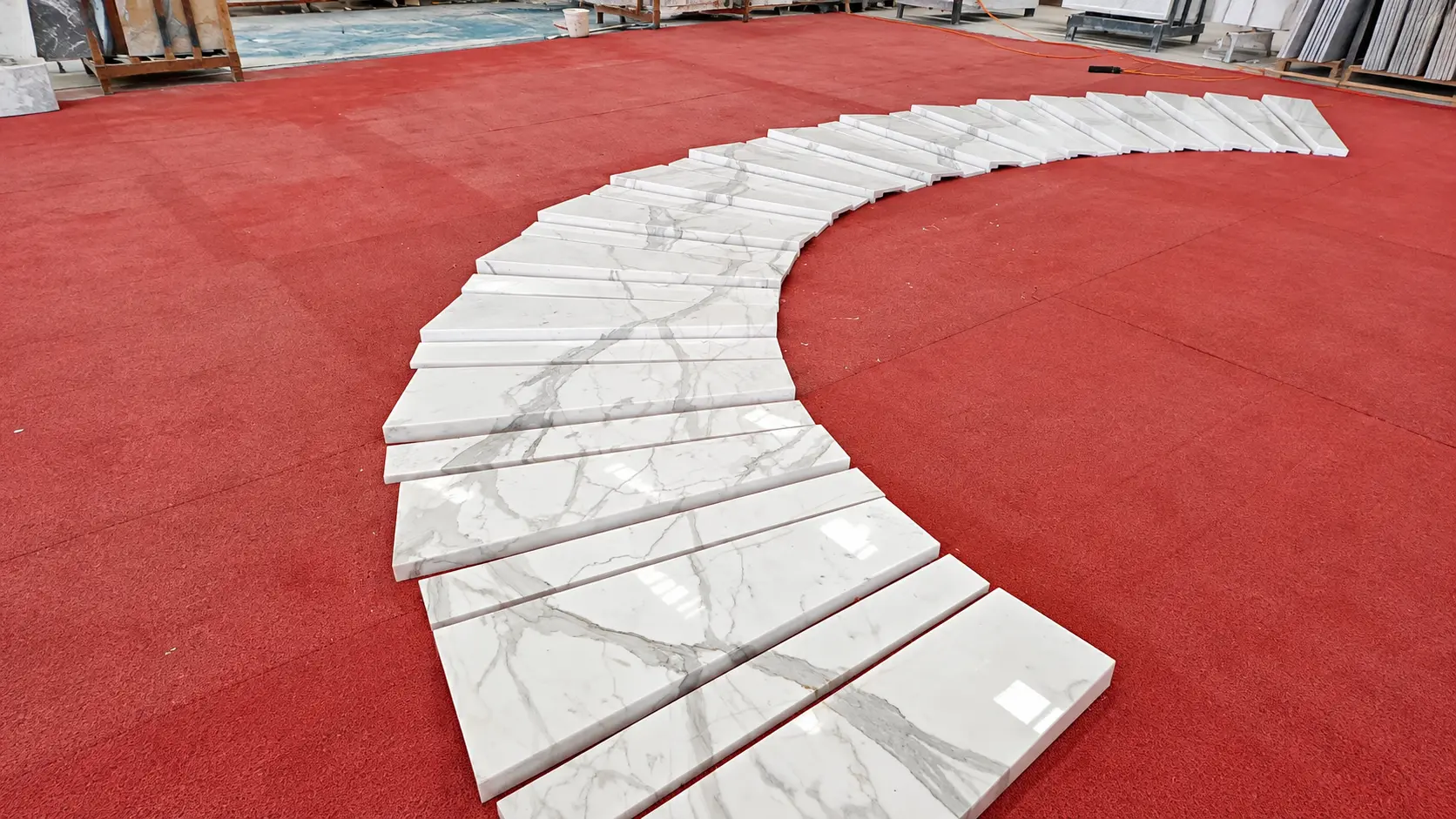
If a project requires full dry lay, this should be stated before quotation rather than added only after production begins.
This is especially relevant for:
- Bookmatched wall panels
- Feature walls
- Curved staircases
- Geometric floors
- Fireplace assemblies
- Custom reception desks
How Show Stone Reviews a Natural Stone RFQ
A project RFQ can be reviewed through several stages.
| Stage | Review | Typical Output |
|---|---|---|
| 1. Material | Stone name, reference and availability direction | Material recommendation / confirmation |
| 2. Drawings | Dimensions, applications and stone scope | Clarification list |
| 3. Fabrication | Edges, mitres, profiles, openings, CNC or waterjet | Fabrication scope |
| 4. Layout | Bookmatch, vein match and slab allocation | Digital layout requirement |
| 5. QC | Mock-up, dry lay, photo or video approval | QC scope |
| 6. Packing | Crates, numbering and installation sequence | Packing scope |
| 7. Delivery | Destination and required schedule | Project quotation and lead-time discussion |
Information Needed for an Accurate Project Quote
The most useful RFQ package can be summarised as:
Material + Reference + Drawings + Finished Sizes + Thickness + Finish + Quantity + Application + Fabrication Details + Matching Requirements + QC + Packing + Destination + Required Date
Not every project needs every item at the first enquiry stage, but the closer the quotation moves toward an order, the more complete this information should become.
Common Natural Stone RFQ Mistakes
Sending Only the Total Square Metres
Total area does not show individual panel sizes, slab yield, joints, fabrication or packing requirements.
Using Only a Material Name
Natural stone appearance can vary, so reference images or approved slabs are useful where colour and pattern matter.
Not Sending Drawings
Drawings often reveal details that are difficult to explain accurately through email alone.
Leaving Thickness Unspecified
Thickness affects material selection, weight, fabrication and sometimes packing.
Forgetting Edge Details
Mitres, bullnose edges and CNC profiles can materially change the fabrication scope.
Adding Bookmatching After the Quote
Bookmatching can affect slab selection and material yield and should be identified during quotation whenever possible.
Not Mentioning Dry Lay
Large dry-lay requirements may affect production planning and should be included in the scope.
Ignoring Packing Sequence
Hotel and retail projects may benefit from room-, floor- or elevation-based packing rather than generic crate grouping.
No Delivery Destination
The destination is necessary for meaningful international packing and logistics discussions.
No Required Project Date
A supplier cannot evaluate whether the requested schedule is realistic without knowing when material is required.
Buyer Checklist Before Ordering
- Material: Provide the stone name or preferred visual direction.
- Reference: Include slab photographs, samples or designer references.
- Drawings: Send the latest plans, elevations, sections and relevant shop drawings.
- Cut Sizes: Provide finished dimensions or a BOQ where available.
- Thickness: Confirm the required stone thickness.
- Finish: Confirm polished, honed or other surface treatment.
- Quantity: Separate quantities by size, room, floor or application where practical.
- Application: Identify floor, wall, vanity, countertop, stairs, fireplace or other use.
- Edges: Specify mitres, bullnose, bevels and custom profiles.
- Openings: Show sinks, cooktops, holes, drains, vents and service openings.
- Matching: Confirm bookmatching or vein matching.
- Mock-Up: Identify any required sample or prototype.
- Dry Lay: Confirm pre-shipment visual and dimensional QC requirements.
- Numbering: Define room, floor, elevation and piece references.
- Packing: Confirm export wooden crates and installation-sequence requirements.
- Destination: Provide the project country and delivery destination.
- Schedule: Provide the required shipment or delivery date.
Frequently Asked Questions
What information is required for a natural stone RFQ?
A useful RFQ normally includes the stone material or reference, drawings, finished dimensions, thickness, finish, quantity, application, fabrication details, packing requirements, delivery destination and required project schedule.
Can I request a quote if the final stone has not been selected?
Yes. Provide reference photographs, preferred colour, application, budget direction and project requirements so suitable natural stone options can be reviewed before final material selection.
Are drawings necessary for a stone quotation?
They are strongly recommended for cut-to-size and custom fabrication because drawings help identify dimensions, quantities, edges, cut-outs, joints and other details that can affect the quotation.
Is square metre quantity enough for an accurate quotation?
It may be enough for an initial budget discussion, but finished sizes and drawings are normally needed for a more accurate cut-to-size quotation because slab yield and fabrication depend on the individual pieces.
Should bookmatching be specified before quotation?
Yes. Bookmatching or controlled vein matching should be identified during the RFQ stage because slab sequence, panel position and material yield can affect the required quantity.
Should dry-lay inspection be included in the RFQ?
Yes, when required. Defining dry lay, photo approval, video approval and other QC expectations during the RFQ stage makes the required project scope clearer before production.
Can Show Stone review project drawings before quoting?
Yes. Show Stone can review client-, designer- or contractor-supplied drawings for stone fabrication and identify relevant material, dimensional, fabrication and QC requirements.
Can Show Stone assist with stone selection before quotation?
Yes. Full-slab photographs, video, material references and available stone options can be reviewed according to the project appearance and application requirements.
What is Show Stone’s typical project lead time?
Typical lead time is approximately four weeks, although actual timing depends on material availability, quantity, fabrication complexity, approvals and project requirements.
Does Show Stone provide on-site stone installation?
No. Show Stone provides stone sourcing, fabrication, QC, dry lay, piece numbering, packing and installation coordination, while final on-site installation is carried out by the client or appointed contractor.
Why Project Buyers Work With Show Stone
Show Stone supports importers, designers, contractors, hotel groups, luxury retailers and international project buyers from quotation review through fabrication, QC and export delivery.
Our project support can include:
- Natural stone material selection
- Full-slab photography and video approval
- Batch and colour coordination
- Review of client-, designer- and contractor-supplied drawings
- Stone-specific drawing coordination
- BOQ and cutting-list review
- Digital slab scanning
- Digital slab layouts
- Bookmatch and vein-match planning
- Material-yield planning
- Custom cut-to-size fabrication
- Waterjet fabrication
- CNC fabrication
- Mitred and custom edge fabrication
- Cut-outs and openings
- Mock-up and sample support
- Factory dry lay
- Dimensional and visual QC
- Photo and video approval
- Piece numbering
- Room, floor and elevation references
- Installation-sequence packing
- Foam protection
- Export wooden crates
- Container loading coordination
- International shipment coordination
- Mechanical fixing coordination
- Adhesive installation coordination
Show Stone does not undertake final on-site installation or structural engineering. Final site installation, structural design and fixing-system engineering remain with the appointed contractors, consultants and engineers.
Project teams can review materials including Arabescato Marble, Taj Mahal Quartzite, Travertino Classico, China Honey Onyx and Lemurian Blue Granite.
For the complete fabrication workflow, see Natural Stone Fabrication Process for Hotel and Retail Projects.
For independent natural-stone specification and design resources, project teams can also review the Natural Stone Institute resources for design professionals.
Final Recommendation
A natural stone RFQ checklist should make the project easier to understand before price calculation begins. The more clearly the buyer defines the material, finished sizes, fabrication, visual layout, QC, packing and delivery requirements, the fewer assumptions need to be built into the quotation.
For an initial budget discussion, material, approximate quantity, thickness, finish, application and destination may be enough. For a more accurate project quotation, drawings, finished dimensions, edge details, cut-outs, bookmatching, dry lay, numbering and packing requirements should also be supplied.
Send your drawings, stone reference, dimensions, quantity and delivery destination to Show Stone for project review and quotation.
Contact Show Stone to discuss your natural stone RFQ, fabrication requirements and international project schedule.