Natural Stone Mock-Ups for Hotel and Retail Projects: Why They Matter Before Production
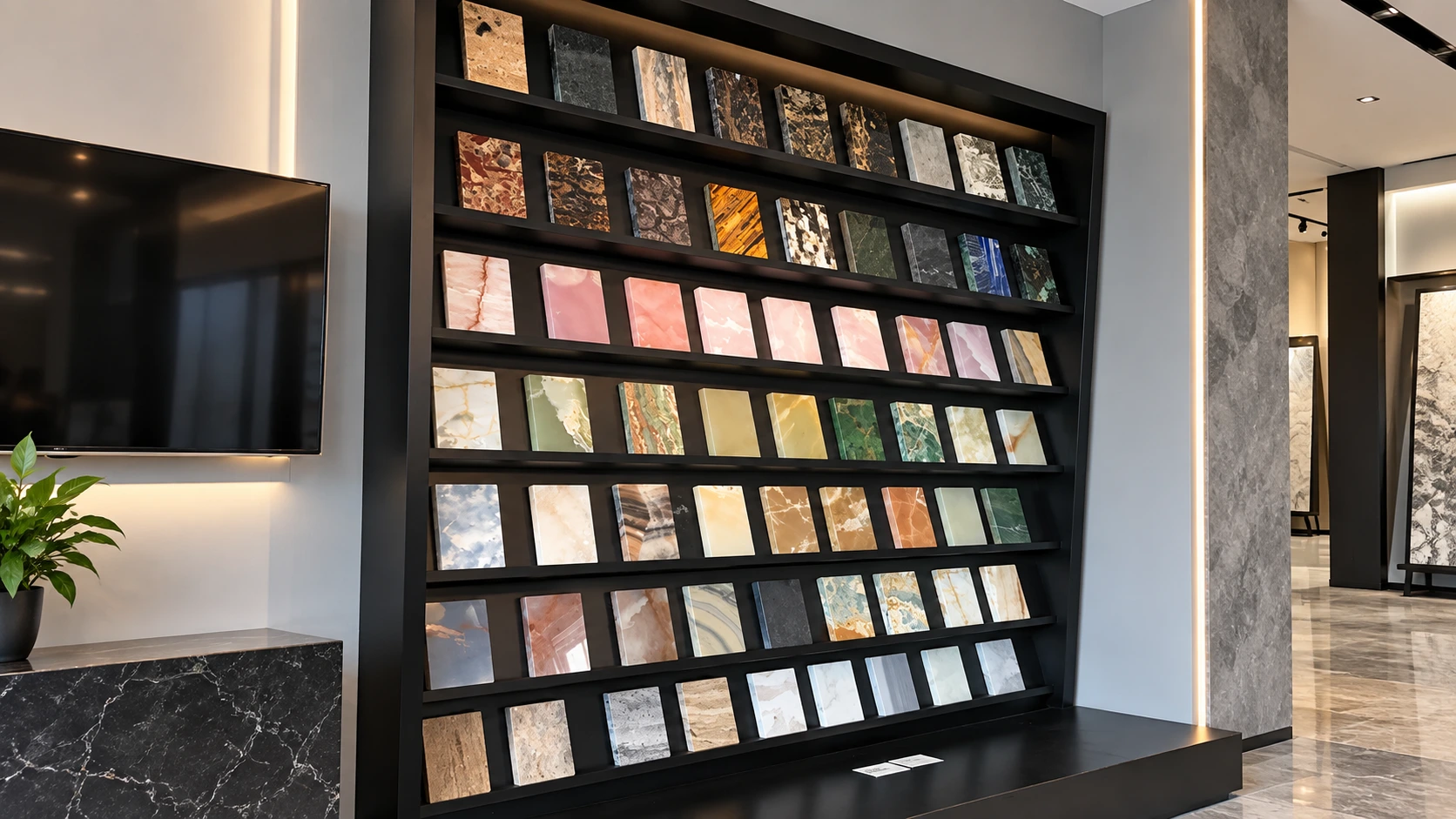
Natural stone mock ups are one of the most useful approval tools for hotel, luxury retail, high-end residential and commercial interior projects. Drawings can describe dimensions and details, while digital slab layouts can show where pieces may be cut, but a physical mock-up allows project teams to review the actual stone, finish, joints, profiles and interfaces together before large-scale production begins.
This is particularly important because natural marble, quartzite, travertine and onyx contain variation. A small sample may represent the general colour of a material, but it may not show how a mitred corner will look, how two panels meet, how a metal trim aligns with the stone or how a translucent onyx reacts to lighting.
For international projects, natural stone mock ups can also provide a common reference between the designer, contractor, buyer and fabricator. Once approved, the physical sample, photographs, drawings and revision record can be used as production and QC references.
Show Stone can support sample panels, full-size mock-ups and partial detail mock-ups based on drawings and requirements supplied by the client, designer or contractor. Final on-site installation remains the responsibility of the appointed project team.
Buyer Decision Check
- Mock-Up Scope: Decide whether the project needs a material sample, detail mock-up, partial assembly or full-size prototype.
- Approval Items: Define whether colour, finish, veins, joints, mitres, profiles, trims, lighting or fixing interfaces need approval.
- Reference Drawings: Use the latest client- or designer-approved drawings when developing the mock-up.
- Approval Method: Confirm whether approval will be in person, by photograph, by video or through remote review.
- Revision Process: Allow time for feedback, modification and re-approval before full production.
- Production Reference: Record the approved mock-up clearly so it can be used during fabrication and QC.
What Are Natural Stone Mock Ups?
Natural stone mock ups are physical samples or assemblies produced before full project fabrication. Depending on the project, they may be as simple as a finished panel showing colour and surface treatment or as detailed as a complete wall corner, vanity section, reception desk detail or backlit onyx assembly.
A mock-up may help demonstrate:
- Stone colour and natural variation
- Vein direction
- Bookmatching or vein matching
- Surface finish
- Joint width and alignment
- Mitred corners
- Edge profiles
- Metal, wood and glass interfaces
- Cut-outs and openings
- Lighting-related stone details
- Fixing-related fabrication details
The objective is to convert an important design detail into something that can be physically reviewed before the same method is repeated across a larger quantity of finished stone.
Why Natural Stone Mock Ups Matter Before Production
A drawing may be technically clear but still leave visual questions unanswered. A mock-up provides another level of information because it combines the selected stone with the intended fabrication method.
This can be especially valuable when the project includes:
- Strong natural veining
- Custom mouldings
- Complex mitred edges
- Metal trims
- Integrated lighting
- Backlit onyx
- Custom reception desks
- Retail stone fixtures
- Large-format wall panels
- Custom vanities or countertops
Mock-ups do not eliminate natural variation, but they can establish an approved expectation for material appearance, detailing and workmanship before production begins.
1. Approve the Actual Stone Material
The first step is confirming that the material selected for the mock-up represents the project direction.
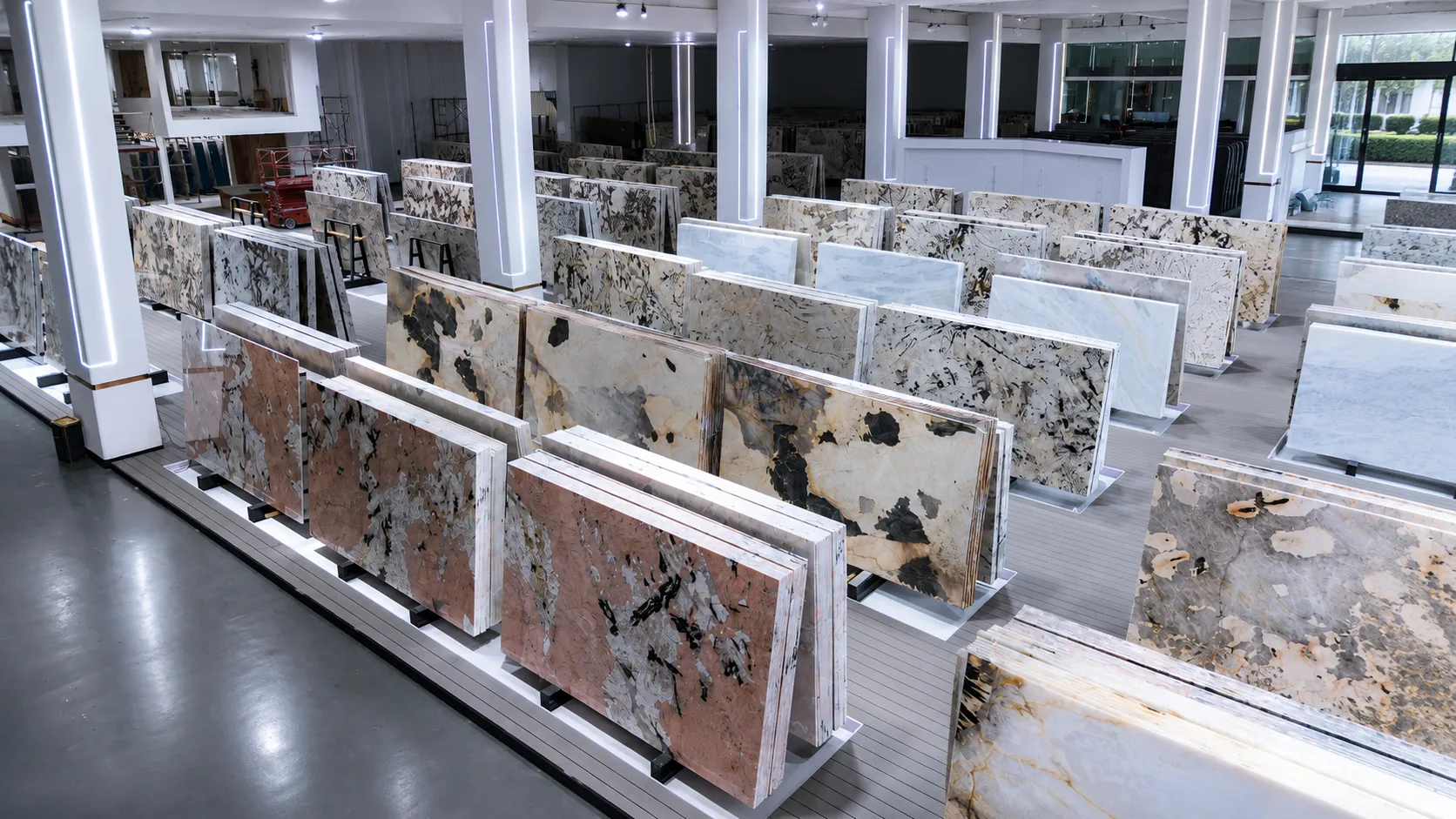
Small samples can support early material selection, but large slabs reveal more information about:
- Background colour
- Vein scale
- Pattern concentration
- Natural fissures and variation
- Available slab dimensions
- Batch compatibility
Materials such as Arabescato Marble can show expressive veining that should be considered when selecting material for wall panels and decorative features.
For more information about this first stage, see How to Select Natural Stone Slabs.
2. Check Colour and Vein Direction
A natural stone mock-up can show whether the selected pieces create the intended colour and vein relationship.
Review:
- Background colour
- Vein intensity
- Direction of movement
- Relationship between adjacent pieces
- Visual balance around joints
This is particularly useful with strongly patterned materials such as Juliet Crystal Quartzite or other decorative quartzites where slab-to-slab variation contributes significantly to the final appearance.
3. Approve the Surface Finish
The same natural stone can look very different depending on its surface finish.
A mock-up can help confirm whether the project requires:
- Polished finish
- Honed finish
- Brushed finish
- Leathered finish
- Other approved project finishes
Lighting conditions should also be considered because reflection, colour depth and texture can change depending on how the finished stone is illuminated.
The approved mock-up can then become a visual finish reference during production QC.
4. Check Joint Width and Alignment
Joints influence the visual rhythm of natural stone walls, floors, counters and cladding systems.
A mock-up can help the project team review:
- Joint width
- Horizontal alignment
- Vertical alignment
- Vein continuation across joints
- Relationship with metal trims
- Relationship with adjacent materials
For large-format panels, even a small change in joint position can affect how the stone pattern reads across the elevation.
5. Review Mitred Corners and Edge Profiles
Mitred corners are frequently used to create the appearance of thicker stone while keeping the finished architectural detail clean.
A detail mock-up allows the project team to review:
- Mitre alignment
- Vein relationship
- Visible joint quality
- Finished corner geometry
- Edge polishing
Other edge-profile mock-ups may include:
- Bullnose
- Bevel
- Chamfer
- Built-up edge
- Custom moulding
- Fluted profile
6. Check Custom Carving and Architectural Profiles
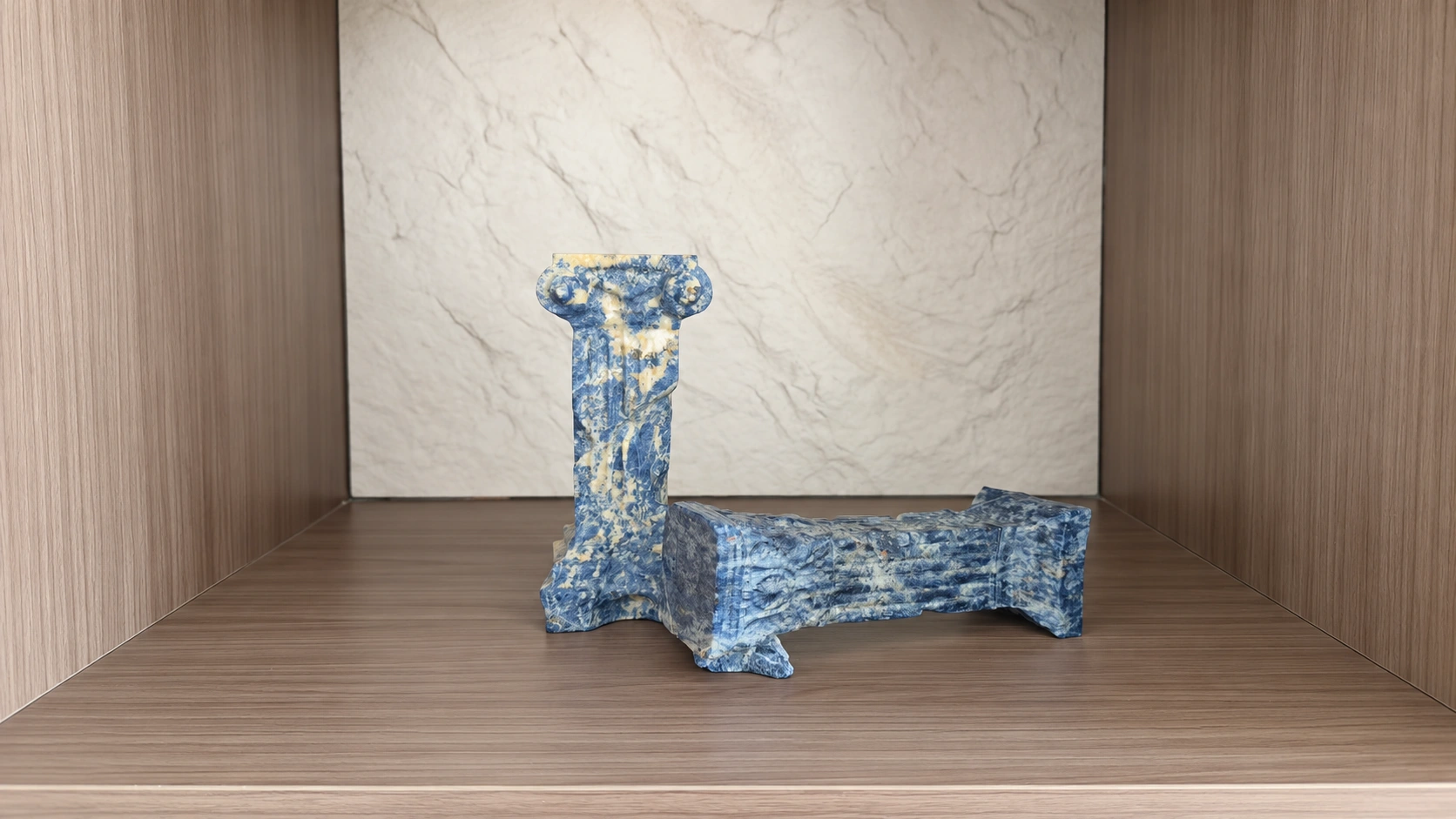
Custom stone profiles often involve details that are difficult to evaluate from a two-dimensional drawing alone.
A carved or machined sample can help confirm:
- Profile depth
- Radius
- Groove size
- Fluting
- Edge transitions
- Surface finish
Once approved, the detail can be used as a fabrication reference for repeated pieces.
7. Use CNC and Custom Fabrication for Repeatable Details
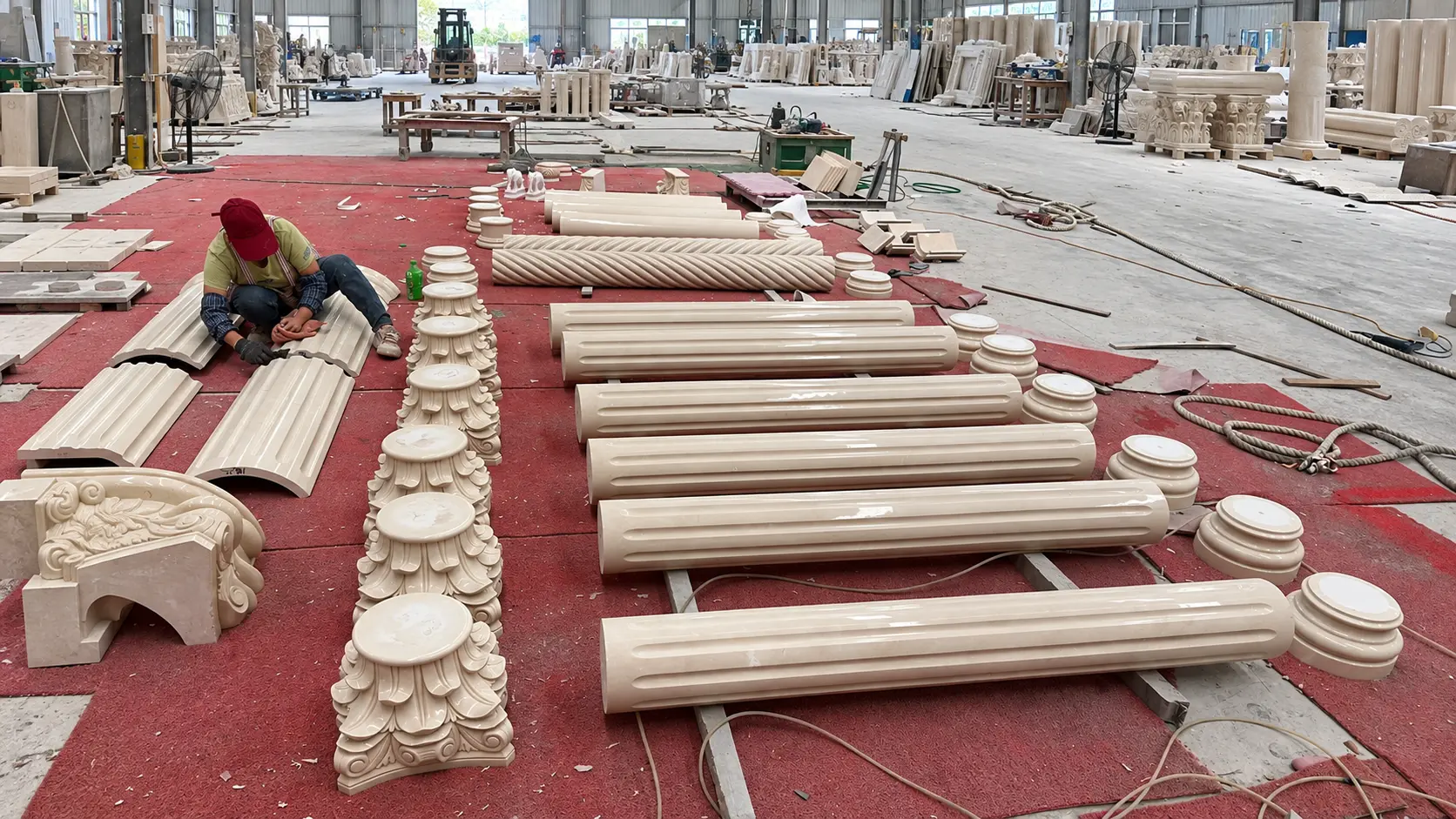
CNC and waterjet fabrication can support mock-ups for complex architectural stone components.
Typical applications include:
- Columns
- Decorative profiles
- Reception-desk details
- Fireplace components
- Retail fixture cladding
- Grooves
- Custom edges
- Curved stone components
A prototype or detail sample allows adjustments to be made before the design is repeated across a larger production quantity.
8. Inspect Dimensions, Grooves and Fabrication Details
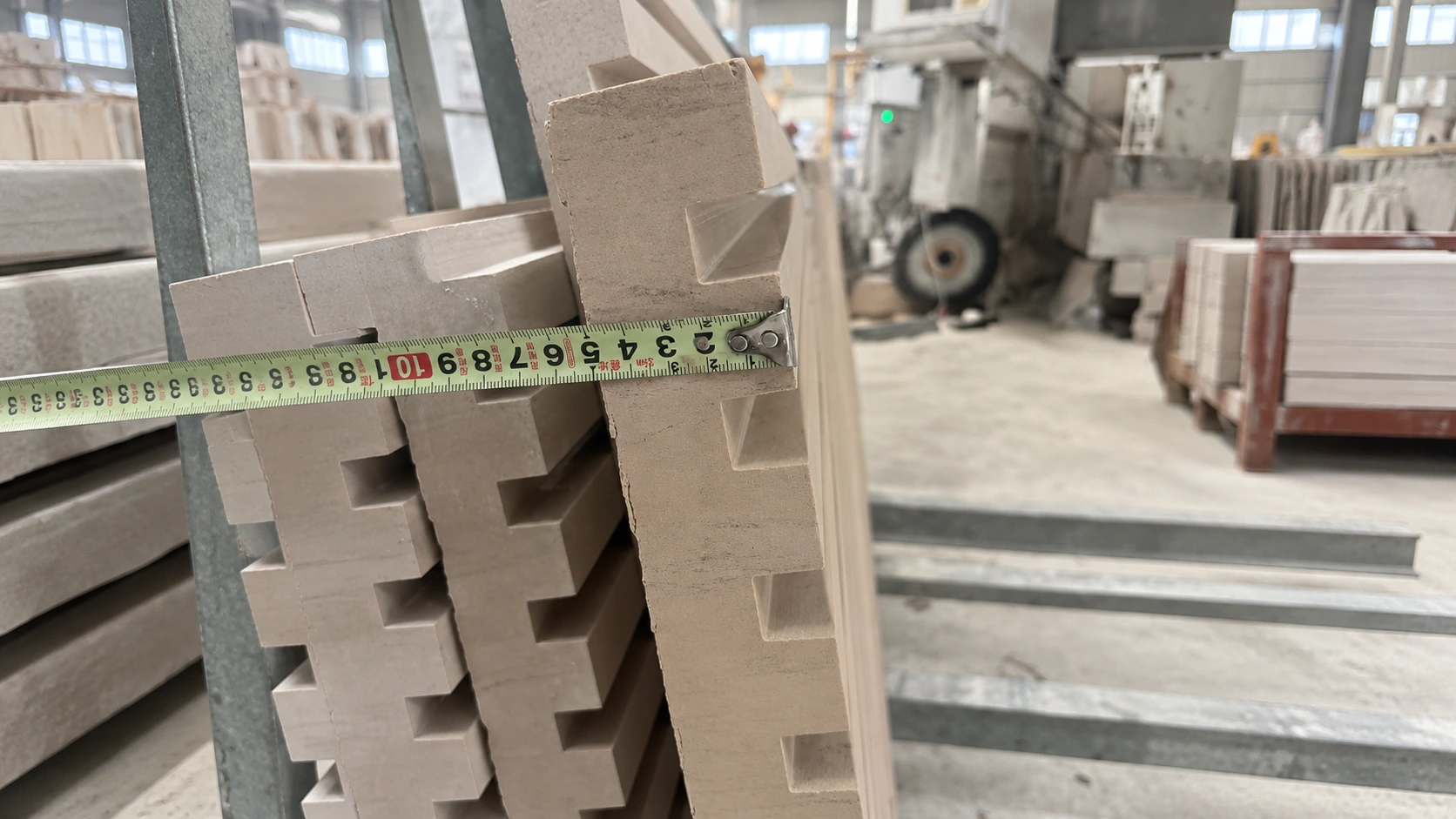
Mock-up approval should not focus only on appearance. Dimensions and fabrication details should also be checked against the approved drawing.
Inspection may include:
- Overall dimensions
- Thickness
- Groove width
- Groove depth
- Opening positions
- Edge profiles
- Mitre dimensions
- Fixing-related fabrication
This is especially important for details that interface with metalwork, joinery, glass or other trades.
9. Coordinate Metal, Wood and Glass Interfaces
Natural stone rarely exists alone in a hotel or luxury retail interior. It often meets stainless steel, brass, aluminium, timber, glass or custom joinery.
A partial mock-up can help review these interfaces before production.
Important checks may include:
- Metal trim position
- Stone-to-metal joint
- Wood-to-stone transition
- Glass alignment
- Recess dimensions
- Finished edge exposure
Show Stone can coordinate stone-specific fabrication details with approved information supplied by the client, designer, contractor and other project trades.
10. Use Mock-Ups for Vanities, Countertops and Reception Desks
Mock-ups can be particularly useful for fabricated elements where several details come together in one assembly.
For a vanity or countertop, the mock-up may demonstrate:
- Mitred edges
- Sink cut-outs
- Tap holes
- Backsplashes
- Edge profiles
- Wall interfaces
For a reception desk, it may demonstrate:
- Stone cladding thickness
- Curved or faceted surfaces
- Metal trim integration
- Lighting details
- Countertop edges
- Joint positions
Taj Mahal Quartzite is one material that can be considered for premium countertop, hospitality and custom interior applications where colour, edge details and pattern should be reviewed carefully.
11. Test Lighting With Backlit Onyx Mock-Ups
Backlit onyx is one of the clearest examples of why physical mock-ups can be valuable.
A translucent stone can change significantly depending on:
- Stone thickness
- Natural colour variation
- Light source
- Light distance
- Diffusion method
- Panel joints
- Backing construction
A backlit onyx mock-up allows the project team to review the relationship between the stone and the proposed lighting arrangement before the final stone package is released for production.
China Honey Onyx, a Yellow / Honey Onyx product, can be used in decorative backlit applications where translucency, colour range and lighting effect are key design considerations.
Show Stone can coordinate lighting-related stone fabrication details based on the project information supplied by the responsible designer, lighting consultant and contractor. Final lighting-system engineering remains with the appointed project professionals.
12. Use the Approved Mock-Up as a Production and QC Reference
The value of a mock-up continues after it has been approved.
The approved reference can be used to check:
- Material colour direction
- Finish
- Joint treatment
- Edge profile
- Mitre quality
- Groove dimensions
- Metal interface
- Carving or profile detail
For international projects, approval records may include physical samples, photographs, videos, drawings and written revision notes.
This creates a clearer link between design approval and factory quality control.
Sample Panels, Partial Mock-Ups and Full-Size Mock-Ups
Not every project needs the same level of mock-up.
| Mock-Up Type | Typical Purpose | What It Can Confirm |
|---|---|---|
| Material Sample | Initial stone review | Colour, finish, general texture |
| Sample Panel | Wall or floor detail | Joint, veins, finish, panel relationship |
| Partial Detail Mock-Up | Complex interface review | Mitre, edge, trim, groove, opening |
| Full-Size Mock-Up | Major architectural assembly | Scale, proportions, interfaces and overall appearance |
| Backlit Onyx Mock-Up | Lighting-related review | Translucency, colour, joints and lighting effect |
Mock-Up Approval Workflow
A structured mock-up process can follow this sequence:
Drawings → Material Selection → Mock-Up Fabrication → Inspection → Photo/Video Review → Client/Designer Feedback → Revision → Re-Approval → Production Release → QC Reference
If feedback requires changes, the mock-up can be modified or reproduced for re-approval before bulk production starts.
This approach is particularly useful when the same detail will be repeated across many hotel guestrooms, retail stores, public areas or residential units.
Mock-Ups vs Dry Lay Inspection
Mock-up and dry lay are related, but they serve different purposes.
| Process | Main Timing | Primary Purpose |
|---|---|---|
| Mock-Up | Before or early in production | Approve material, finish, details and fabrication method |
| Dry Lay | After fabrication, before packing | Inspect the actual fabricated project pieces before shipment |
For the next stage of QC, see Natural Stone Dry Lay Inspection: What to Check Before Shipment.
Common Mistakes When Managing Natural Stone Mock Ups
Approving Only a Small Colour Sample
A small stone chip may help confirm basic colour, but it cannot demonstrate joints, mitres, edge profiles, lighting conditions or interfaces with other materials.
Building the Mock-Up From an Outdated Drawing
The mock-up should be based on the latest approved project information so the sample does not represent an obsolete detail.
Reviewing Appearance but Ignoring Dimensions
A mock-up should be checked for both visual quality and measurable fabrication details.
Ignoring Adjacent Materials
Stone-to-metal, stone-to-wood and stone-to-glass interfaces should be reviewed when they affect the final detail.
Approving a Backlit Onyx Sample Without the Intended Lighting Logic
The appearance of translucent stone can vary significantly with lighting distance, diffusion and the selected stone area.
Making Changes Without Updating the Approval Reference
Revisions should be recorded so production follows the final approved version rather than an earlier sample.
Starting Bulk Production Too Early
Where a critical detail requires mock-up approval, large-scale fabrication should not rely on an unresolved prototype.
Treating the Mock-Up as Site Installation
A factory mock-up helps review stone fabrication and interfaces, but it does not replace final site coordination, substrate verification or installation by the appointed contractor.
Buyer Checklist Before Ordering
- Mock-Up Type: Confirm material sample, sample panel, partial detail or full-size mock-up.
- Application: Identify whether the mock-up is for a wall, floor, vanity, countertop, reception desk, fireplace or retail fixture.
- Material: Confirm the natural stone and approved slab range.
- Finish: Confirm polished, honed or other required surface treatment.
- Vein Direction: Confirm orientation and matching requirements.
- Bookmatching: Provide the intended layout where relevant.
- Joints: Confirm joint width and alignment.
- Mitres: Confirm corner geometry and visible finish requirements.
- Edge Profiles: Provide dimensions for bullnose, bevel, moulding, fluting or other custom profiles.
- Interfaces: Provide relevant metal, wood, glass and joinery information.
- Openings: Confirm cut-outs, grooves, cable holes and other fabrication features.
- Lighting: Provide relevant lighting information for backlit or illuminated stone details.
- Drawings: Use the latest approved client or designer drawings.
- Approval: Define who can approve the mock-up.
- Documentation: Confirm whether photo, video or physical sample approval is required.
- Revision: Allow for modification and re-approval if feedback changes the detail.
- Production Reference: Record the approved mock-up clearly for fabrication and QC.
Frequently Asked Questions
What are natural stone mock ups?
Natural stone mock ups are physical samples or assemblies produced before full fabrication so project teams can review stone colour, finish, veins, joints, edge profiles, interfaces and other important details.
When should a natural stone mock-up be made?
A mock-up is most useful before full production begins, especially when the project includes custom profiles, mitred corners, strong vein matching, metal interfaces, integrated lighting or repeated architectural details.
Can Show Stone produce full-size stone mock-ups?
Yes. Depending on the project, Show Stone can support material samples, sample panels, partial detail mock-ups and full-size mock-ups based on approved project drawings and requirements.
Can a mock-up be revised after client feedback?
Yes. Mock-ups can be modified or reproduced according to project feedback and submitted for re-approval when required before larger-scale production continues.
Can stone mock-ups include metal, wood or glass interfaces?
Yes. Stone-specific mock-up details can be coordinated with approved information for metal trims, timber or joinery interfaces and glass-related conditions supplied by the relevant project trades.
Can backlit onyx be tested with a mock-up?
Yes. A backlit onyx mock-up can help review stone translucency, colour variation, joints and the visual relationship between the stone and the proposed lighting arrangement.
Can buyers approve a mock-up remotely?
Yes. Photographs and video can be provided for remote review, and physical mock-up samples can also be identified and packed for shipment when required.
Can an approved mock-up be used for quality control?
Yes. The approved mock-up, photographs, drawings and revision information can be used as references when checking production details such as finish, profiles, joints and fabrication quality.
What is the difference between a mock-up and dry lay inspection?
A mock-up is mainly used before or early in production to approve materials and details, while dry lay inspection is normally used after fabrication to review the actual project pieces before packing and shipment.
Does Show Stone install natural stone mock-ups or finished stone on site?
No. Show Stone provides stone fabrication, mock-up development, QC, piece identification and installation coordination, while final on-site installation is carried out by the client or appointed contractor.
Why Project Buyers Work With Show Stone
Show Stone supports architects, designers, contractors, hotel groups, luxury retailers and international project buyers through a workflow that connects slab selection, mock-up development, digital planning, fabrication, approval, QC and export delivery.
Our project mock-up support can include:
- Full-slab photography and video approval
- Material and colour coordination
- Sample panel mock-ups
- Partial-size detail mock-ups
- Full-size mock-ups
- Wall panel mock-ups
- Floor-detail mock-ups
- Vanity and countertop mock-ups
- Reception desk mock-ups
- Fireplace-detail mock-ups
- Retail fixture and stone-cladding mock-ups
- Vein-direction review
- Bookmatch and vein-match review
- Surface-finish approval
- Joint alignment review
- Mitred-corner mock-ups
- Edge-profile mock-ups
- Bullnose, bevel and custom profiles
- Metal-trim interface coordination
- Wood-interface coordination
- Glass-interface coordination
- Mechanical fixing coordination
- Adhesive installation coordination
- Cut-out and opening mock-ups
- Lighting-related stone-detail coordination
- Backlit onyx mock-ups
- Mock-up revision and re-approval
- Photo and video approval
- Remote review
- Approved mock-up references for production and QC
- Sample identification
- Mock-up packing for shipment when required
Show Stone does not undertake on-site installation. The appointed contractors, installers and project consultants remain responsible for final site conditions, structural requirements, fixing-system engineering and installation.
Project teams can review materials including China Honey Onyx, Travertino Classico, Juliet Crystal Quartzite, Taj Mahal Quartzite and Arabescato Marble.
For the wider production process, see Natural Stone Fabrication Process for Hotel and Retail Projects, Natural Stone Shop Drawings Explained and How to Specify Natural Stone for Luxury Retail Interiors.
For independent natural-stone design and specification information, project teams can also review the Natural Stone Institute resources for design professionals.
Final Recommendation
Natural stone mock ups are most valuable when they are treated as controlled approval references rather than decorative samples. The mock-up should represent the project detail that matters: material colour, vein direction, surface finish, joint, mitre, edge profile, trim interface, lighting condition or fabrication method.
For hotel and luxury retail projects where the same detail may be repeated many times, approving one representative assembly before full production can create a clearer standard for fabrication and quality control.
To discuss a natural stone mock-up for a hotel, retail, residential or commercial project, please contact Show Stone with your drawings, material reference, finish, dimensions, interface details, mock-up scope and approval requirements.