Marble Fireplace Surrounds: Stone Selection, Profiles, Fabrication & Installation Guide
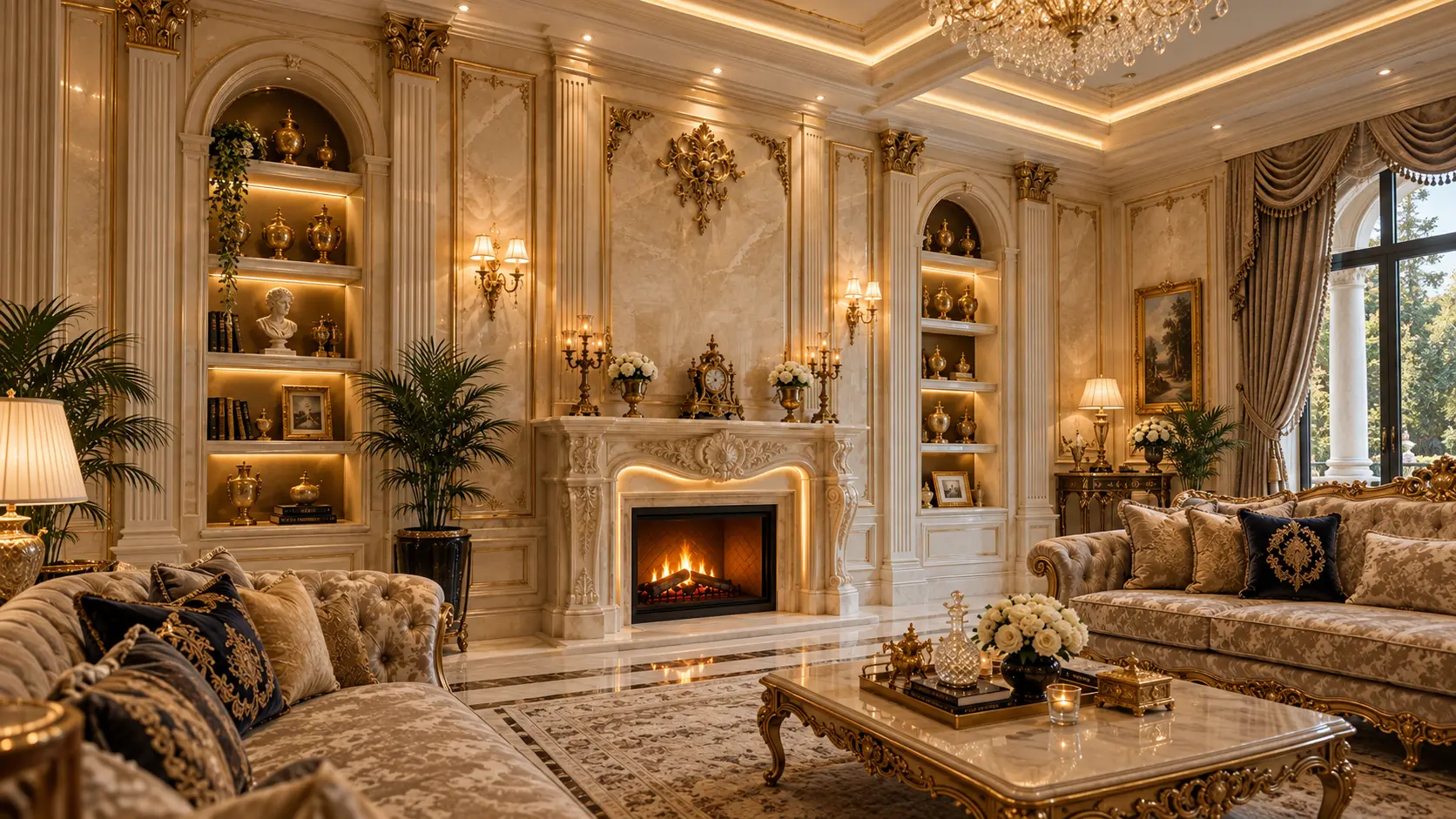
Marble fireplace surrounds can become one of the strongest focal points in a luxury residence, hotel lounge, private suite or premium hospitality interior. Depending on the design, the fireplace may be expressed as a traditional carved mantel, a clean contemporary surround, a dramatic full-height marble feature wall or a combination of stone, metal, timber and lighting.
The final result depends on much more than choosing a marble by name. Stone colour, slab pattern, fireplace opening, mantel proportions, leg profiles, hearth dimensions, edge details, carving depth and the relationship with the firebox or insert should all be coordinated before fabrication begins.
For custom marble fireplace surrounds, digital slab scanning, fabrication drawings, CNC carving, waterjet processing, mock-ups, dry-lay inspection and piece numbering can help connect the approved design with factory production.
Project teams can also review Show Stone’s natural marble collection and natural stone collection when comparing materials for fireplace surrounds, feature walls and custom interior stonework.
Buyer Decision Check
- Design direction: Confirm traditional carved, French-style, minimalist, contemporary or full-height fireplace design.
- Material: Select marble according to colour, vein scale, carving suitability and the overall interior concept.
- Main dimensions: Confirm the fireplace opening, mantel width, mantel depth, leg dimensions and hearth size.
- Visual control: Review actual slabs and approve book matching or vein matching before cutting.
- Fabrication: Confirm carved profiles, mouldings, mitres, curves, openings and substrate interfaces.
- Responsibility: Fireplace manufacturer requirements, structural engineering, clearances and fire-safety compliance should be confirmed by the appointed project professionals.
What Are Marble Fireplace Surrounds?
A marble fireplace surround is the stone assembly framing and supporting the visual composition around a fireplace opening. Depending on the design, it may include several separate stone components.
Typical components include:
- Mantel shelf
- Fireplace legs or jambs
- Header
- Inner surround panels
- Hearth slab
- Side returns
- Full-height wall panels
- Decorative mouldings
- Carved profiles
Traditional marble fireplace surrounds may use deep mouldings, curved profiles and carved ornament, while contemporary fireplaces often use large flat panels, sharp mitres and restrained joints.
Best Marble Types for Fireplace Surrounds
The right marble depends on the style of the fireplace, the surrounding interior and the actual slabs available.
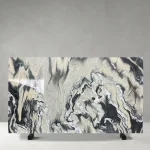
Breccia Violetta Marble
Breccia Violetta Marble can create a dramatic statement fireplace with strong violet, burgundy and white movement. It is especially effective where the fireplace is intended to become the visual centre of the room.
Noir Aziza Marble
Noir Aziza Marble can support darker contemporary interiors where a deep stone background is preferred around the firebox.
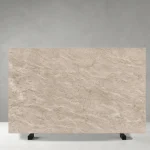
Crema Marfil Marble
Crema Marfil Marble provides a warm beige appearance that can suit traditional living rooms, hospitality lounges and softer classic interiors.
Red Jasper Marble
Red Jasper Marble can create a rich and distinctive fireplace surround for interiors where colour and natural movement are intended to stand out.
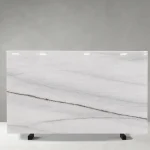
Arabescato Marble
Arabescato Marble combines a light background with expressive grey veining and can work in both classic and contemporary fireplace designs.
Palissandro Blue Marble
Palissandro Blue Marble can provide a cooler blue-grey direction for interiors requiring a more unusual decorative stone.
Nero Marquina Marble
Nero Marquina Marble is well suited to dark minimalist surrounds, sharp mitred panels and high-contrast modern interiors.
1. Start With the Actual Marble Slabs
Small samples are useful for initial material selection, but they cannot represent the entire pattern of a natural marble slab.
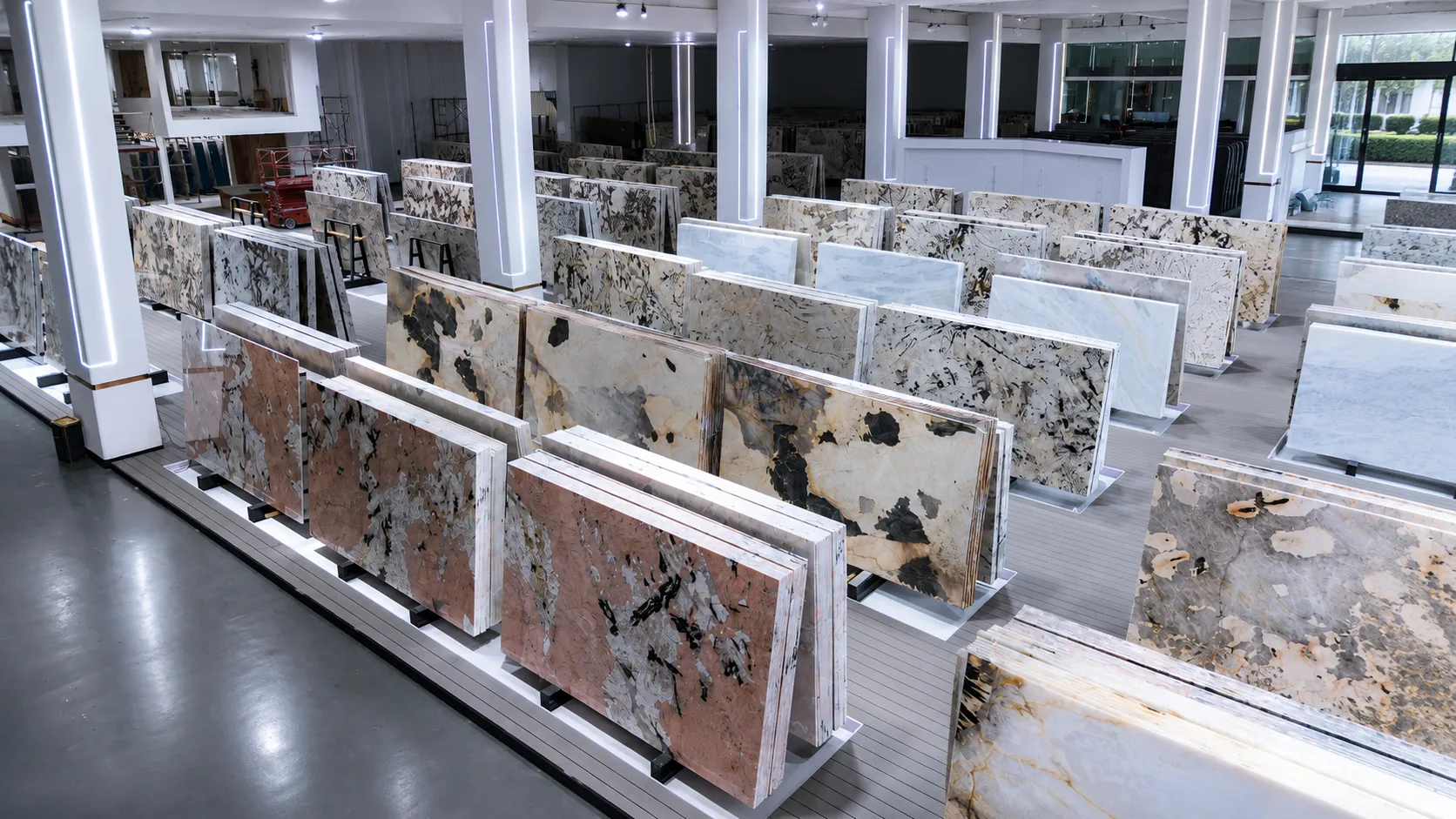
When reviewing marble for fireplace surrounds, check:
- Background colour
- Vein direction
- Pattern concentration
- Natural variation
- Usable slab dimensions
- Fissures and repairs
- Available quantity
- Compatibility between visible components
Full-slab photography and video can support remote approval for international projects.
2. Choose Between Traditional and Modern Fireplace Designs
Traditional Carved Fireplace Surrounds
Traditional fireplace designs often include a projecting mantel shelf, substantial legs, decorative mouldings, carved transitions and a separate hearth.
These designs may require:
- CNC-carved profiles
- Hand finishing
- Custom mouldings
- Bullnose edges
- Curved transitions
- Decorative fluting
Modern Minimalist Fireplace Surrounds
Modern marble fireplace surrounds usually reduce the number of decorative profiles and focus more on large slabs, precise joints and clean geometry.
Typical details include:
- Large-format flat panels
- Mitred corners
- Minimal joint lines
- Book-matched marble
- Full-height feature walls
- Integrated TV or electrical openings
3. Confirm the Fireplace Opening First
The fireplace opening is one of the most important dimensions in the entire marble package.
The approved drawing should show:
- Opening width
- Opening height
- Firebox or insert position
- Stone return dimensions
- Surround panel dimensions
- Required gaps or interfaces
Clearances, heat-related requirements and final interface conditions should follow the fireplace or insert manufacturer’s documentation, applicable local requirements and the instructions of the appointed consultants and contractors.
4. Coordinate the Mantel Shelf
The mantel shelf is a highly visible horizontal element and often defines the overall style of a traditional marble fireplace surround.
The design should confirm:
- Overall width
- Depth
- Thickness
- Projection
- Edge profile
- Relationship with the legs
Mitred, bullnose, moulded and custom-profile mantel edges can be fabricated according to approved drawings.
5. Design Fireplace Legs and Jambs
Fireplace legs, sometimes called jambs, frame the sides of the opening and visually support the mantel.
They may be:
- Flat rectangular pieces
- Stepped profiles
- Fluted components
- Curved jambs
- Decoratively carved pieces
Where several carved details repeat, CNC fabrication can help maintain consistency between the left and right components.
6. Coordinate the Hearth Slab
The hearth forms the lower horizontal stone surface in front of or around the fireplace opening.
The drawing should confirm:
- Overall dimensions
- Thickness
- Projection
- Joint locations
- Edge finish
- Relationship with surrounding flooring
Hearth geometry and any heat-related or fire-safety requirements should be confirmed by the responsible project professionals before stone fabrication.
7. Use Full-Height Marble for a Contemporary Fireplace Wall
A fireplace does not need to stop at the mantel. Full-height marble feature walls can extend from floor to ceiling and integrate the fireplace into a larger architectural composition.
These applications may include:
- Book-matched marble walls
- Vein-matched vertical panels
- Integrated fireplace openings
- TV recesses
- Electrical openings
- Vent or grille openings
For larger panel systems, see Large Format Natural Stone Wall Panels: Specification, Vein Matching & Installation.
8. Define Profiles and Mouldings Before Production
Profiles are a major part of traditional marble fireplace design.
Available fabrication can include:
- Custom moulding profiles
- Fluted details
- Bevelled edges
- Bullnose profiles
- Stepped profiles
- Curved transitions
Profiles should be shown at full detail on the approved drawing rather than described only with general notes.
9. Use CNC Carving for Repeated and Complex Details
CNC fabrication can be used to produce detailed marble shapes, mouldings and carved fireplace components with controlled geometry.
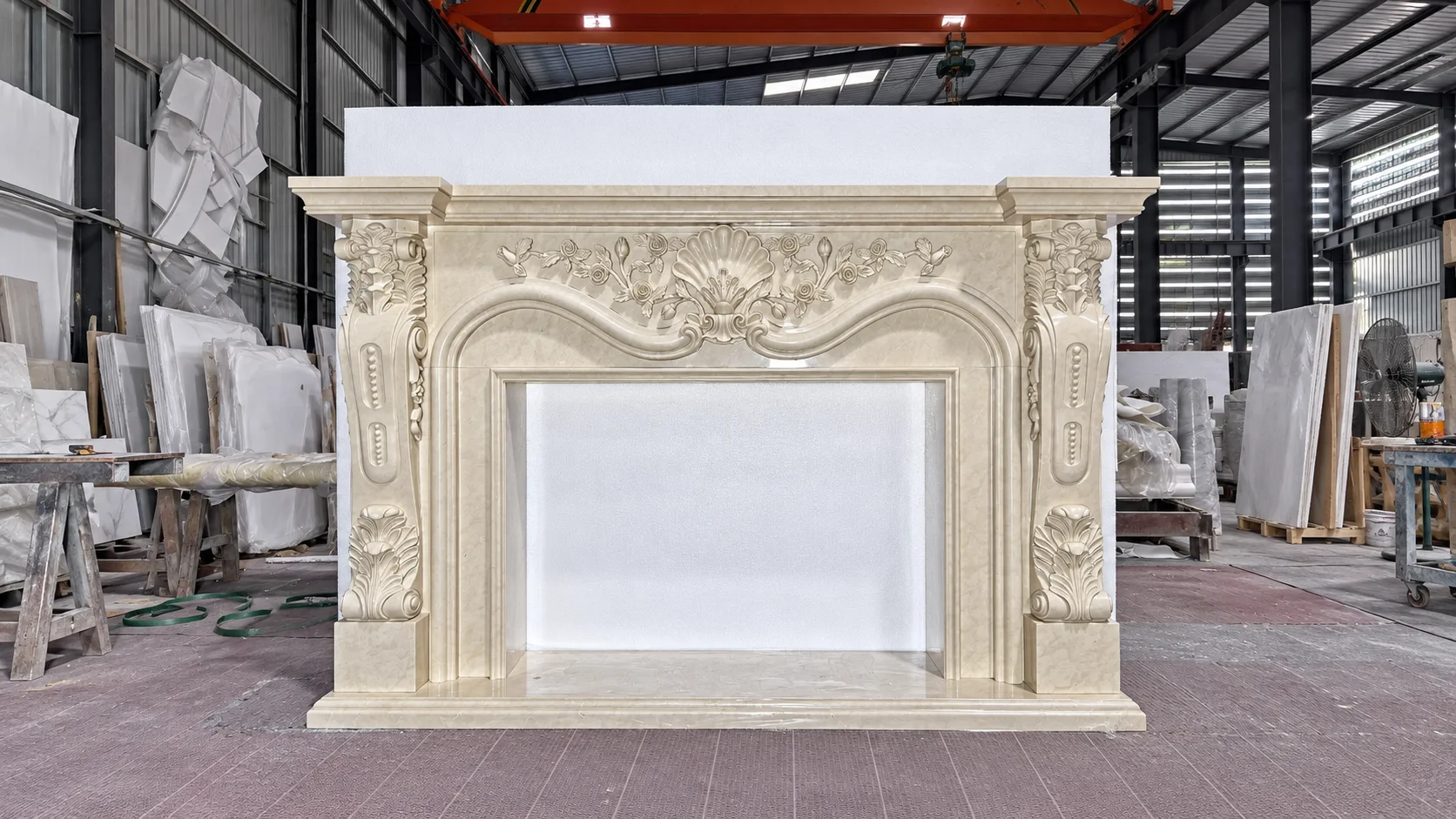
CNC processing can support:
- Repeated mouldings
- Fluting
- Curved profiles
- Decorative legs
- Complex edge geometry
- Radius components
Waterjet processing may also be used for selected shapes, openings and custom stone components.
For other examples of custom-profile natural stone fabrication, see Natural Stone Staircases for Luxury Interiors.
10. Use Fabrication Drawings to Control Dimensions
Fireplace fabrication drawings connect the approved interior design with the individual stone components.
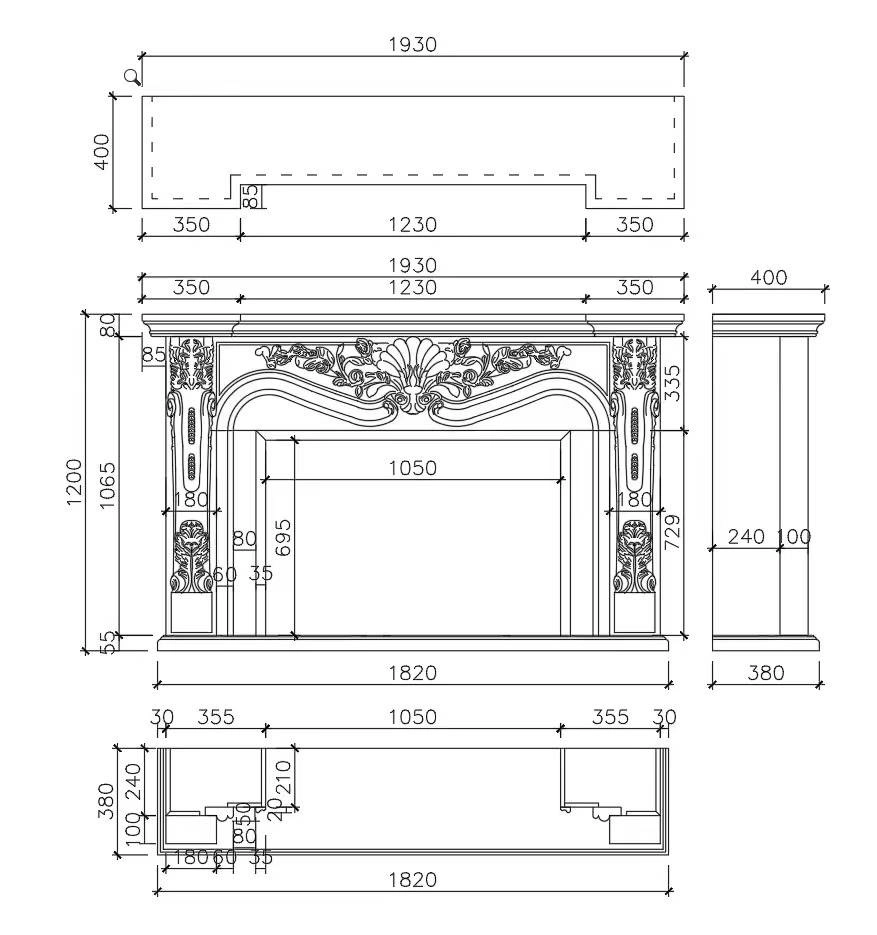
A complete drawing package may identify:
- Overall width and height
- Opening dimensions
- Mantel dimensions
- Leg dimensions
- Hearth dimensions
- Profile sections
- Mitres
- Curved components
- Piece numbers
For more detail on fabrication drawing control, see Natural Stone Shop Drawings Explained: What to Check Before Fabrication.
11. Use Book Matching and Vein Matching
Vein direction can strongly influence how a marble fireplace reads within the room.
Possible layout strategies include:
- Book-matched full-height wall panels
- Vein-matched inner surround panels
- Matching mantel and leg material
- Continuous vein direction across side panels
- Coordinated hearth pattern
Digital slab scanning can help position each component on the actual slab before cutting.
12. Plan Cut-Outs and Openings Before Fabrication
Modern fireplace walls may contain several functional openings in addition to the firebox.
These can include:
- Fireplace opening cut-outs
- Vent or grille openings
- TV recesses
- Electrical outlets
- Cable openings
- Service access openings
All openings should be coordinated from approved drawings before the slabs are cut.
13. Coordinate the Marble With the Fireplace Insert
Where a metal fireplace insert or prefabricated firebox is used, the stone dimensions need to coordinate with the manufacturer’s approved installation requirements.
Coordination may involve:
- Opening dimensions
- Stone returns
- Metal trim interfaces
- Access requirements
- Vent locations
- Surround-panel dimensions
Show Stone can coordinate stone fabrication with approved fireplace-insert information supplied by the project team. Show Stone does not provide fireplace-system engineering or fire-safety engineering.
14. Coordinate Wood and Metal Substrates
Modern fireplace features often combine marble with metal framing, timber joinery or other backing systems.
Stone fabrication may need to consider:
- Substrate thickness
- Stone support conditions
- Fixing positions
- Joint locations
- Metal trims
- Timber interfaces
Stone-specific details can be coordinated with approved project information supplied by the contractor, joinery supplier or appointed engineer.
15. Use Dry Lay Before Packing
A complete fireplace surround may contain many separate pieces that need to fit together accurately.
Factory dry lay can help review:
- Mantel-to-leg relationships
- Opening dimensions
- Carved profiles
- Joint alignment
- Vein relationships
- Hearth position
- Piece numbering
For more complex surrounds, a representative mock-up or sample detail can also be produced before full fabrication.
16. Number Every Fireplace Component
A clear numbering system helps connect the drawing, factory inspection, packing and site installation.
A typical structure may follow:
Project → Room → Fireplace → Component → Piece Number
Components can be identified as:
- Mantel
- Left leg
- Right leg
- Header
- Inner panel
- Hearth
- Return panel
17. Pack by Component and Installation Sequence
Finished fireplace components can be protected with foam and export wooden crates.
Packing can be organised by:
- Project
- Building
- Room
- Fireplace reference
- Component
- Installation sequence
This helps the appointed contractor identify the correct parts after delivery.
Traditional French-Style Marble Fireplaces
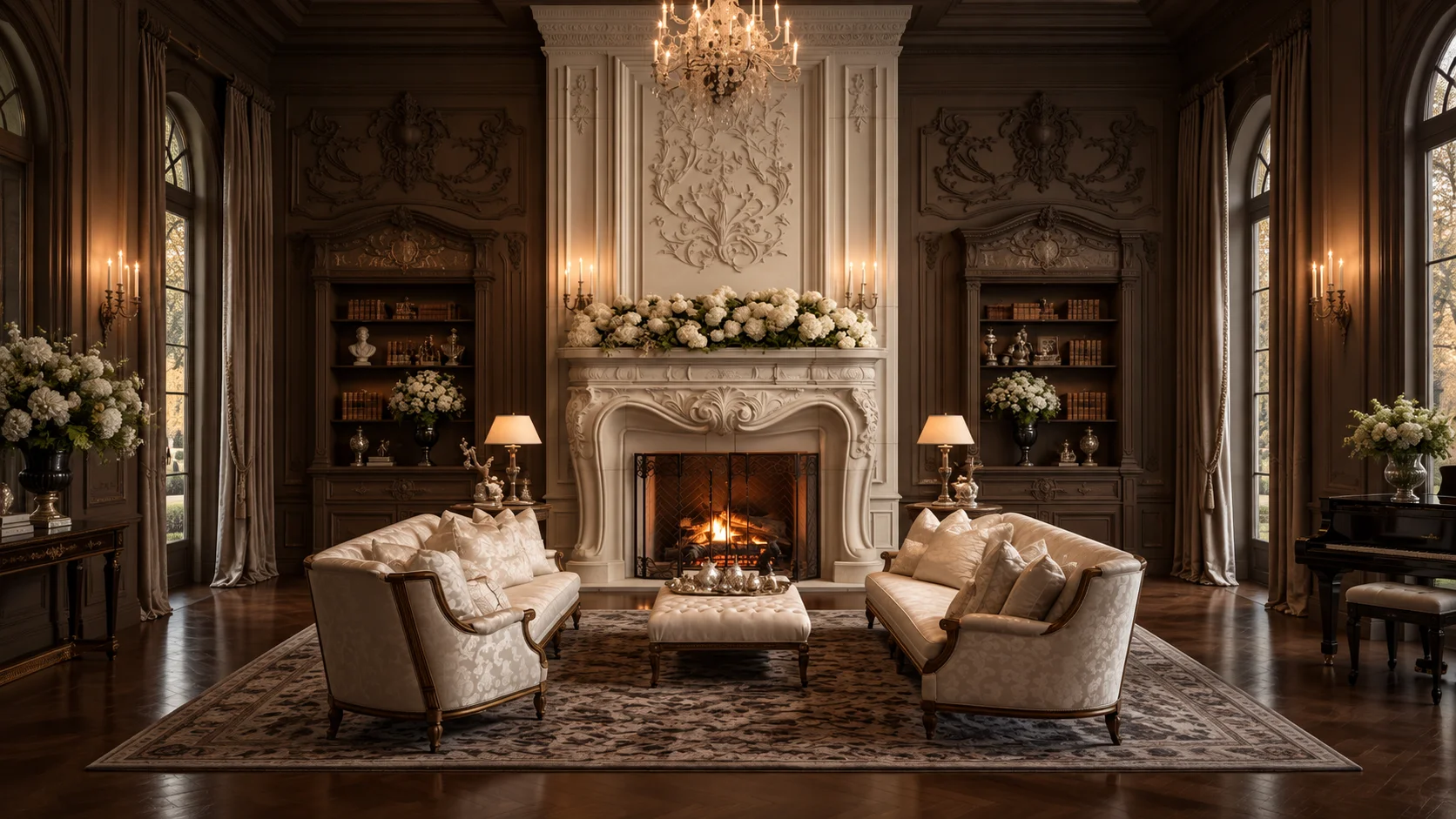
French-inspired fireplace surrounds typically focus on proportion, symmetry and carefully shaped mouldings.
They may use:
- Carved legs
- Curved headers
- Projecting mantel shelves
- Bevelled details
- Decorative mouldings
- Warm beige or white marble
Materials such as Crema Marfil Marble and Arabescato Marble can support very different interpretations of this style.
Polished vs Honed Marble Fireplace Finishes
Polished Marble
A polished finish increases colour depth and reflection and can make strongly veined marble more visually prominent.
Honed Marble
A honed finish provides a softer, lower-sheen appearance and can work well with minimalist or understated interiors.
Finish selection should be confirmed according to the selected marble, design concept and maintenance requirements.
Technical Specification Guidelines
| Specification | Typical Project Option | Project Notes |
|---|---|---|
| Material | Natural Marble | Approve actual slabs before fabrication. |
| Common Panel Thickness | 18mm / 20mm | Carved and structural-looking components may require custom dimensions according to the approved design. |
| Other Thicknesses | Custom | According to profiles, carving and component design. |
| Finish | Polished / Honed | Final finish depends on the selected marble and interior concept. |
| Fireplace Styles | Traditional / Modern / Full-height | Produced according to approved project drawings. |
| Profiles | CNC carved / Moulded / Fluted / Bullnose / Bevelled | Custom profiles available. |
| Panel Fabrication | Mitred / Curved / Radius / Custom cut-to-size | According to approved fabrication details. |
| Matching | Book matching / Vein matching | Recommended for large visible fireplace walls and connected components. |
| Digital Planning | Slab scanning / Cutting layout | Used for visual placement and material-yield planning. |
| Custom Fabrication | Waterjet / CNC | Supports profiles, curves and openings. |
| Openings | Firebox / Vent / Grille / Electrical / TV cable | Coordinate from approved project information. |
| Quality Control | Mock-up / Full dry lay / Piece numbering | Useful for multi-piece or carved fireplace assemblies. |
| Packing | Foam + export wooden crates | Can be organised by component, room and installation sequence. |
| Installation Support | Mechanical / Adhesive coordination | Show Stone does not undertake on-site installation. |
| MOQ | 1 pc | Suitable for individual fireplace surrounds and larger project packages. |
| Lead Time | Approximately 4 weeks | Depends on carving complexity, material approval and quantity. |
Installation Coordination
Marble fireplace surrounds should be fabricated with the approved fireplace system, substrate and installation method in mind.
Show Stone can coordinate:
- Stone component dimensions
- Piece numbering
- Metal fireplace insert interfaces
- Wood and metal substrate interfaces
- Mechanical fixing-related fabrication
- Adhesive installation coordination
- Installation-sequence references
Show Stone does not undertake on-site installation. Structural engineering, fireplace-system engineering, fixing-system engineering, fire-safety compliance and final site installation remain the responsibility of the appointed project consultants, engineers, fireplace specialists and contractors.
Common Mistakes When Ordering Marble Fireplace Surrounds
Choosing Marble From a Small Sample Only
A small sample does not show how the pattern will appear across the mantel, legs, hearth or full-height fireplace wall.
Fabricating Before the Firebox Dimensions Are Final
The fireplace opening and insert information should be approved before the surrounding marble is cut.
Leaving Profiles Undefined
Carved mouldings, bullnose edges, bevels and fluting should be shown clearly on detailed drawings.
Ignoring Vein Direction
Strong marble patterns can look disconnected when the mantel, legs and hearth are positioned independently.
Skipping Digital Slab Layout
Digital allocation helps project teams review where the strongest veins will appear before cutting begins.
Skipping Dry Lay for Multi-Piece Surrounds
Full dry lay can identify dimensional, profile and alignment issues before the fireplace components leave the factory.
Assuming the Stone Fabricator Controls Fireplace Engineering
Stone fabrication should follow approved fireplace-system, structural and fire-safety requirements supplied by the responsible project professionals.
Packing Components Without Clear References
Mantel, legs, panels and hearth pieces should remain traceable to the approved drawings and packing list.
Buyer Checklist Before Ordering
- Design Style: Confirm traditional carved, French-style, contemporary or full-height design.
- Material: Select the required marble and review actual slab availability.
- Fireplace Opening: Confirm final width and height from approved project information.
- Firebox / Insert: Provide the approved manufacturer information where applicable.
- Mantel: Confirm width, depth, thickness and profile.
- Legs / Jambs: Confirm dimensions, carving and profile details.
- Hearth: Confirm dimensions, thickness and edge treatment.
- Wall Panels: Confirm full-height or surrounding panel dimensions.
- Finish: Confirm polished or honed marble.
- Profiles: Confirm mouldings, fluting, bevels, bullnose or custom carving.
- Curves: Confirm any radius or curved stone components.
- Matching: Approve book matching or vein matching where required.
- Openings: Confirm vents, grilles, cables, electrical points and TV recesses.
- Digital Layout: Approve slab allocation before cutting strongly veined marble.
- Mock-Up: Review a representative profile or detail where required.
- Dry Lay: Review the complete fireplace assembly before packing.
- Numbering: Link each component to the fabrication drawing.
- Packing: Organise components by room and installation sequence.
- Engineering: Confirm structural, fireplace-system and fire-safety requirements with the appointed professionals.
Frequently Asked Questions
What marble is suitable for fireplace surrounds?
White, beige, black, red, blue-grey and strongly veined marbles can all be suitable depending on the fireplace style, interior design, fabrication requirements and actual slabs available.
Can marble fireplace surrounds be custom carved?
Yes. Traditional and decorative fireplace components can be produced with CNC-carved profiles, custom mouldings, fluting, bevels, bullnose details and additional finishing according to approved drawings.
Can Show Stone fabricate the mantel, legs and hearth?
Yes. Custom fireplace packages can include mantel shelves, legs or jambs, headers, hearth slabs, surround panels and other stone components according to the approved design.
Can modern marble fireplace walls be book matched?
Yes. Suitable slabs can be digitally scanned and planned for book matching or vein matching before full-height fireplace panels are cut.
Can curved fireplace components be fabricated?
Yes. Curved and radius stone components can be produced according to approved dimensions using suitable CNC, waterjet and custom fabrication methods.
Can openings for vents, grilles and cables be cut in the factory?
Yes. Fireplace openings, vent and grille openings, electrical points and cable openings can be fabricated according to approved project drawings and equipment information.
Can a complete marble fireplace be dry laid before shipment?
Yes. A full dry lay can be used to review the relationship between the mantel, legs, panels, hearth, carved profiles, vein direction and piece numbering before packing.
Can marble fireplace components be packed by room and installation sequence?
Yes. Finished pieces and crates can be organised by project, room, fireplace reference, component and installation sequence where required.
Does Show Stone engineer the fireplace system or fire-safety clearances?
No. Show Stone fabricates and coordinates the stone package, while fireplace-system engineering, structural requirements, fire-safety clearances and code compliance remain with the appointed consultants, engineers, fireplace specialists and contractors.
Does Show Stone install marble fireplace surrounds on site?
No. Show Stone provides fabrication support, drawing coordination, dry-lay inspection, piece numbering and mechanical or adhesive installation coordination, while on-site installation is carried out by the client or appointed contractor.
Why Project Buyers Work With Show Stone
Show Stone supports designers, architects, contractors, developers and project buyers sourcing marble fireplace surrounds through a workflow that connects slab selection, drawing coordination, digital layout, CNC fabrication, inspection, numbering and export delivery.
Our fireplace project support can include:
- Natural marble sourcing
- Full-slab photography and video approval
- Batch and colour coordination
- Digital slab scanning
- Digital cutting layouts
- Book matching and vein matching
- Fireplace surround panels
- Mantel shelves
- Fireplace legs and jambs
- Hearth slabs
- Traditional carved fireplace surrounds
- Modern minimalist fireplace surrounds
- Full-height fireplace walls
- CNC-carved profiles
- Custom mouldings
- Fluted details
- Bevelled and bullnose profiles
- Mitred fireplace panels
- Curved and radius fabrication
- Waterjet processing
- Vent, grille and cable openings
- Mock-ups and sample details
- Full fireplace dry lay
- Piece numbering
- Packing by room and installation sequence
- Metal fireplace insert coordination
- Wood and metal substrate coordination
- Mechanical fixing coordination
- Adhesive installation coordination
- Foam protection and export wooden-crate packing
- International shipment coordination
Show Stone does not undertake structural engineering, fireplace-system engineering, fire-safety engineering or on-site installation.
Project buyers can compare fireplace materials including Breccia Violetta Marble, Noir Aziza Marble, Crema Marfil Marble, Red Jasper Marble, Arabescato Marble, Palissandro Blue Marble and Nero Marquina Marble.
For custom-profile fabrication and luxury stone details, also see Natural Stone Staircases for Luxury Interiors, Natural Stone Fabrication Process for Hotel and Retail Projects and Natural Stone Shop Drawings Explained.
For independent technical information on natural stone design and specification, project teams can also review the Natural Stone Institute resources for design professionals.
Final Recommendation
Marble fireplace surrounds should be specified as complete architectural assemblies rather than as isolated stone pieces. The strongest results come from coordinating the actual slabs, firebox opening, mantel, legs, hearth, profiles, full-height panels, vein direction and equipment openings before fabrication begins.
For traditional carved fireplaces, detailed profile drawings, CNC fabrication and full dry lay can help control repeated mouldings and component relationships. For modern fireplace walls, digital slab layouts, book matching and precise mitres become more important.
To discuss a marble fireplace surround for a luxury residence, hotel, resort or hospitality project, please contact Show Stone with your fireplace drawings, preferred marble, opening dimensions, mantel and hearth details, profile requirements, quantity and delivery destination.