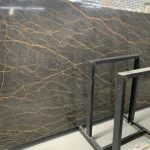
How to Choose a Reliable Natural Stone Supplier for Global Projects
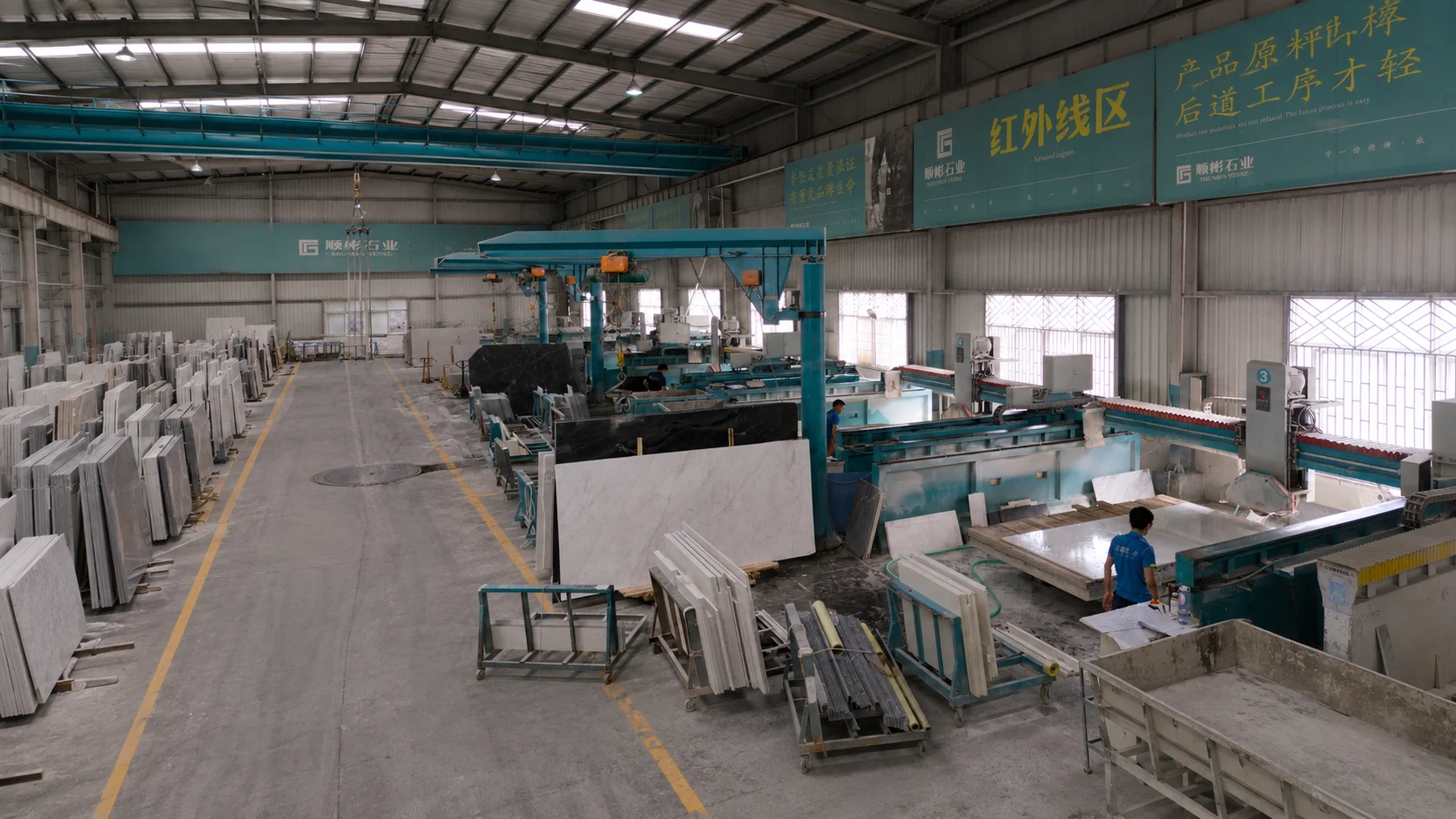
How to choose a reliable natural stone supplier is an important question for architects, interior designers, contractors, importers and project procurement teams working across different countries. Natural stone is not a completely uniform manufactured product, and large projects may involve hundreds of slabs, cut-to-size panels, countertops, mosaics, vanity tops and custom architectural pieces.
The supplier therefore needs to do more than quote a stone price. The project may require slab selection, batch coordination, drawing review, digital cutting layouts, vein matching, precision fabrication, dimensional inspection, dry laying, piece numbering, export packing and shipment documentation.
For global projects, reliability means having enough control over these connected stages to deliver what the buyer actually approved. This guide explains how to choose a reliable natural stone supplier and what project buyers should verify before placing an order.
Buyers can also explore Show Stone’s broader range of natural stone materials, including natural marble and natural quartzite.
What Makes a Natural Stone Supplier Reliable?
A reliable natural stone supplier should be able to provide evidence of what it can control. Marketing claims such as “high quality,” “best price” or “professional service” are less useful than clear information about the actual materials, production process, inspection procedure and shipment preparation.
For project buyers, reliability usually depends on five connected areas:
- Material sourcing and slab availability
- Technical planning and drawing coordination
- Fabrication capability
- Quality control and documentation
- Export packing and international delivery experience
How to choose a reliable natural stone supplier therefore begins by verifying the supplier’s workflow rather than judging the company from its website alone.
How to Choose a Reliable Natural Stone Supplier: 12 Key Checks
| Check | What to Verify | Why It Matters |
|---|---|---|
| 1 | Real factory and warehouse | Shows whether the supplier has physical production and material-control capability. |
| 2 | Material sourcing and inventory | Determines whether enough compatible slabs can be secured for the project. |
| 3 | Actual slab approval | Allows the buyer to approve the real material rather than a small sample or catalogue image. |
| 4 | Batch and colour coordination | Reduces uncontrolled visual differences across connected areas. |
| 5 | Drawing and digital planning | Connects slab selection with actual project components and installation areas. |
| 6 | In-house fabrication capability | Determines whether custom edges, cut-outs, mosaics and architectural components can be controlled. |
| 7 | Quality-control system | Confirms dimensions, finishes, visible quality and fabrication details before shipment. |
| 8 | Dry-lay inspection | Allows connected pieces to be reviewed for colour, pattern and sequence. |
| 9 | Piece numbering and documentation | Helps the site team connect each finished piece with the correct room or elevation. |
| 10 | Export packing | Protects finished stone during handling and international transport. |
| 11 | International project experience | Improves coordination of drawings, schedules, packing and shipping requirements. |
| 12 | Communication and traceability | Creates a documented reference from material approval through final shipment. |
1. Verify That the Supplier Has a Real Factory and Material Base
The first step in how to choose a reliable natural stone supplier is confirming what physical facilities the company actually controls.
A supplier handling custom projects should be able to show:
- Stone warehouse or slab-selection area
- Fabrication workshop
- Cutting equipment
- Finishing areas
- Quality-control area
- Dry-lay space
- Packing and loading areas
Factory photographs are useful, but remote buyers can also request live video calls or current production videos. This helps confirm that the supplier has access to the facilities it describes.
A trading company is not automatically unsuitable, and a factory is not automatically reliable. What matters is whether the supplier can clearly demonstrate who controls material selection, fabrication, inspection and packing.
2. Review the Supplier’s Material Sourcing Capability
Material sourcing becomes particularly important when a project requires many slabs from a coordinated colour and vein range.
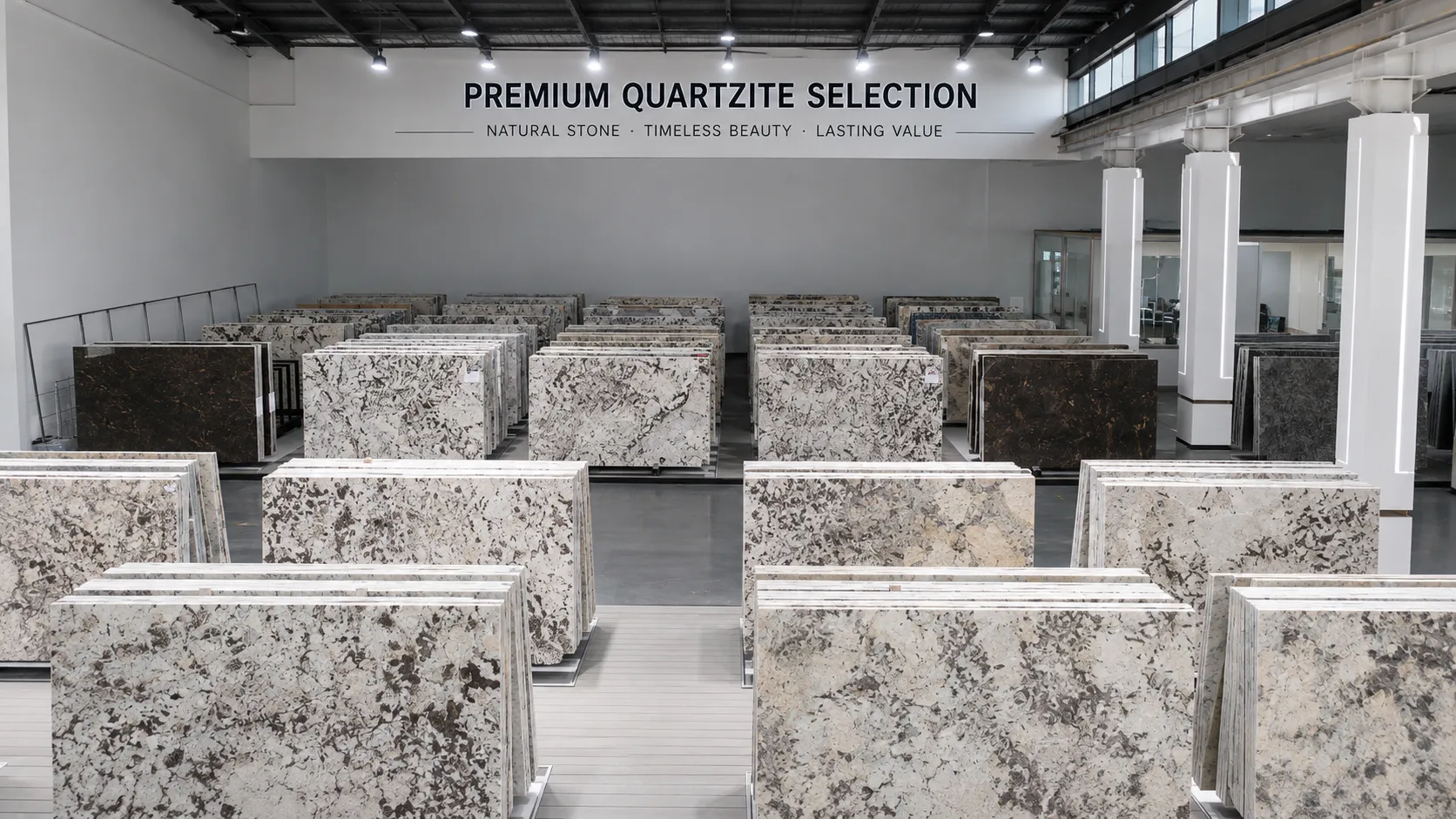
Ask the supplier:
- How many slabs are currently available?
- Are the slabs from one block or several blocks?
- Can specific slabs be reserved?
- Can additional matching material be sourced?
- Can slabs be grouped by colour or vein intensity?
- Are actual dimensions recorded?
A supplier that understands natural variation should not promise that every slab will look identical. Instead, it should help the buyer establish an acceptable visual range.
Materials such as Taj Mahal Quartzite, Patagonia Quartzite and Breccia Violetta Marble can all require careful slab allocation when used across prominent project surfaces.
3. Require Actual Slab Approval
How to choose a reliable natural stone supplier also depends on whether the company is willing to show the actual material before production.
For project work, buyers should request:
- Full-slab photographs
- Slab numbers
- Dimensions
- Batch information where available
- Video inspection
- Digital scans for important slabs
A small sample is not enough to evaluate complete vein movement, colour variation, fissures, repairs or usable cutting areas.
For a more detailed explanation of this stage, see our guide on how to select and match natural stone slabs for large projects.
4. Check How the Supplier Controls Batch and Colour Variation
Natural stone variation cannot be completely eliminated, but it can be planned.
For hotels, retail stores and large residences, compatible slabs can be assigned to:
- Individual floors
- Guestroom groups
- Wall elevations
- Reception counters
- Vanity packages
- Kitchen areas
The supplier should be able to explain how it separates slabs, records approved ranges and prevents unrelated batches from being mixed without approval.
This becomes especially important when the same natural stone is used across a large open space.
5. Evaluate Drawing and Digital Planning Capability
A reliable natural stone supplier should be able to translate architectural information into a workable production plan.
For custom projects, this may involve:
- Reviewing architectural drawings
- Reviewing shop drawings
- Confirming finished dimensions
- Checking joint positions
- Confirming visible faces
- Planning vein direction
- Preparing digital cutting layouts
- Checking material yield
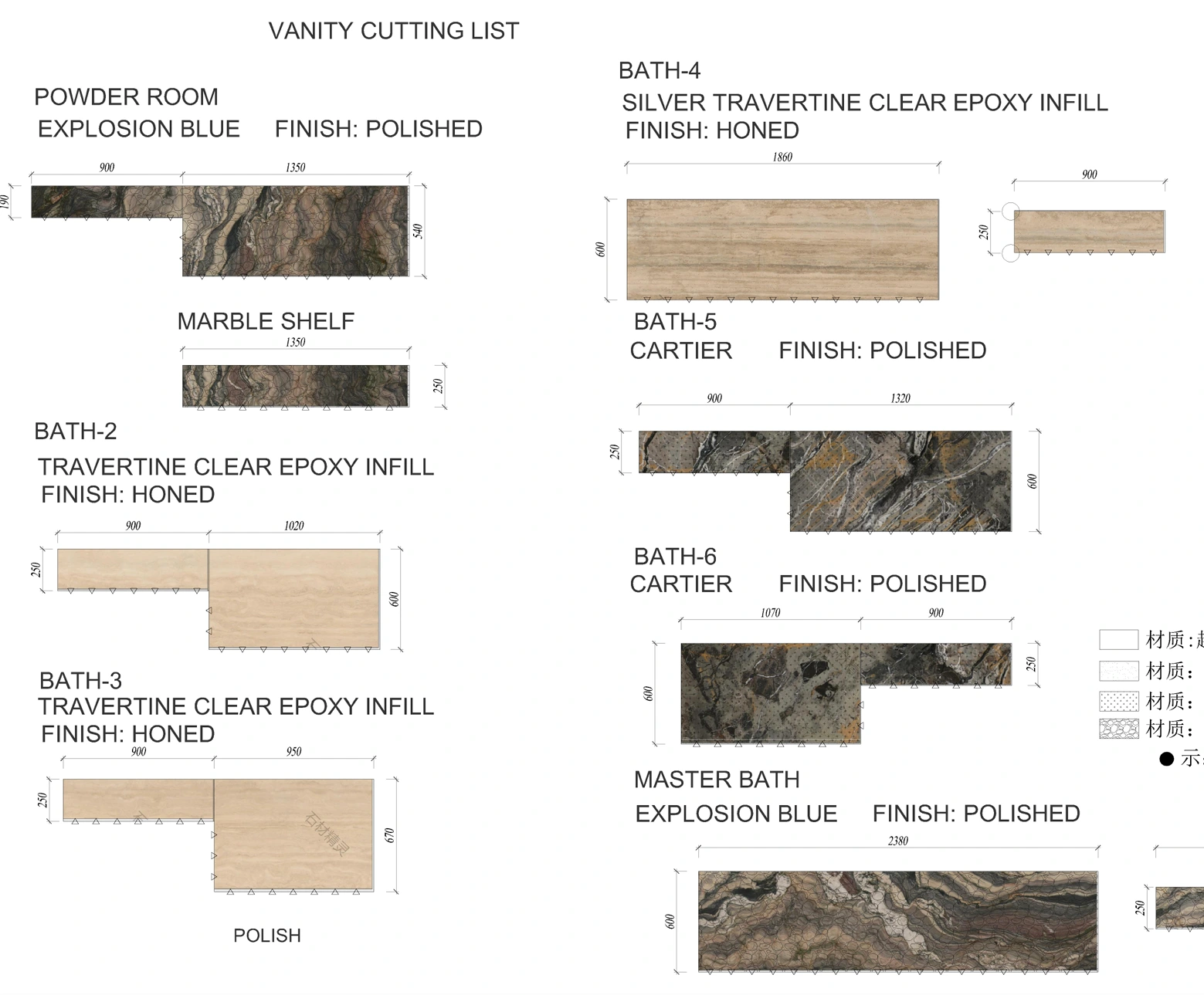
Digital planning is particularly valuable for highly visible materials because a technically correct cut may still be visually unsuitable if the strongest vein is positioned in the wrong place.
For kitchen applications, the same planning principles are explained in our guide to quartzite countertops for luxury kitchens.
6. Check the Supplier’s In-House Fabrication Capability
How to choose a reliable natural stone supplier becomes even more important when the same company is responsible for both material supply and fabrication.
Project buyers should understand which processes are completed in-house and which are subcontracted.
Relevant equipment may include:
- Bridge cutting machines
- Infrared cutters
- Five-axis cutting equipment
- Waterjet machines
- CNC carving or profiling equipment
- Edge-finishing equipment
The equipment itself is only part of the assessment. Buyers should also ask what types of products the factory regularly produces.
Typical project fabrication may include:
- Floor and wall panels
- Countertops
- Vanity tops
- Reception counters
- Mitred edges
- Waterfall islands
- Mosaics
- Waterjet inlays
- Carved elements
- Custom furniture components
Our complete natural stone fabrication process for hotel and retail projects explains how these production stages can be coordinated from slab scanning through export packing.
7. Ask How Quality Control Is Managed
A reliable supplier should not describe quality control only as “checking the products before shipment.” Buyers need to understand what is checked, when it is checked and which approved reference is used.
Inspection may include:
- Material and slab identity
- Colour and vein range
- Length and width
- Thickness
- Diagonal measurements
- Surface finish
- Visible repairs
- Edge profiles
- Mitres
- Cut-outs and holes
- Pattern direction
- Piece numbering
The important point is that the inspection criteria are connected with the current project drawings and agreed standards.
For additional independent technical guidance on natural stone standards, testing and project specifications, buyers can also review the Natural Stone Institute technical bulletins.
8. Look for Dry-Lay and Visual Inspection Capability
Dry laying is an important indicator when evaluating how to choose a reliable natural stone supplier for visually complex projects.
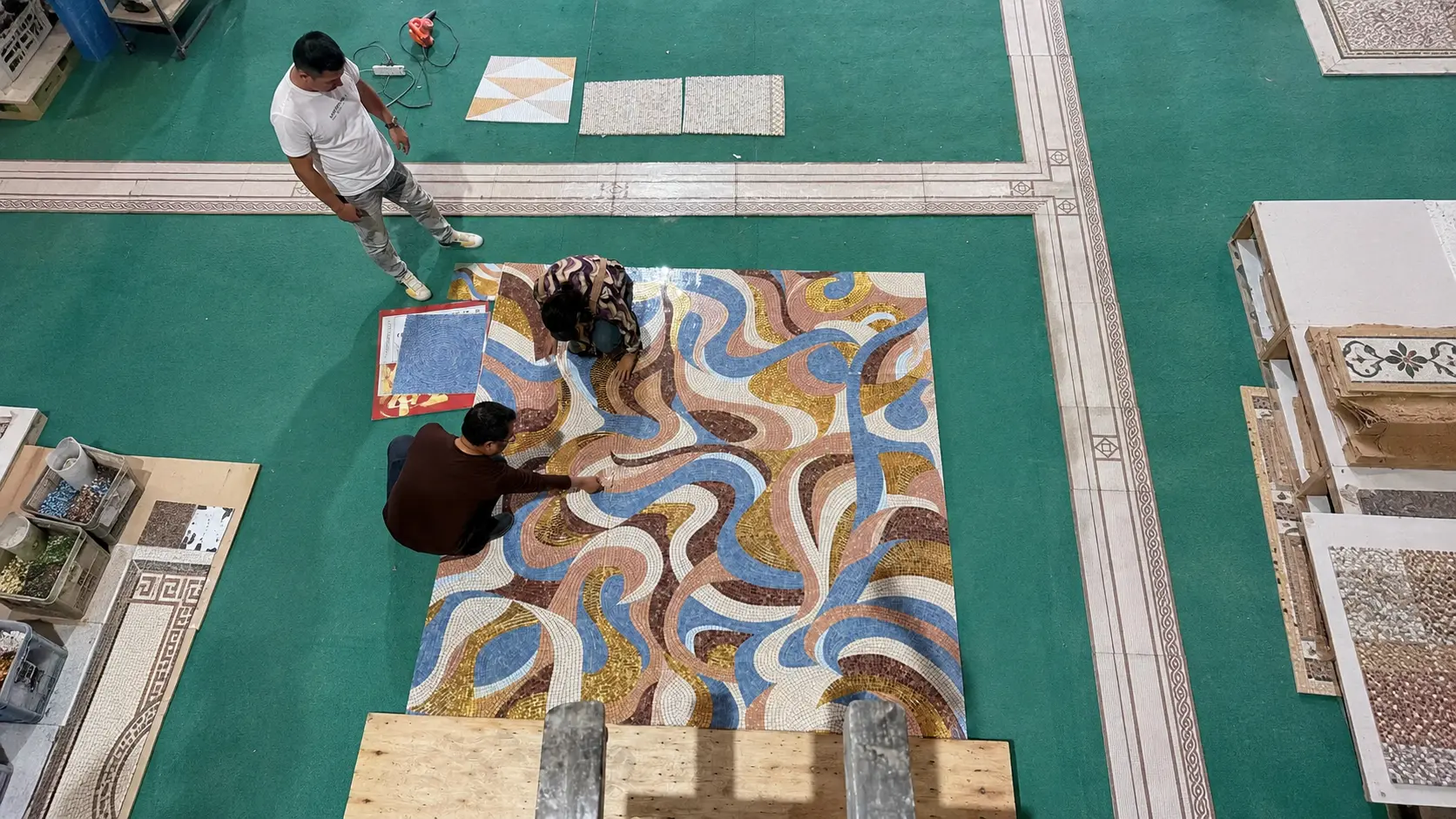
Dry-lay inspection is particularly useful for:
- Book-matched walls
- Hotel lobby floors
- Lift lobbies
- Custom mosaics
- Waterjet patterns
- Reception counters
- Retail feature areas
Finished pieces can be arranged according to their intended sequence, photographed and reviewed before packing.
This allows colour transitions, pattern relationships and piece order to be corrected while the material is still in the factory.
9. Confirm Piece Numbering and Installation Documentation
Correct fabrication is only useful if the correct piece reaches the correct installation location.
Large projects may require numbering based on:
- Building
- Floor
- Room
- Area
- Elevation
- Panel sequence
- Furniture reference
The same reference should appear where appropriate on drawings, product labels and packing lists.
For hotel projects with repeated rooms, clear numbering reduces the risk of similar-looking components being installed in the wrong location.
10. Inspect Export Packing Capability
How to choose a reliable natural stone supplier should also include evaluating what happens after fabrication is complete.
Natural stone can travel thousands of kilometres before it reaches the project site. Packing must protect the material during factory handling, container loading, ocean transport, unloading and site movement.
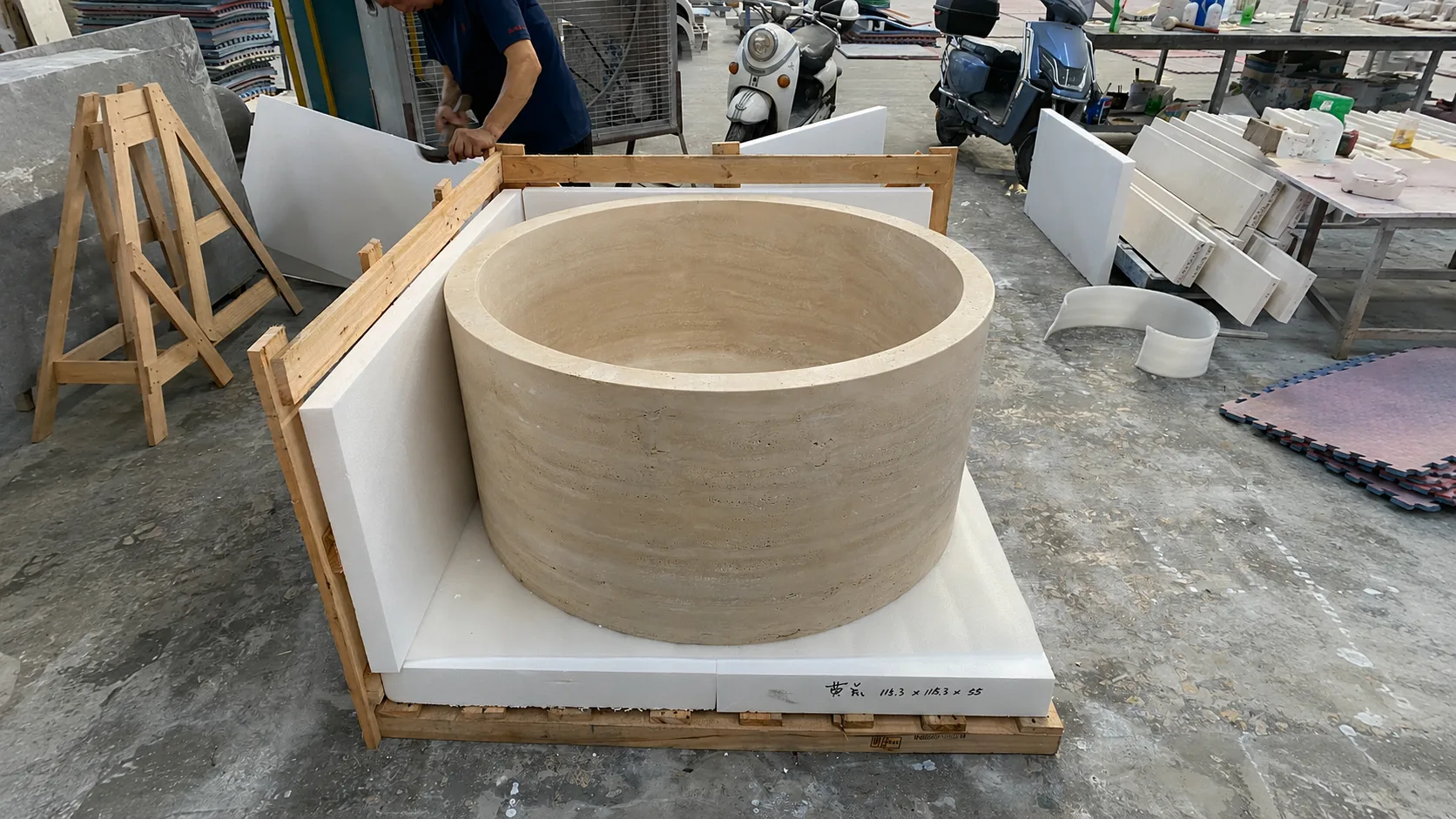
Depending on the product, packing may include:
- Export wooden crates
- Internal timber supports
- Foam protection
- Edge protectors
- Face protection
- Crate labels
- Piece-number references
- Packing lists
Custom bathtubs, long panels, mitred countertops and delicate onyx pieces require different protection from standard tiles.
A reliable supplier should be able to explain the packing method before the goods are completed.
11. Evaluate International Project Experience
A company that understands export projects should be familiar with the additional coordination required between factory production and overseas installation.
This may include:
- International drawing communication
- Remote slab approval
- Production schedules
- Pre-shipment inspection records
- Export packing requirements
- Container planning
- Shipping marks
- Commercial documentation
Project experience does not mean the supplier must have worked in every country. It means the company should demonstrate a repeatable process for coordinating materials, fabrication, documentation and shipment across long distances.
Buyers specifying materials for hospitality projects can also review the guide to the best natural stones for luxury hotel interiors.
12. Check Communication, Transparency and Traceability
Clear communication is one of the most practical factors in how to choose a reliable natural stone supplier.
A good project supplier should be able to provide a clear record of important decisions, including:
- Approved slab numbers
- Current drawings
- Material changes
- Cutting-layout approvals
- Production status
- Inspection photographs
- Dry-lay records
- Piece numbers
- Packing lists
- Shipment details
For international projects, written documentation is especially valuable because several teams may be involved across different time zones.
Factory vs Trading Company: Which Is Better?
Buyers sometimes assume that purchasing directly from a factory is always safer than working with a trading company. In practice, the answer depends on how the supply chain is controlled.
A capable factory may offer:
- Direct production management
- Faster fabrication feedback
- In-house inspection
- Clearer equipment visibility
A capable trading or sourcing company may offer:
- Access to multiple quarries and factories
- Broader material sourcing
- Consolidated procurement
- Additional project coordination
The better question is not simply “factory or trading company?” It is: who is responsible for the actual slabs, drawings, fabrication, inspection, packing and delivery, and can that responsibility be demonstrated clearly?
How to Verify a Natural Stone Supplier Remotely
Global buyers do not always have time to visit every potential supplier before requesting quotations. Fortunately, several practical checks can help verify capability remotely.
Ask for:
- A live factory video call
- Current warehouse videos
- Current slab photographs
- Equipment photographs or video
- Examples of digital cutting layouts
- Dry-lay inspection photographs
- Finished-product QC records
- Export-packing photographs
- Sample packing lists
When buying quartzite internationally, the risks associated with remote approval are discussed in more detail in Common Mistakes When Buying Quartzite From Overseas Suppliers.
Red Flags When Choosing a Natural Stone Supplier
Learning how to choose a reliable natural stone supplier also means recognising warning signs before a deposit is paid.
No Current Slab Images
If a supplier can show only catalogue images but not the actual slabs being quoted, the buyer cannot properly evaluate the material.
Unusually Vague Material Availability
A quotation should make it reasonably clear whether the required quantity is currently available or still needs to be sourced.
Reluctance to Show Production Facilities
A supplier responsible for fabrication should normally be able to provide reasonable evidence of the equipment and workshop involved.
No Cutting-Layout Approval for Complex Stone
Strongly patterned materials should not be cut for large visible components without considering the final layout.
No Clear QC Reference
“We will check everything” is less useful than a defined inspection process based on the approved drawings and material.
No Piece Numbering for Large Projects
Projects with multiple rooms, floors or elevations require more than generic labels.
Packing Discussed Only After Production
Export packing should be part of the project plan, particularly for large, fragile or highly finished pieces.
Price Is the Only Differentiator
The cheapest raw material does not necessarily produce the lowest installed project cost when waste, incorrect fabrication, repacking or replacement are considered.
Questions to Ask Before Placing an Order
Before deciding how to choose a reliable natural stone supplier, project buyers can ask the following questions:
- Can you show the actual slabs currently available?
- How many slabs from the same or compatible batch are available?
- Can specific slabs be reserved after approval?
- Can you provide full-slab photographs or digital scans?
- Can you prepare digital cutting layouts?
- How do you control vein direction and batch variation?
- Which fabrication processes are completed in-house?
- Can you produce mitred edges, waterjet work or CNC components?
- How are finished dimensions inspected?
- Which areas can be dry-laid before packing?
- How are pieces numbered?
- How are crates organised by room, floor or elevation?
- What pre-shipment photos and documents will be provided?
- How is replacement material handled if required?
Buyer Checklist Before Ordering
Use this checklist when evaluating how to choose a reliable natural stone supplier for a hotel, luxury retail, residential or commercial project.
- Company Verification: Confirm the supplier’s actual office, warehouse and production facilities.
- Material Availability: Review current slabs and available quantities.
- Full-Slab Approval: Request photographs, videos or digital scans of the actual material.
- Batch Control: Define acceptable colour, veining and natural variation.
- Drawings: Confirm that the supplier can review current project and fabrication drawings.
- Digital Planning: Request cutting layouts for visually important or complex components.
- Equipment: Verify the relevant cutting, waterjet, CNC and finishing capability.
- Fabrication Scope: Confirm which processes are completed in-house.
- QC Standards: Agree on dimensions, finishes and visual inspection references.
- Dry Lay: Identify areas that require factory arrangement before shipment.
- Numbering: Confirm room, floor, elevation or panel coding.
- Documentation: Agree on photos, inspection records and packing lists.
- Packing: Confirm wooden crates, internal protection and installation-sequence packing.
- Lead Time: Review material approval, fabrication, inspection and shipping schedules.
- Communication: Confirm who will manage the project and how approvals will be recorded.
Frequently Asked Questions
How can I verify whether a natural stone supplier is reliable?
Verify the supplier’s actual material inventory, factory or fabrication facilities, slab-approval process, digital planning capability, quality-control system, dry-lay procedure, export packing and project documentation rather than relying only on website claims.
Should I choose a natural stone factory or a trading company?
Neither business model is automatically better. The important factor is whether the supplier can clearly control and document material sourcing, fabrication, inspection, packing and delivery for your project.
Why should I review actual stone slabs before ordering?
Actual slabs show full colour, veining, natural variation, fissures, repairs and usable dimensions that cannot be evaluated accurately from a small sample or catalogue image.
What should a natural stone supplier provide for remote slab approval?
A supplier can provide full-slab photographs, videos, slab numbers, dimensions and high-resolution digital scans where appropriate so the buyer can review the actual material remotely.
Why are digital cutting layouts important?
Digital cutting layouts show how finished components will be positioned on the actual slabs and help control vein direction, seam locations, visual relationships and material yield before cutting.
What should be checked during natural stone quality control?
Quality control may include material identity, dimensions, thickness, surface finish, edges, mitres, cut-outs, vein direction, repairs, dry-lay sequence, piece numbers and packing references according to the approved project requirements.
Why is dry-lay inspection useful?
Dry laying allows connected pieces to be reviewed together for colour transitions, pattern alignment, joints and installation sequence before they are packed and shipped.
How should natural stone pieces be numbered for large projects?
Piece numbers can identify the building, floor, room, area, elevation and panel sequence so finished components can be matched with drawings and installation locations.
Why should export packing be reviewed before ordering?
Packing requirements vary by product type, dimensions, edges and fragility. Confirming the method in advance helps ensure the supplier prepares suitable supports, protection, crate labels and packing documentation.
What information should I send a natural stone supplier before requesting a quotation?
Provide the required materials, approximate quantities, applications, drawings where available, finished dimensions, thicknesses, finishes, fabrication details, project schedule and delivery destination.
Why Global Project Buyers Work With Show Stone
Show Stone supports architects, designers, contractors, importers and procurement teams looking for a reliable natural stone supplier for hotel, luxury retail, premium residential and commercial projects.
Our approximately 10,000-square-metre finishing centre combines material selection and custom fabrication with an intelligent slab scanner, five-axis bridge cutting equipment, eight infrared cutters, four waterjet machines and four CNC carving machines.
Our project workflow can include:
- Natural stone sourcing
- Actual slab photography and video approval
- Batch and colour-range coordination
- Digital slab scanning
- Cutting-layout preparation
- Material-yield planning
- Vein matching and book matching
- Custom cutting and edge processing
- Waterjet and CNC fabrication
- Factory dry-lay inspection
- Dimensional and visual quality control
- Piece numbering
- Installation-sequence packing
- Export wooden crates
- International shipment coordination
Buyers can learn more about the company through the About Show Stone page or review our natural stone project solutions.
Additional material-selection, fabrication and purchasing guides are available in the Show Stone blog.
Final Recommendation
How to choose a reliable natural stone supplier should ultimately be based on evidence of control, communication and traceability. A professional website and competitive price may help start the conversation, but they do not replace actual slab approval, technical planning, fabrication capability, quality inspection and export preparation.
For global projects, the strongest supplier relationship begins with clear drawings, real material information and documented approvals. The supplier should be able to explain how the selected stone moves from the warehouse to the cutting layout, fabrication line, dry-lay area, QC station and export crate.
The more transparent this workflow is before the order is placed, the easier it becomes for architects, contractors and procurement teams to evaluate project risk and make informed purchasing decisions.
To discuss natural stone sourcing or custom fabrication for a hotel, retail, residential or commercial project, please contact Show Stone with your material requirements, quantities, drawings, finishes, project schedule and delivery destination.