What Is Taj Mahal Quartzite? Benefits, Uses, Care & Buying Guide
Taj Mahal Quartzite has become one of the most requested natural stones for luxury kitchens, premium residences, hotels and high-end commercial interiors. Its popularity comes from a distinctive combination: the quiet elegance associated with light marble and the practical performance expected from a harder natural stone.
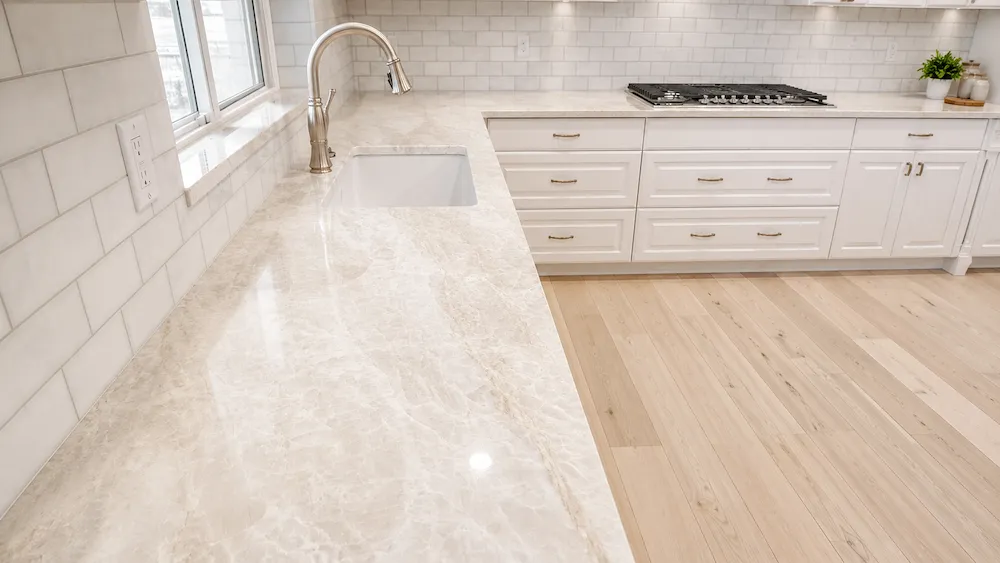
The material usually features a warm ivory or creamy beige background crossed by subtle veins in gold, taupe, light brown or grey. Unlike highly dramatic exotic stones, Taj Mahal Quartzite creates a calm and refined surface that works well with timber cabinetry, brushed metal, warm white interiors and contemporary neutral palettes.
However, selecting Taj Mahal Quartzite involves more than choosing an attractive sample. Slab variation, vein direction, finish, thickness, fabrication, seam positioning and batch coordination can all affect the final result. This guide explains what the material is, where it performs well and what professional buyers should confirm before placing an order.
What Is Taj Mahal Quartzite?
Taj Mahal Quartzite is a natural stone formed from quartz-rich sandstone that has been transformed by geological heat and pressure. During this process, the quartz grains recrystallise and bond together, producing a compact and comparatively hard material.
It is important not to confuse natural quartzite with engineered quartz. Taj Mahal Quartzite is quarried in blocks, processed into slabs and supplied with natural differences in colour, vein movement and mineral structure. Engineered quartz is a manufactured surface produced from quartz particles, pigments and resin binders.
This distinction affects appearance, specification and purchasing expectations. Natural quartzite offers geological depth and one-of-a-kind slab movement, while engineered quartz provides greater visual repetition. Buyers who prefer authentic natural variation can explore the wider range of natural stone materials available for architectural and interior applications.
What Does Taj Mahal Quartzite Look Like?
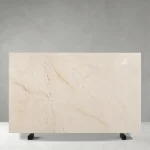
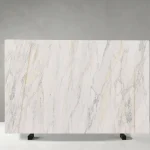
The defining feature of Taj Mahal Quartzite is its warm, understated appearance. Most selections have a cream, ivory or pale beige base, although some batches may appear slightly whiter, greyer or more golden. The veins are generally soft and flowing rather than sharp or highly contrasted.
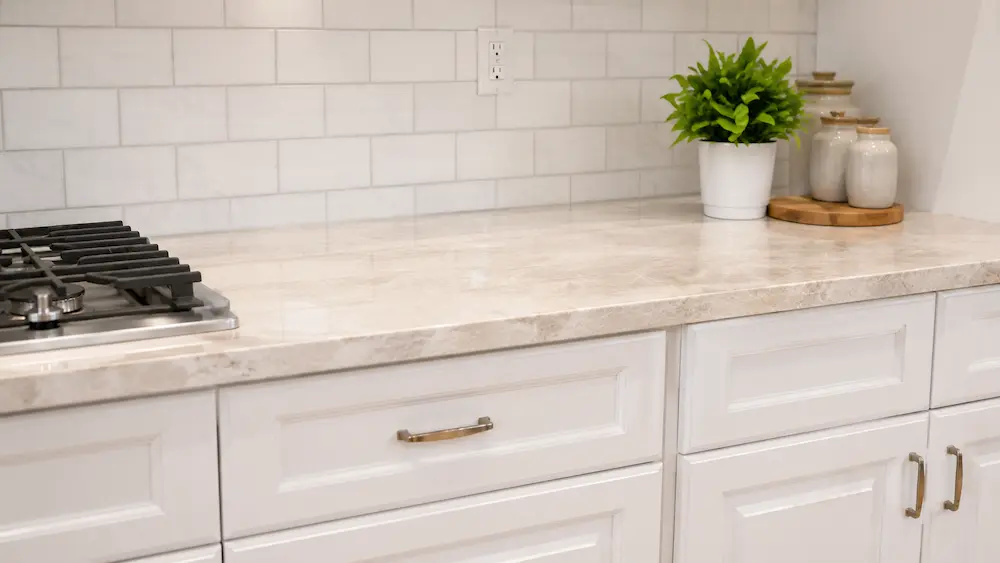
Because every slab is natural, the appearance can vary significantly between quarry blocks and production batches. One bundle may have quiet linear movement, while another may contain broader waves, cloudy mineral areas or stronger golden accents. These variations are not defects; they are part of the material’s natural identity.
Taj Mahal Quartzite works particularly well with:
- Natural oak, walnut and dark timber cabinetry
- Warm white, beige, greige and taupe interiors
- Brass, bronze, stainless steel and black metal details
- Minimalist, transitional and contemporary luxury design
- Hotels, villas and retail spaces requiring an elegant but restrained stone
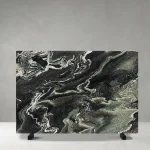
For projects requiring a bolder blue and gold quartzite appearance, buyers may also compare it with Azul Imperial Quartzite. The two materials create very different visual effects, so the final choice should follow the overall design language of the project.
Why Is Taj Mahal Quartzite So Popular?
Taj Mahal Quartzite addresses a common design challenge. Many buyers appreciate the soft movement of marble but are concerned about scratching, etching and daily maintenance in active spaces. At the same time, some engineered surfaces may look too uniform for a genuinely high-end project.
Taj Mahal Quartzite sits between these expectations. It provides natural movement and visual depth while generally offering stronger scratch resistance than marble. Its warm colour also makes it easier to coordinate than many dramatic exotic stones.
Another reason for its popularity is long-term design flexibility. Neutral cream and beige surfaces are less dependent on short-lived trends and can be incorporated into both classic and modern projects. This makes the material attractive to homeowners, architects, developers and hospitality designers seeking a premium finish with broad market appeal.
Main Benefits of Taj Mahal Quartzite
1. Elegant Marble-Like Appearance
Taj Mahal Quartzite provides a refined natural appearance without relying on strong contrast. Its warm background and soft veining can visually connect cabinetry, flooring, metal fixtures and wall finishes across an interior.
2. Strong Scratch Resistance
Genuine quartzite is composed mainly of quartz, a naturally hard mineral. This gives the material strong resistance to normal scratching and makes it suitable for frequently used surfaces when it is correctly fabricated and maintained.
Hardness should not be treated as a guarantee against all damage. Cutting boards are still recommended, and heavy objects should not be dropped onto edges, corners or unsupported areas.
3. Good Performance in Kitchen Applications
Taj Mahal Quartzite is widely specified for kitchen countertops and islands because it combines natural beauty with practical everyday performance. It also has good heat resistance compared with many resin-based surfaces.
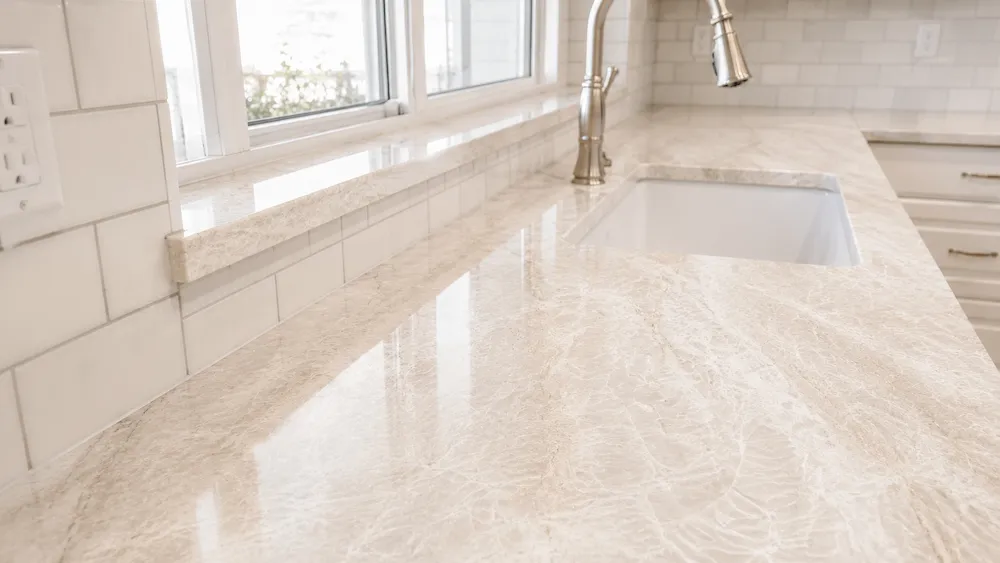
Trivets should still be used under hot cookware. Sudden temperature changes, concentrated heat and direct contact with extremely hot objects can create unnecessary risk for any installed countertop system.
4. Natural Slab Individuality
No two slabs are identical. This allows designers to create customised islands, matched wall panels, statement reception counters and furniture pieces with a distinctive natural pattern.
5. Broad Project Compatibility
The stone can be used across luxury residential, hospitality, retail and commercial environments. Its understated appearance allows it to support the wider design concept rather than dominate every surrounding element.
Where Can Taj Mahal Quartzite Be Used?
Kitchen Countertops
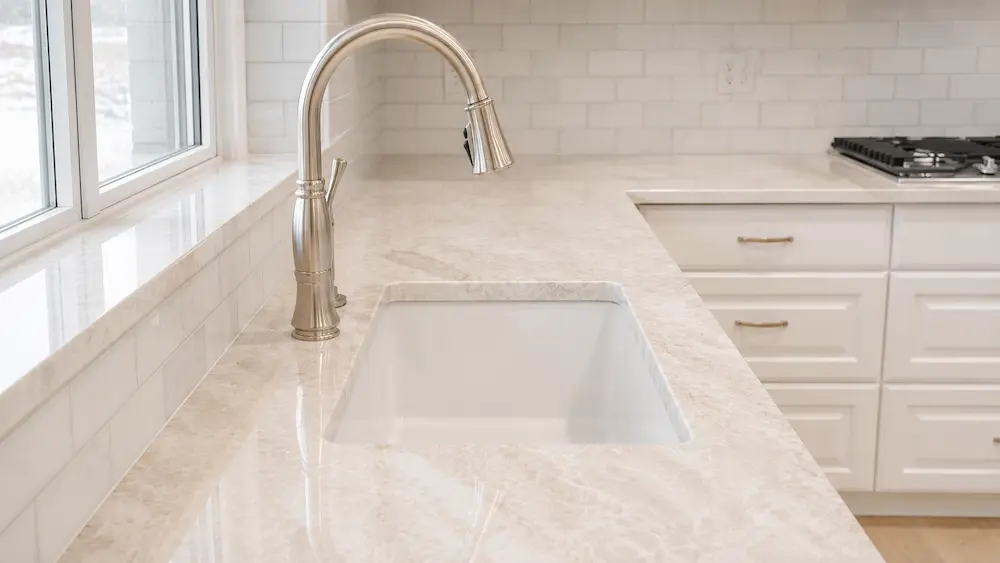
Kitchen countertops are among the most common applications. The stone’s warm colour creates a softer alternative to bright white surfaces, while its natural movement adds depth without making the space visually busy.
Waterfall Islands
Large waterfall islands are particularly effective because the broad slab area displays the full vein movement. Professional slab selection and vein alignment are essential when the horizontal countertop continues down one or both sides of the island.
Backsplashes and Full-Height Walls
Using the same quartzite for both countertop and backsplash can create a coordinated, continuous appearance. Before production, the supplier should prepare a layout showing where veins, joints, sockets and cut-outs will appear.
Bathroom Vanity Tops
Taj Mahal Quartzite can bring warmth to bathrooms that might otherwise feel too cold or clinical. It is suitable for vanity tops, wall panels and coordinated bathroom elements when the installation system is properly designed for the environment.
Hotel and Luxury Retail Interiors
The material can be fabricated for reception counters, display tables, wall cladding, bar counters and feature furniture. These applications often require more detailed drawing review, dry-lay inspection and numbered packing than standard residential countertops.
Custom Furniture and Tabletops
Round tables, consoles, coffee tables and side tables can be produced from selected areas of a slab. Edge profiles, reinforcement, frame support and overall weight must be considered before cutting begins.
Show Stone provides integrated custom natural stone solutions for countertops, wall panels, furniture, floors and other project-specific applications.
Taj Mahal Quartzite vs Marble vs Engineered Quartz
| Comparison | Taj Mahal Quartzite | Marble | Engineered Quartz |
|---|---|---|---|
| Material type | Natural quartzite | Natural calcium-based stone | Manufactured composite surface |
| Appearance | Warm cream tones with soft natural movement | Classic natural veining with broad visual variety | More controlled and repeatable pattern |
| Scratch resistance | Generally high for genuine quartzite | Lower than quartzite | Generally good, depending on formulation |
| Acid sensitivity | Normally lower than marble, subject to the actual stone | Can etch from acidic liquids | Does not behave like marble, but chemical care is still required |
| Heat consideration | Good natural heat resistance; trivets recommended | Natural heat resistance; careful use recommended | Resin content may be sensitive to excessive heat |
| Pattern consistency | Natural slab-to-slab variation | Natural slab-to-slab variation | More consistent across production |
| Best suited for | Buyers seeking natural luxury and practical performance | Projects prioritising traditional marble character | Projects requiring controlled colour and repetition |
Taj Mahal Quartzite is not automatically better than every marble or engineered surface. The correct choice depends on the project’s design objective, use conditions, maintenance expectations and required level of pattern consistency.
Buyers who prefer traditional veining and historic stone character can review the broader natural marble collection. For projects prioritising strength, geological movement and natural slab individuality, the quartzite collection provides additional options.
How to Select Taj Mahal Quartzite Slabs
Review Full Slab Images
A small sample can confirm the general colour and finish, but it cannot show the complete movement of a slab. Before approving the order, review high-resolution full slab photographs or videos under consistent lighting.
Check the Colour Direction
Some batches are creamy and golden, while others are lighter, greyer or more neutral. Compare the stone with cabinetry, flooring, wall colours and metal finishes before final approval.
Coordinate Multiple Slabs
Projects requiring several slabs should be reviewed as one set. The supplier should identify slabs with compatible colour, movement and vein direction rather than selecting each slab independently.
Confirm Usable Slab Dimensions
The nominal slab size is not always equal to the completely usable area. Natural fissures, resin-filled sections, edge damage or areas reserved for reinforcement may affect the cutting yield.
The project drawing should therefore be checked against the actual slabs before production. This is especially important for long islands, full-height backsplashes and layouts requiring minimal seams.
Plan the Vein Direction
The same slab can produce very different results depending on how the pieces are positioned. Veins may run along the length of a countertop, continue across a waterfall edge or align between adjacent wall panels.
A digital cutting layout or marked slab photograph allows the buyer, designer and fabricator to review the visual result before cutting begins.
Confirm the Surface Finish
Polished finishes enhance colour depth and reflect more light. Honed finishes create a softer, lower-gloss appearance but may show handling marks or moisture differently. Other textures should be evaluated according to the intended application and maintenance requirements.
Fabrication and Installation Considerations
High-quality slabs alone do not guarantee a successful installation. Fabrication accuracy and pre-production planning have a major influence on the final appearance and long-term performance.
Before fabrication, confirm the following:
- Final site measurements or approved shop drawings
- Countertop thickness and built-up edge requirements
- Edge profile and corner details
- Sink, hob, socket and tap cut-out positions
- Seam location and vein alignment
- Support requirements for overhangs and unsupported areas
- Backsplash, wall return and waterfall connections
- Surface finish and visible-face orientation
Natural fissures should be assessed before cutting, particularly around narrow sections, sink rails and internal corners. Reinforcement may be required depending on the slab structure and finished component design.
For large hotel or retail projects, dry-lay inspection and numbered packing can reduce installation errors. Each finished piece should correspond with the approved drawing and packing list so the installation team can identify its intended location.
Common Mistakes When Buying Taj Mahal Quartzite
Choosing From a Small Sample Only
A sample does not reveal full slab movement, tonal variation or the relationship between several slabs. Approving material without seeing the actual slabs can result in a final installation that looks different from the original expectation.
Assuming Every Commercially Named Quartzite Is Identical
Natural stones sold under similar trade names may vary in mineral composition and performance. Ask the supplier to confirm the material, inspect the actual batch and provide relevant test information when required by the project.
Ignoring Cutting Yield
Quoting only by finished square metre can hide significant material loss. Large islands, vein matching, edge build-ups and defect avoidance may require more slab area than the final installed measurement suggests.
Planning Seams After Slab Selection
Seam positions should be considered while reviewing slab sizes and movement. Poorly positioned joints can interrupt the pattern or create unnecessary visual imbalance.
Expecting Perfect Uniformity
Taj Mahal Quartzite is a natural material. Variation in tone, veins, mineral areas and structure should be expected. Buyers requiring identical repetition across numerous rooms or units should evaluate whether natural stone aligns with the project brief.
Overlooking Packaging and Installation Sequence
Large, thin or heavily cut pieces require appropriate reinforcement and export packaging. For multi-area projects, packing pieces according to room, elevation or installation sequence can improve site efficiency.
Buyer Checklist Before Ordering
| Item to Confirm | Why It Matters |
|---|---|
| Actual slab photos or video | Shows the real colour, movement and natural variation. |
| Slab size and usable area | Determines whether large pieces can be produced with acceptable yield. |
| Batch coordination | Reduces visible differences across multi-slab installations. |
| Thickness and finish | Affects appearance, fabrication method and installation planning. |
| Cutting layout and vein direction | Controls visual flow between countertops, waterfalls and wall panels. |
| Edge and cut-out details | Prevents fabrication misunderstandings and site modifications. |
| Sealing recommendation | Sets realistic care expectations for the selected slab and finish. |
| Quality inspection | Confirms dimensions, finish, edges, repairs and visible-face quality. |
| Packing method | Protects finished pieces during handling and international shipment. |
How to Care for Taj Mahal Quartzite
Taj Mahal Quartzite is comparatively durable, but it should still be treated as a premium natural stone. Correct daily care helps preserve the finish and reduces the risk of staining or surface damage.
- Clean the surface with a pH-neutral cleaner formulated for natural stone.
- Blot spills promptly instead of spreading them across the surface.
- Avoid abrasive powders, aggressive chemicals and unsuitable acidic cleaners.
- Use cutting boards instead of cutting directly on the countertop.
- Use trivets under hot cookware and heat-producing appliances.
- Do not stand or place excessive impact loads on unsupported areas.
- Check the need for sealing according to the actual slab, finish and application.
Not every quartzite slab absorbs liquids at the same rate. Sealing frequency should therefore be based on the actual material and professional recommendations rather than a fixed universal schedule.
Frequently Asked Questions
Is Taj Mahal Quartzite suitable for kitchen countertops?
Yes. It is widely used for kitchen countertops and islands because of its natural appearance, hardness and good practical performance. Correct slab selection, fabrication, support and maintenance are still essential.
Is Taj Mahal Quartzite the same as engineered quartz?
No. Taj Mahal Quartzite is a quarried natural stone. Engineered quartz is manufactured using quartz particles, pigments and resin binders.
Does Taj Mahal Quartzite stain?
Any natural stone may absorb liquids depending on its mineral structure, surface finish and treatment. Spills should be cleaned promptly, and sealing may be recommended after evaluating the actual slab.
Does Taj Mahal Quartzite etch like marble?
Genuine quartzite is generally more resistant to acidic substances than calcium-based marble. However, materials sold under commercial quartzite names can vary, so the actual stone should be verified rather than relying only on the trade name.
Does Taj Mahal Quartzite need to be sealed?
It may benefit from sealing, especially in kitchens, bathrooms and other areas exposed to liquids. The decision and maintenance interval should follow the absorption characteristics of the selected slab and the sealer manufacturer’s instructions.
Which finish is better, polished or honed?
A polished finish provides greater colour depth and light reflection. A honed finish creates a softer, more understated appearance. The best choice depends on the design, lighting, application and maintenance expectations.
Can Taj Mahal Quartzite be book-matched?
Some blocks and slab sequences may support mirrored or continuous layouts. Availability depends on the way the block was cut and whether consecutive slabs have compatible movement. Full slab review is required before confirming a book-matched design.
Can Taj Mahal Quartzite be used for hotel and retail projects?
Yes. It can be fabricated for reception counters, wall panels, vanity tops, bar counters, display tables and other high-end interior elements. Commercial projects should include detailed drawings, batch coordination, quality control and installation planning.
Why Source Custom Quartzite From Show Stone?
Show Stone supports architects, designers, contractors, wholesalers and project buyers with material selection, slab coordination, fabrication, quality inspection, packing and international shipment.
Our 10,000-square-metre finishing centre is equipped with an intelligent slab scanner, five-axis bridge cutting equipment, infrared cutters, waterjet machines and CNC carving machines. This allows our team to process countertops, islands, wall panels, floors, vanity tops, furniture and custom architectural components according to approved drawings.
For multi-slab projects, we can assist with:
- Actual slab photography and material approval
- Batch and colour-range coordination
- Digital slab scanning and cutting layout
- Vein matching and dry-lay inspection
- Custom cut-outs, edges and special shapes
- Dimensional and surface quality inspection
- Piece numbering and project-based packing
- Export wooden crates and shipment coordination
More information about our factory, service model and project experience is available on the About Show Stone page. Buyers can also visit the natural stone blog for additional material, fabrication and project-selection guides.
Final Recommendation
Taj Mahal Quartzite is a strong choice for projects that require warm natural beauty, subtle movement and greater everyday confidence than many traditional marble surfaces. It is particularly suitable for luxury kitchen islands, countertops, vanity tops, feature walls, custom furniture and coordinated hotel or residential interiors.
The best result depends on more than the material name. Buyers should review the actual slabs, coordinate batches, confirm usable dimensions, plan the vein direction and approve all fabrication details before production. These steps reduce waste, control visual variation and help the finished installation reflect the original design intention.
To review available quartzite materials, discuss custom fabrication or request slab photographs for an upcoming project, please contact Show Stone with your required dimensions, finish, quantity, application and destination.