Travertine for Luxury Interiors: Types, Finishes, Applications & Buying Guide
Travertine for luxury interiors continues to attract architects, designers, contractors and project buyers because it combines a calm natural palette with a distinctive porous texture and broad application flexibility. It can look quietly minimal in a contemporary residence, richly architectural in a hotel lobby, and tactile and welcoming in wellness, bathroom and hospitality settings.
Unlike a fully uniform manufactured finish, travertine brings natural movement, tonal variation and cut-direction character. These qualities are part of its value, but they also mean the material should be selected and specified carefully. Buyers need to understand how vein cut differs from cross cut, how finishes affect the surface appearance, and how slabs or tiles should be coordinated for the final space.
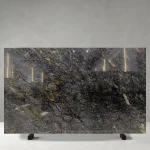
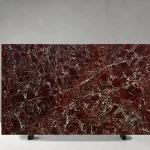
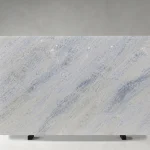
This guide explains how travertine for luxury interiors is typically selected, finished, fabricated and applied in premium projects. It also covers practical buying considerations such as slab approval, shade variation, thickness, maintenance and supplier coordination. Buyers can explore Show Stone’s wider natural stone collection and browse current materials including Italian Silver Travertine, Persian Gray Travertine and Iran Red Travertine.
Buyer Decision Check
- Best for: Hotel lobbies, residential feature walls, staircases, bathrooms, spas, fireplaces and custom architectural interiors.
- Main visual decision: Choose between vein cut and cross cut depending on whether the project needs linear movement or softer cloud-like patterning.
- Main finish decision: Confirm whether the design calls for polished, honed, filled and honed, brushed, tumbled or unfilled travertine.
- Main buying requirement: Review actual slabs, batch range and cut direction before fabrication or tile production.
- Most suitable buyers: Architects, interior designers, importers, hotel procurement teams, contractors and high-end residential project clients.
What Is Travertine?
Travertine is a natural stone formed over time through mineral deposition, most commonly associated with limestone-related geological processes. It is recognisable for its warm organic appearance and its naturally occurring pores or voids, which can be left visible or filled depending on the required finish and application.
Travertine for luxury interiors is valued not only for colour but also for texture. A beige travertine can create a calm, sun-washed atmosphere. A silver or grey travertine can feel more contemporary and architectural. Richer colours such as red travertine can be used in more distinctive, decorative or dramatic design settings.
Because travertine is used in many cut and finish combinations, the same material family can support very different design directions. This is one reason it remains a strong option in both hospitality and premium residential projects.
Why Travertine for Luxury Interiors Remains Popular
Travertine for luxury interiors is often chosen when the design team wants warmth, texture and natural credibility without the highly polished, high-contrast appearance that some marbles create. It sits comfortably between refined and relaxed aesthetics.
Designers often value travertine for:
- Soft beige, ivory, silver and grey base tones
- Distinctive natural pores and layering
- Compatibility with timber, bronze, matte metal and soft fabrics
- Ability to work in large planes such as walls and floors
- Suitability for both classic and contemporary spaces
- Availability in slab, tile and custom-fabricated formats
In practical design terms, travertine for luxury interiors can bridge public and private spaces well. A hotel lobby can use it for floors, cladding and reception areas, while a residence can continue the same language into staircases, bathrooms and fireplace surrounds.
Vein Cut vs Cross Cut Travertine
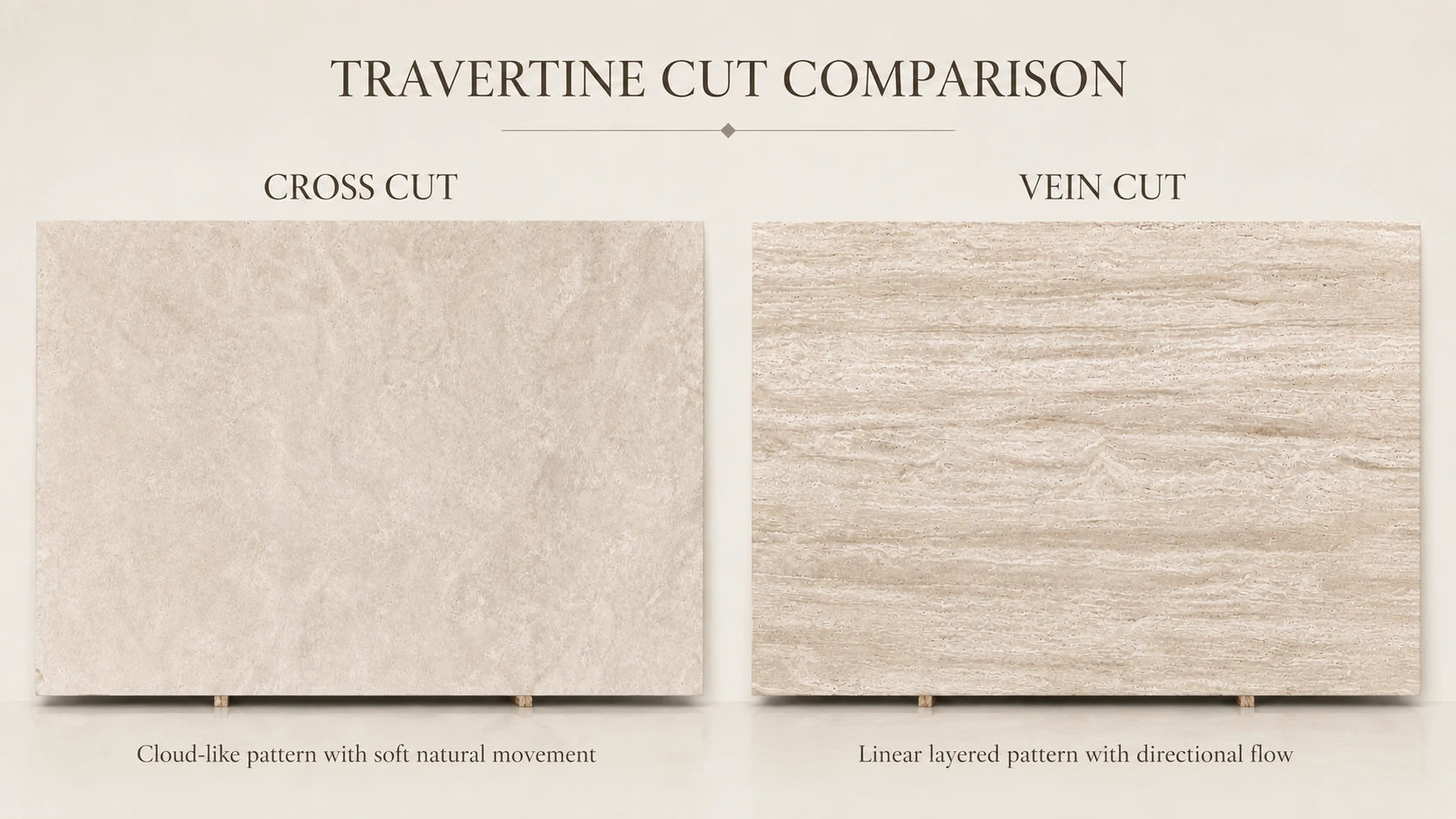
One of the most important specification decisions for travertine for luxury interiors is whether the material should be cut in vein cut or cross cut.
What Is Vein Cut Travertine?
Vein cut travertine is cut parallel to the stone’s natural bedding. This usually produces more linear movement and elongated bands. It is often selected for contemporary interiors, long wall surfaces, large floor areas and spaces where directional visual flow is important.
What Is Cross Cut Travertine?
Cross cut travertine is cut across the bedding, which tends to create a more diffuse, cloud-like or gently layered appearance. It often feels softer and more organic, and it can work especially well in calm residential or spa-like environments.
Neither cut is universally better. The correct choice depends on the design intent. For staircases, corridors and long feature walls, vein cut can emphasise direction and length. For bathrooms, soft wall panels and tranquil lounge spaces, cross cut may feel more relaxed.
Travertine Colours and Material Options
Travertine for luxury interiors is available in a wider range of colours than many buyers first expect. Beige and cream tones are the most familiar, but silver, grey and red tones can bring very different design outcomes.
- Beige Travertine: A classic choice for hotel lobbies, warm residential floors and architectural wall cladding.
- Silver Travertine: More contemporary in tone, often preferred for cooler interiors and modern wall applications. See Italian Silver Travertine.
- Grey Travertine: Suitable for restrained, urban and contemporary design schemes. See Persian Gray Travertine.
- Red Travertine: More distinctive and decorative, appropriate for statement walls, feature zones or character-led interiors. See Iran Red Travertine.
The commercial name alone should never be treated as the full specification. Buyers should still confirm the actual slabs or tile batch, because background tone, pore structure and movement can vary naturally between blocks and shipments.
Available Travertine Finishes
Travertine for luxury interiors can be supplied in a range of finishes, and the chosen finish has a major effect on appearance, touch and application character.
Polished
A polished finish creates higher reflectivity and deeper colour expression. It can work well where a more refined and formal surface is desired, though not every project wants the reflective look.
Honed
Honed travertine has a smoother, matte or low-sheen appearance. This is one of the most popular options for luxury interiors because it feels soft, contemporary and architectural.
Filled & Honed
Filled and honed travertine is widely used where buyers want the visual character of travertine but with a more even, practical surface. The natural voids are filled and the stone is finished with a honed face.
Brushed
A brushed finish gives the stone a more textured, tactile and lived-in feel. It is suitable for spaces where designers want warmth and material character rather than a crisp refined sheen.
Tumbled
Tumbled travertine tends to feel softer, more relaxed and often more rustic. It can suit traditional or Mediterranean-inspired interiors, spa-like areas and selected wall or flooring applications.
Unfilled
Unfilled travertine leaves the natural pores more visible. It can be visually striking and highly authentic, but buyers should consider whether the application benefits from that more open surface character.
When reviewing finishes, it is best to assess them on the actual material rather than deciding from a generic sample board. The same travertine can feel very different once polished, honed or brushed.
Main Applications of Travertine for Luxury Interiors
Travertine for luxury interiors is valued because it can run through an entire project language rather than being limited to one isolated feature.
Common applications include:
- Hotel lobbies and public areas
- Feature walls and wall cladding
- Stone flooring
- Staircases and steps
- Bathrooms and spa areas
- Vanity tops and washstand surfaces
- Fireplace surrounds
- Reception desks and selected custom furniture elements
Travertine in Hotel Lobbies and Public Interiors
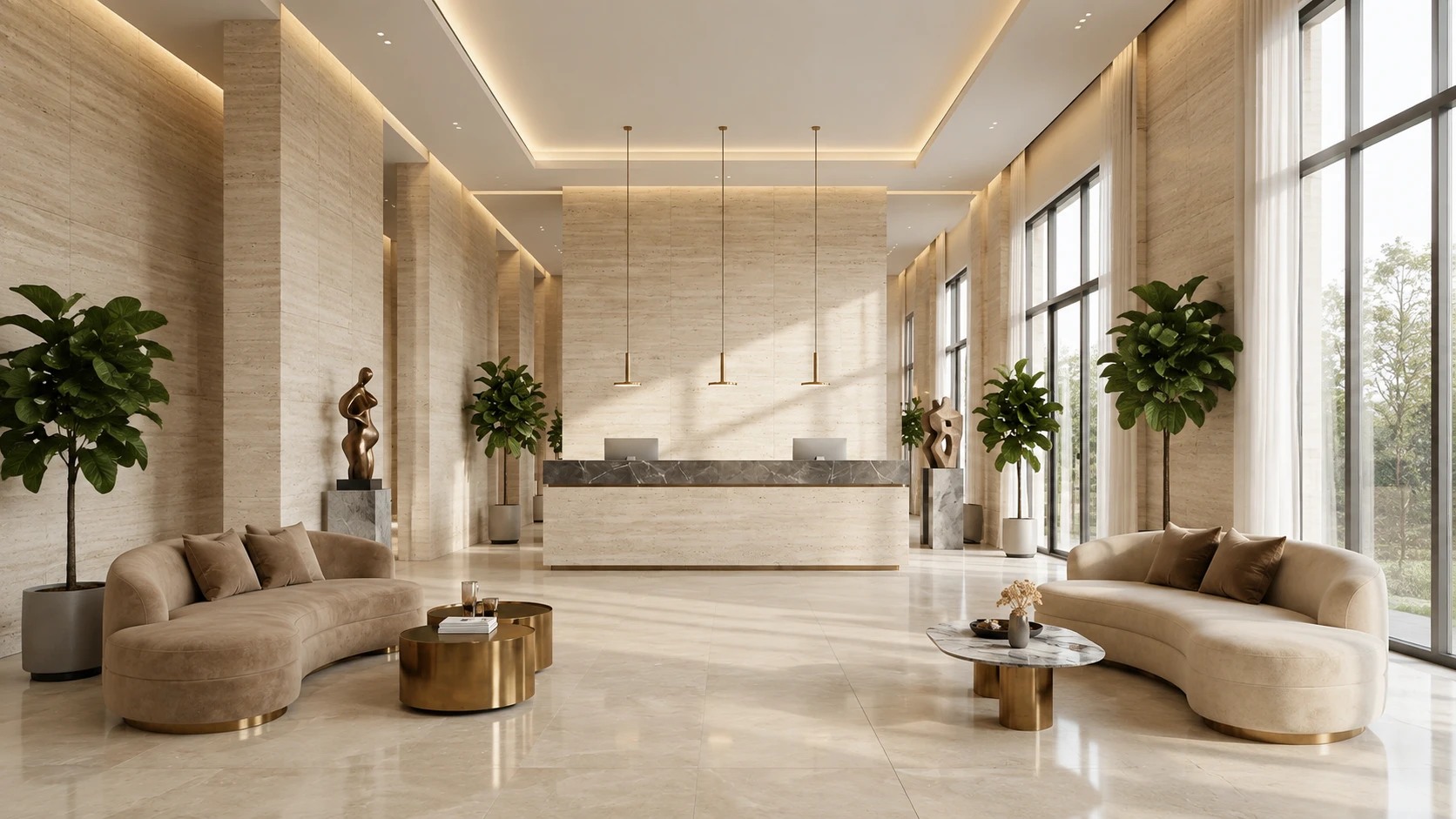
Travertine for luxury interiors is particularly well suited to hospitality spaces because it can create scale and warmth at the same time. In hotel lobbies, it is often used for flooring, column wraps, feature cladding, walls and reception zones.
Its visual softness helps create a welcoming atmosphere, especially when combined with warm timber, bronze metalwork, textured fabrics and integrated lighting. Compared with more dramatically veined marbles, travertine can offer a quieter architectural background that still feels premium and natural.
This makes it especially useful in luxury hospitality settings that want a timeless mood rather than a highly decorative one. Buyers comparing supplier capability for this kind of project can also review how to choose a reliable natural stone supplier for global projects.
Travertine Wall Cladding and Staircases
Travertine wall cladding and stairs are among the most visually effective architectural uses of this material.
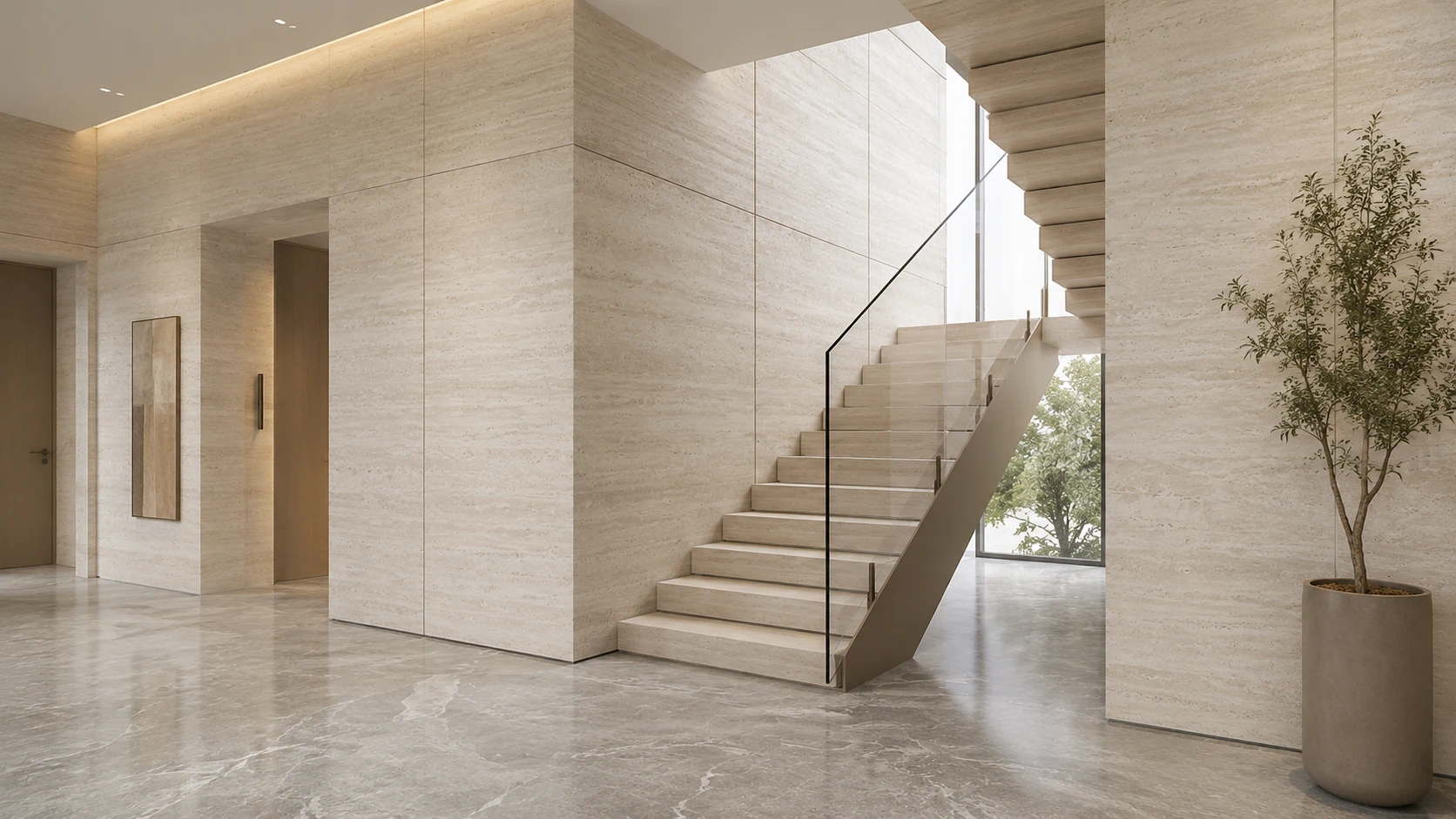
When used on walls and stairs, the material benefits from good planning of:
- Cut direction
- Joint layout
- Panel size
- Edge treatment
- Visible movement direction
- Shading sequence across adjoining areas
Vein cut travertine can work especially well where the designer wants strong horizontal or vertical movement. Cross cut travertine can soften the effect and produce a quieter continuous surface.
For staircases, the relationship between treads, risers, side cladding and nearby wall panels should be considered as one design composition rather than as separate items.
Travertine Bathrooms and Spa-Style Interiors
Travertine for luxury interiors is also a strong choice for bathrooms, vanity walls and spa-inspired spaces because it creates a calm tactile environment without looking cold or overly polished.
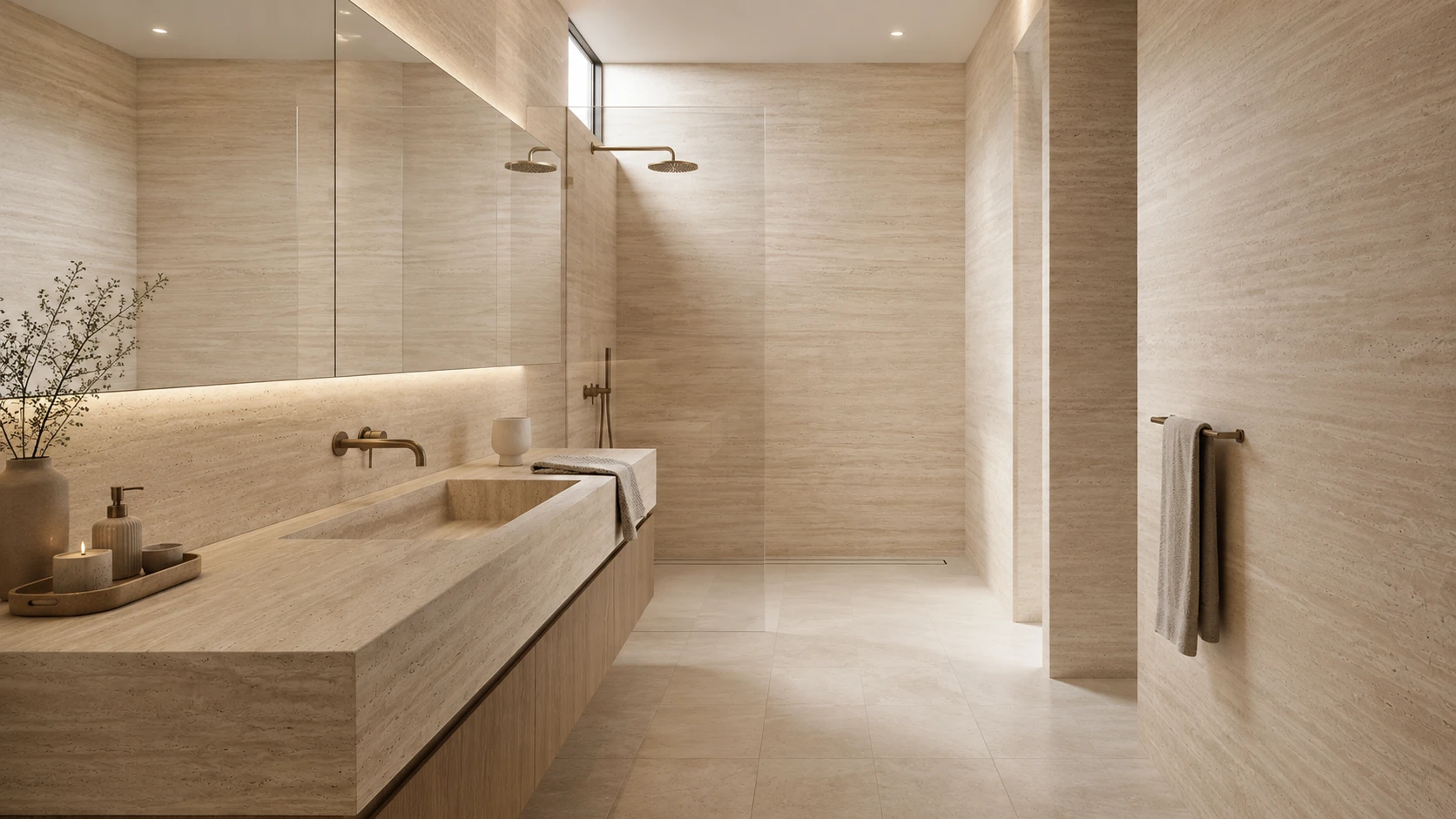
Bathrooms commonly use travertine for:
- Full-height wall panels
- Vanity tops and splashbacks
- Shower surrounds
- Feature niches
- Bathtub skirts and surrounds
- Flooring and dry areas
For wet-area design, finish selection matters. Many buyers prefer honed or filled and honed surfaces to preserve a softer visual effect, while still keeping the overall composition elegant and practical.
Slab Selection and Batch Coordination
Travertine for luxury interiors should be selected from the actual slabs or the actual tile batch whenever the appearance is important. This is especially true for large wall areas, coordinated staircases, bathrooms, and hotel public spaces where the visual continuity of the material matters.
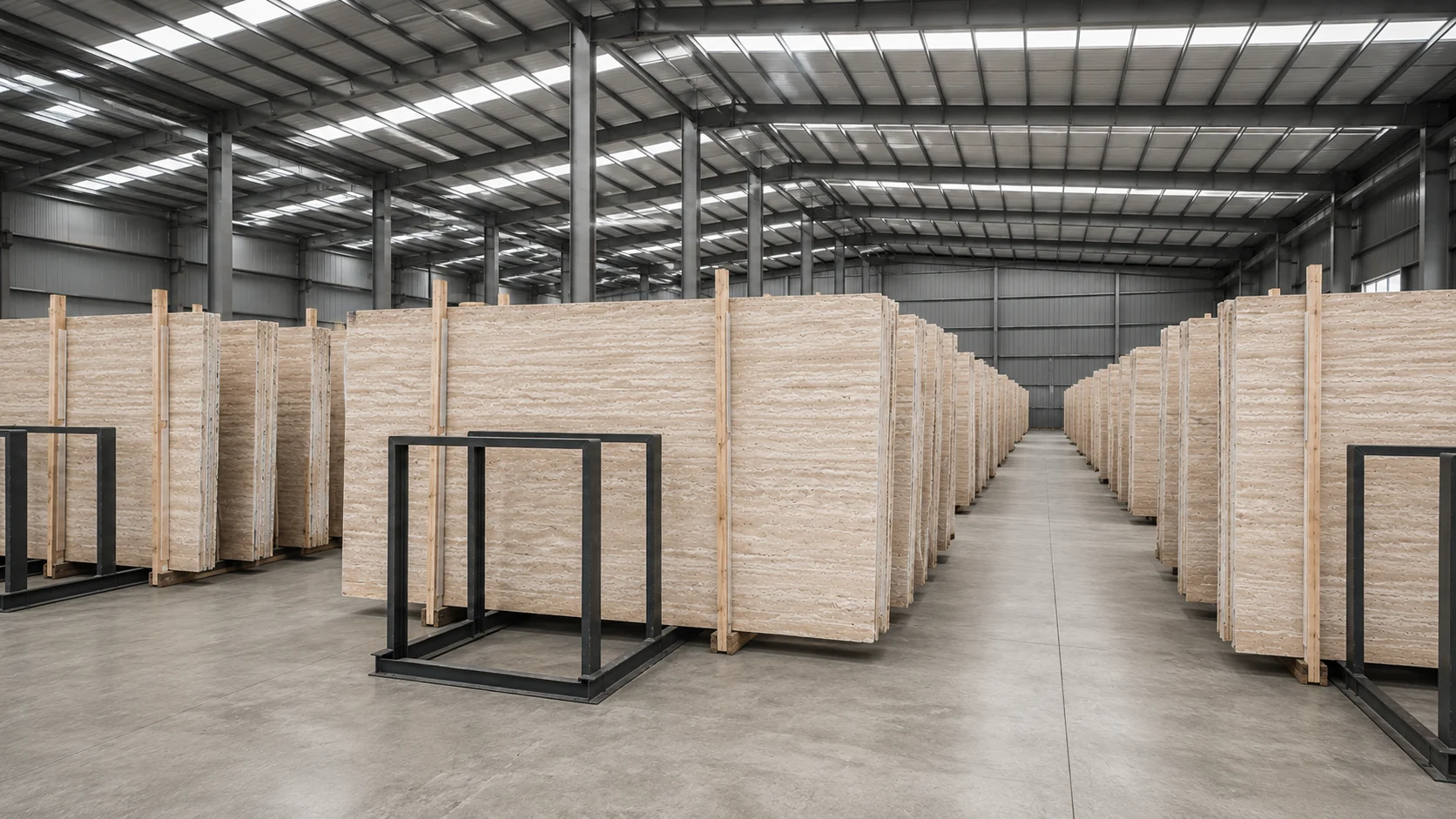
During slab review, buyers should check:
- Overall background tone
- Cut direction suitability
- Pore density and visual texture
- Shade variation between slabs
- Quantity available
- Whether slabs belong to one or multiple batches
- Whether consecutive or visually compatible slabs can be reserved
Even a calm beige travertine can vary from one slab to another. A supplier should help group compatible slabs or tile lots rather than promising that all pieces will look identical.
Specification Guidelines for Travertine Projects
Travertine for luxury interiors is usually specified according to the project application rather than only by the stone name.
| Specification | Typical Project Option | Notes |
|---|---|---|
| Material | Natural travertine | Confirm actual slabs, colour range and cut direction. |
| Size | Custom cut-to-size | Also available as slabs or project tiles depending on the application. |
| Thickness | 18mm / 20mm | Other thicknesses can be discussed according to project needs. |
| Available Finishes | Polished, honed, filled and honed, brushed, tumbled, unfilled | Confirm based on the intended atmosphere and application zone. |
| Applications | Flooring, wall cladding, bathroom, spa, stairs, vanity, fireplace | Project layout and finish selection should match the application. |
| MOQ | 1 pc | Suitable for bespoke pieces and larger project supply. |
| Lead Time | Approximately 4 weeks | Depends on material approval, quantity and fabrication scope. |
| Packing | Export wooden crates | Packing method should suit tiles, slabs or custom fabricated pieces. |
Fabrication and Layout Considerations
Travertine for luxury interiors often performs best when the slab or tile layout is treated as part of the design process rather than as a late production detail.
Key fabrication and planning points include:
- Panel size and joint layout for walls
- Directional planning for vein cut material
- Stair tread and riser coordination
- Vanity cut-outs and visible edges
- Consistency between bathroom walls and floor pieces
- Dry lay or layout review for complex spaces
For larger projects, buyers should confirm whether the supplier can support slab photography, digital layout planning, project numbering and quality control. These capabilities matter because travertine is often used across multiple connected surfaces.
Maintenance and Care
Travertine for luxury interiors should be maintained according to the finish, application and project conditions. Good maintenance begins with correct specification and finish selection.
General care recommendations include:
- Remove spills promptly.
- Use cleaners suitable for natural stone.
- Avoid harsh abrasive products unless specifically approved.
- Follow the supplier’s or installer’s recommendations for sealing and maintenance.
- Review how filled or unfilled surfaces will be maintained in the intended environment.
For independent technical guidance, buyers can also review the Natural Stone Institute resources for design professionals.
Bathrooms, lobby floors and highly visible wall surfaces may all have different practical expectations, so maintenance advice should always be tied to the actual project application rather than treated as a generic rule.
Common Buying Mistakes
Several issues can be avoided if travertine for luxury interiors is specified carefully from the beginning.
Choosing the Stone Without Confirming the Cut Direction
Vein cut and cross cut can produce very different results, so the cut direction should be agreed before production.
Approving Only a Small Sample
A small sample cannot fully represent natural tone variation, pore structure or movement across the slabs.
Ignoring the Finish During Design Review
Polished, honed, brushed and tumbled travertine can feel completely different in the finished space.
Not Grouping the Material by Batch or Shade Range
Connected areas such as a staircase and adjacent wall should be planned together visually.
Treating Wall, Floor and Bathroom Areas as Separate Material Decisions
Luxury interiors often work best when the stone language is coordinated across applications.
Buyer Checklist Before Ordering
- Material: Confirm the exact travertine being quoted and request current slab or tile references.
- Cut Direction: Decide whether the project needs vein cut or cross cut travertine.
- Colour Range: Review background tone and acceptable natural variation.
- Finish: Confirm polished, honed, filled and honed, brushed, tumbled or unfilled finish.
- Application: Define where the stone will be used: wall, floor, stair, vanity, bathroom or fireplace.
- Sizes: Confirm slab, tile or custom cut-to-size requirements.
- Thickness: Confirm whether 18mm, 20mm or another approved thickness is required.
- Batch Coordination: Reserve compatible slabs or tile lots where visual continuity matters.
- Layout: Review joint direction, panel sequence and visible faces for complex applications.
- Quality Control: Confirm inspection standards for size, finish and visual appearance.
- Packing: Confirm export wooden-crate packing according to the product format.
- Lead Time: Coordinate production timing with project drawings and approval stages.
Frequently Asked Questions
Is travertine suitable for luxury interiors?
Yes. Travertine is widely used in luxury interiors for hotel lobbies, bathrooms, staircases, wall cladding, fireplaces and other architectural applications because it combines natural warmth, texture and design flexibility.
What is the difference between vein cut and cross cut travertine?
Vein cut travertine usually shows more linear movement, while cross cut travertine tends to show a softer, more cloud-like or layered appearance. The right choice depends on the design direction.
What finishes are available for travertine?
Common available finishes include polished, honed, filled and honed, brushed, tumbled and unfilled travertine. Each finish changes the visual and tactile character of the stone.
Can travertine be used in bathrooms?
Yes. Travertine is commonly used in bathrooms for wall panels, vanity tops, surrounds and coordinated spa-style interior schemes. Finish and maintenance planning should match the application.
Is travertine suitable for flooring and stairs?
Yes. Travertine is often used for interior flooring and staircases, especially in hotel, residential and commercial spaces where a warm architectural natural stone is desired.
What thickness is commonly used for travertine projects?
18mm and 20mm are common project thicknesses, while other thicknesses can be discussed according to the application and fabrication requirement.
How should travertine be selected for a large project?
Large projects should review actual slabs or actual tile lots, confirm batch range, decide the cut direction and coordinate the finish and layout before fabrication or supply.
What colours of travertine are available?
Travertine is available in beige, silver, grey, red and other related natural tones. The actual range depends on the material selected and the available blocks or slabs.
Does travertine require sealing or special maintenance?
Maintenance and sealing should follow the supplier’s or installer’s recommendations and should be based on the actual finish, application and project conditions.
What information should I send before requesting a travertine quotation?
Send the required material name, approximate quantity, application, size, thickness, finish, cut direction, drawings where available, project schedule and delivery destination.
Why Global Buyers Work With Show Stone
Show Stone supports designers, contractors, importers and project buyers sourcing travertine for luxury interiors with material selection, fabrication coordination, quality control, packing and international delivery support.
Our workflow can include:
- Natural stone sourcing
- Current slab photography and video review
- Batch and shade coordination
- Project-oriented cut-to-size support
- Fabrication planning
- Quality inspection
- Piece numbering where required
- Export wooden-crate packing
- International shipment coordination
Buyers looking for a project-ready stone supplier can also review How to Choose a Reliable Natural Stone Supplier for Global Projects for a broader explanation of supplier evaluation, production control and export capability.
More information about custom project support is available through our natural stone solutions, the About Show Stone page and the Show Stone blog.
Final Recommendation
Travertine for luxury interiors works best when the material is chosen as a design system rather than as a generic stone category. The buyer should confirm the cut direction, finish, slab or tile range, and application relationship before final approval.
For hotel lobbies, stairs, bathrooms, fireplaces and high-end residential spaces, travertine can create a timeless and tactile design language. The most successful results usually come from careful coordination of the actual material, finish and layout rather than selecting only by the commercial name.
To discuss beige, silver, grey or red travertine for a hospitality, residential or commercial project, please contact Show Stone with your material preference, size requirements, finish, quantity, drawings and delivery destination.