Natural Stone Flooring for Hotels: Materials, Finishes, Layout & Maintenance
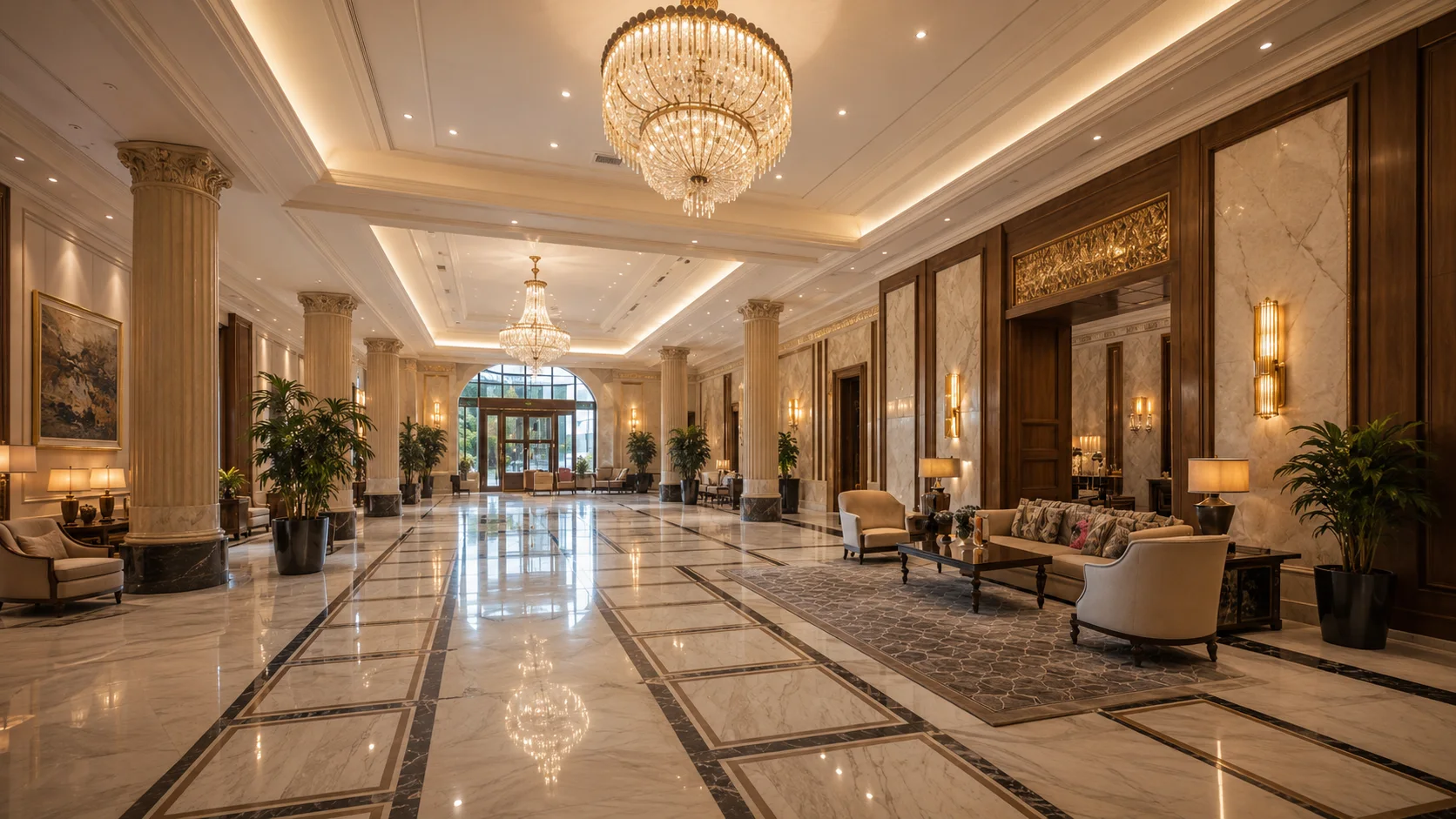
Natural stone flooring for hotels plays both a practical and visual role. It must contribute to the identity of the property while also working across high-traffic public areas, circulation zones, restaurants, lift lobbies, bathrooms and guestrooms.
There is no single stone that is automatically best for every hotel floor. Marble may be selected for a polished luxury lobby, travertine for a warmer architectural atmosphere, granite for areas where project teams prioritise a robust stone character, limestone for softer neutral interiors, and quartzite for selected premium applications requiring distinctive natural movement.
The material name alone is therefore not enough. Buyers should also consider finish, thickness, tile or panel size, batch range, pattern direction, dry lay, installation sequence and maintenance expectations. This guide explains how architects, contractors, hotel procurement teams and stone buyers can specify and order natural stone flooring for hotels more effectively.
Project teams can also review Show Stone’s natural stone collection and compare specific materials such as Volakas Marble, Crema Marfil Marble, Italian Silver Travertine, German Beige Limestone, Alaska White Granite and Taj Mahal Quartzite.
Buyer Decision Check
- Best project areas: Hotel lobbies, corridors, lift lobbies, restaurants, bathrooms, guestrooms and selected public spaces.
- Main material decision: Select the stone according to design intent, traffic level, maintenance expectations and project requirements.
- Main finish decision: Confirm polished, honed, brushed, tumbled, flamed or leathered finish according to the specific material and area.
- Main visual-control requirement: Review colour range, batch consistency, vein direction and tile or panel sequence before installation.
- Main safety requirement: Confirm slip-resistance requirements according to the project area, local code and approved test data rather than assuming one finish is suitable everywhere.
Why Natural Stone Flooring for Hotels Requires Project-Specific Selection
Natural stone flooring for hotels is rarely selected on appearance alone. A hotel contains multiple environments with different operational and design requirements.
A lobby may prioritise visual impact and large-scale pattern continuity. A corridor may require a calmer repeated tile module. A bathroom needs careful finish and maintenance consideration. A restaurant may need to coordinate stone appearance with furniture, lighting and service circulation.
This means the specification should connect four things from the beginning:
- The natural stone material
- The exact hotel area
- The required surface finish
- The installation and maintenance strategy
When these decisions are made independently, problems such as inconsistent colour, unsuitable surface expectations or difficult installation sequences are more likely.
Best Materials for Natural Stone Flooring for Hotels
Several natural stone families can be used successfully in hospitality flooring. The correct choice depends on the project style, location, finish and technical requirements.
Marble Flooring
Marble remains one of the most recognisable choices for luxury hotel interiors. It can create a formal, elegant or contemporary appearance depending on the colour and veining selected.
For lighter interiors, Volakas Marble offers a white base with soft grey movement. For warmer Mediterranean-style or classic interiors, Crema Marfil Marble can provide a cream-to-beige foundation.
Marble is often selected for:
- Main hotel lobbies
- Lift lobbies
- Luxury corridors
- Restaurants
- Bathrooms
- High-end guestrooms and suites
Travertine Flooring
Travertine provides a warmer and more textural appearance than many polished marbles. It can work particularly well in resorts, spa hotels, boutique hospitality spaces and contemporary interiors that favour softer natural materials.
Italian Silver Travertine is a useful option when designers want a cooler grey-silver travertine rather than a conventional beige tone.
Travertine can be supplied with polished, honed, filled and honed, brushed, tumbled or unfilled finishes depending on the design and application.
Limestone Flooring
Limestone is often chosen when the interior needs a quieter and more architectural background. Beige and neutral limestone can work well with timber, metal and soft-furnishing palettes.
German Beige Limestone can support hotel concepts that require a restrained neutral floor rather than dramatic veining.
Granite Flooring
Granite is often considered for hospitality areas where the project requires a visually strong natural stone and suitable project-specific surface treatment.
Alaska White Granite combines a lighter base with visible mineral movement and can be considered for selected lobby or public-area applications.
Quartzite Flooring
Quartzite can also be used in selected luxury flooring applications where its natural pattern and premium appearance fit the overall design concept.
Taj Mahal Quartzite is especially suitable when designers want warm cream, beige and soft natural movement that coordinates with timber, bronze and neutral interior schemes.
Material Selection and Batch Coordination
Natural stone flooring for hotels often covers large areas, so colour and batch coordination become more important than they would be for a small residential room.
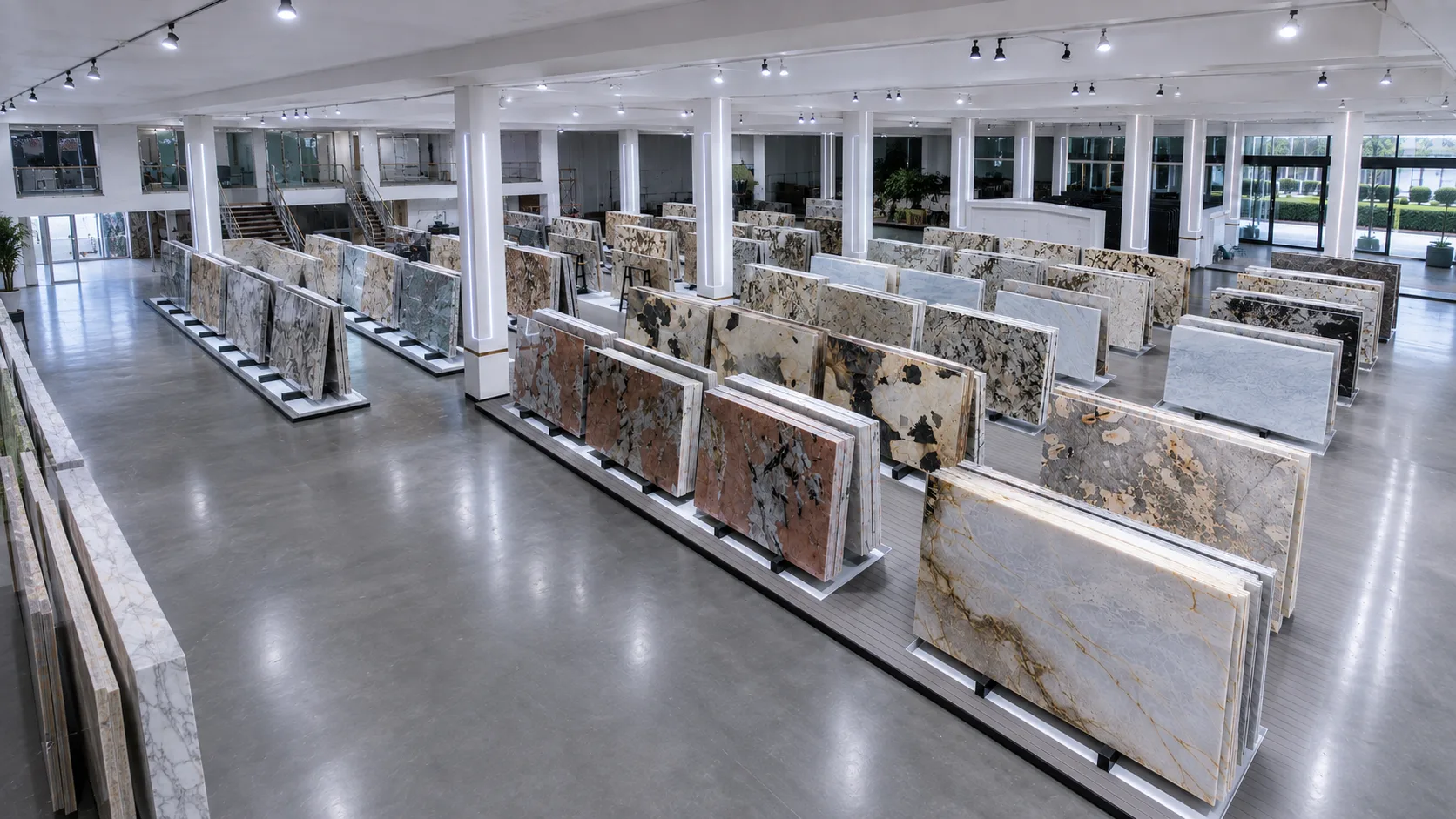
During material approval, buyers should review:
- Overall background colour
- Vein or mineral movement
- Natural shade variation
- Available quantity
- Batch relationships
- Usable slab or tile dimensions
- Natural fissures and repairs where applicable
For very large areas, material should be evaluated as a group rather than piece by piece. The aim is not to make natural stone look artificially identical, but to control the acceptable range and organise the material intentionally.
Hotel Lobby Flooring
The lobby is usually the highest-visibility location for natural stone flooring for hotels. It is often the first major interior surface guests see when entering the property.
Lobby flooring should therefore coordinate with:
- Reception desk materials
- Wall cladding
- Columns
- Feature walls
- Furniture layouts
- Main circulation routes
- Lighting design
Large-format tiles or cut-to-size stone can create fewer joints and a more continuous appearance, while smaller modules may support geometric layouts, borders or repeated patterns.
For projects using dramatic wall stone as well as flooring, our guide to bookmatched marble walls explains how slab selection, digital layout and installation sequencing can be coordinated across architectural features.
Lift Lobby and Corridor Flooring
Lift lobbies and corridors are important transition spaces in hotels. Although they may receive less design attention than the main lobby, they repeat across multiple floors and can therefore represent a significant quantity of stone.
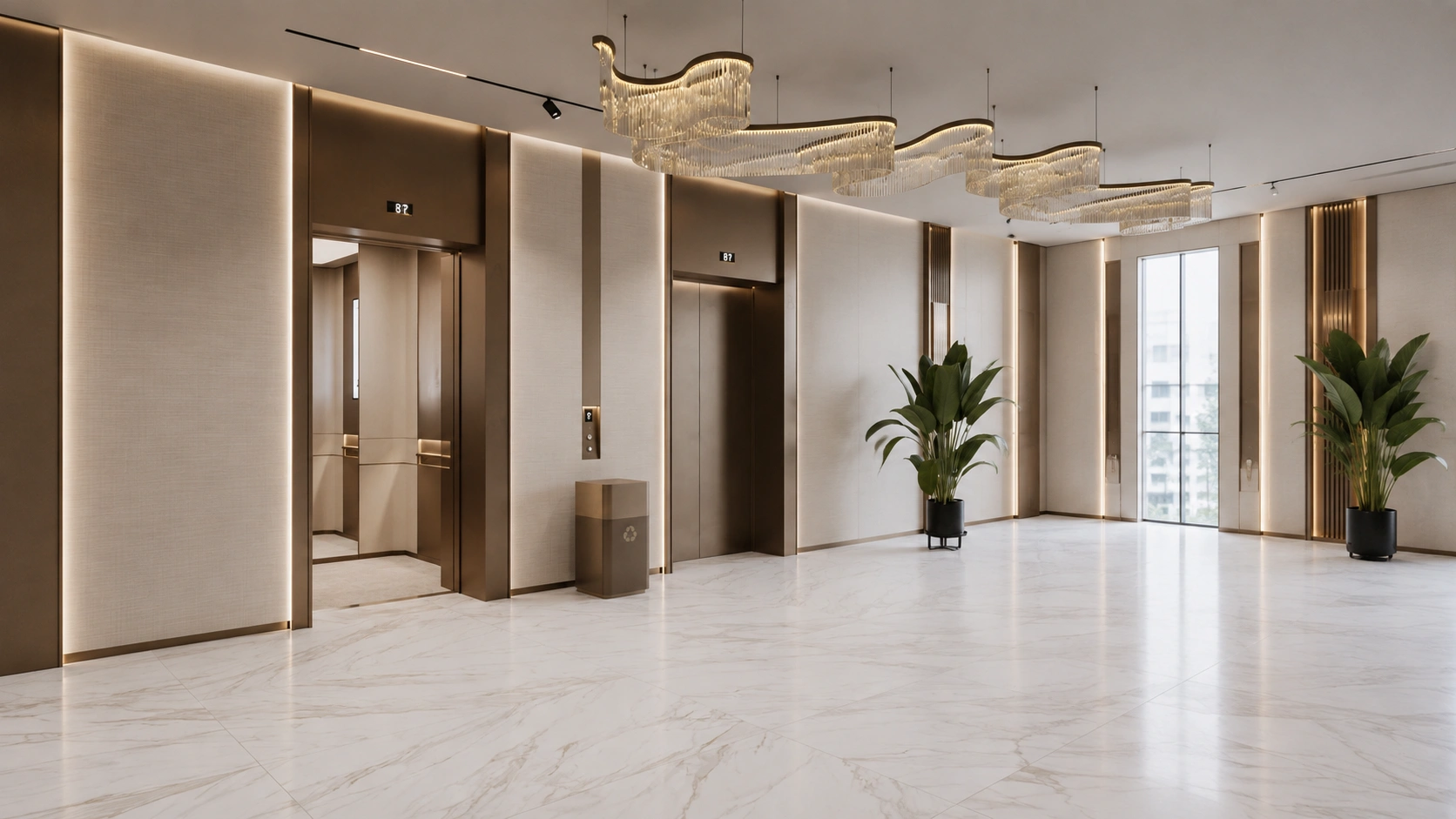
Repeated areas should be coordinated by:
- Floor number
- Room or zone
- Tile module
- Border or threshold details
- Batch allocation
- Piece or crate numbering
This is especially useful when a hotel has dozens of similar lift lobbies or corridors and the installation team needs to identify the correct material quickly.
Restaurant and Public-Area Flooring
Hotel restaurants, lounges and public dining areas need flooring that supports the wider interior concept while also fitting the operational conditions of the space.
The stone specification should consider:
- Guest circulation
- Furniture movement
- Cleaning routines
- Food and beverage service areas
- Visual relationship with bars and counters
- Local slip-resistance requirements
No single finish should be assumed to meet every hospitality requirement. Slip-resistance requirements should be confirmed according to the project area, local code and approved test data.
Bathroom and Guestroom Flooring
Bathrooms and guestrooms can use natural stone to extend the material language from public areas into private guest spaces.
Bathroom flooring requires particular attention to surface finish, drainage, cleaning expectations and applicable local requirements. The project team should avoid selecting a finish solely because it looks attractive in a dry sample.
For guestrooms and suites, stone may be used in entrance zones, bathrooms, dressing areas or selected decorative floor areas depending on the design concept.
Polished vs Honed vs Textured Finishes
Finish selection has a major effect on both appearance and practical performance.
Polished
Polished stone provides a reflective finish that can enhance colour depth and light movement. It is frequently used in formal hotel interiors and high-visibility dry areas where the approved project requirements allow it.
Honed
Honed stone has a smoother matte or low-sheen appearance. It is often selected for contemporary interiors that require a softer visual effect.
Brushed
A brushed finish adds texture and can create a more tactile architectural appearance, particularly on travertine, limestone and selected other stones.
Tumbled
Tumbled stone has softer edges and a more aged surface character. It can work well in resort, spa or Mediterranean-inspired hospitality interiors.
Flamed
Flamed finishes can be produced on suitable stone materials when a more textured surface is required. Material suitability and final project requirements should be confirmed before specification.
Leathered
Leathered surfaces create a textured low-reflective appearance on suitable materials and can be considered for selected design applications.
Finish selection should never be separated from the stone type and project area. Not every finish produces the same result on every natural stone.
Slip Resistance: What Hotel Buyers Should Confirm
There is no universal slip-resistance value that can be applied to every natural stone floor, finish, country and hotel area.
For this reason, Show Stone does not recommend inventing or assuming a fixed R-rating, DCOF value or other slip classification without project-specific approved test data.
Instead, the project team should confirm:
- The intended hotel area
- Whether the floor is normally dry or exposed to moisture
- The selected stone
- The selected surface finish
- Applicable local building or safety requirements
- Required project testing or certification
The final slip-resistance specification should follow the project consultant’s requirements, local code and approved test data for the actual product and finish.
Flooring Sizes and Thickness
Natural stone flooring for hotels can be supplied as standard tiles or custom cut-to-size pieces depending on the architectural design.
Common project thicknesses are:
- 18mm
- 20mm
- Other thicknesses by custom order
Possible flooring formats include:
- Standard rectangular tiles
- Large-format tiles
- Custom cut-to-size panels
- Borders
- Threshold pieces
- Waterjet patterns
- Custom geometric layouts
Tile size should be coordinated with room dimensions, joints, structural requirements, installation method and material yield.
Digital Slab Scanning and Flooring Layout
Digital slab scanning can be useful when natural stone flooring contains directional veining or when the project requires large custom pieces.
Once slabs are scanned, digital cutting layouts can help project teams review:
- Vein direction
- Panel orientation
- Major visible pattern areas
- Cutting positions
- Material yield
- Relationship with adjacent wall or stair stone
This approach is particularly useful for premium hotel spaces where the floor is intended to read as a coordinated composition rather than a random tile field.
Dry Lay for Natural Stone Hotel Flooring
Dry lay is one of the most valuable quality-control steps for visually sensitive hotel flooring projects.
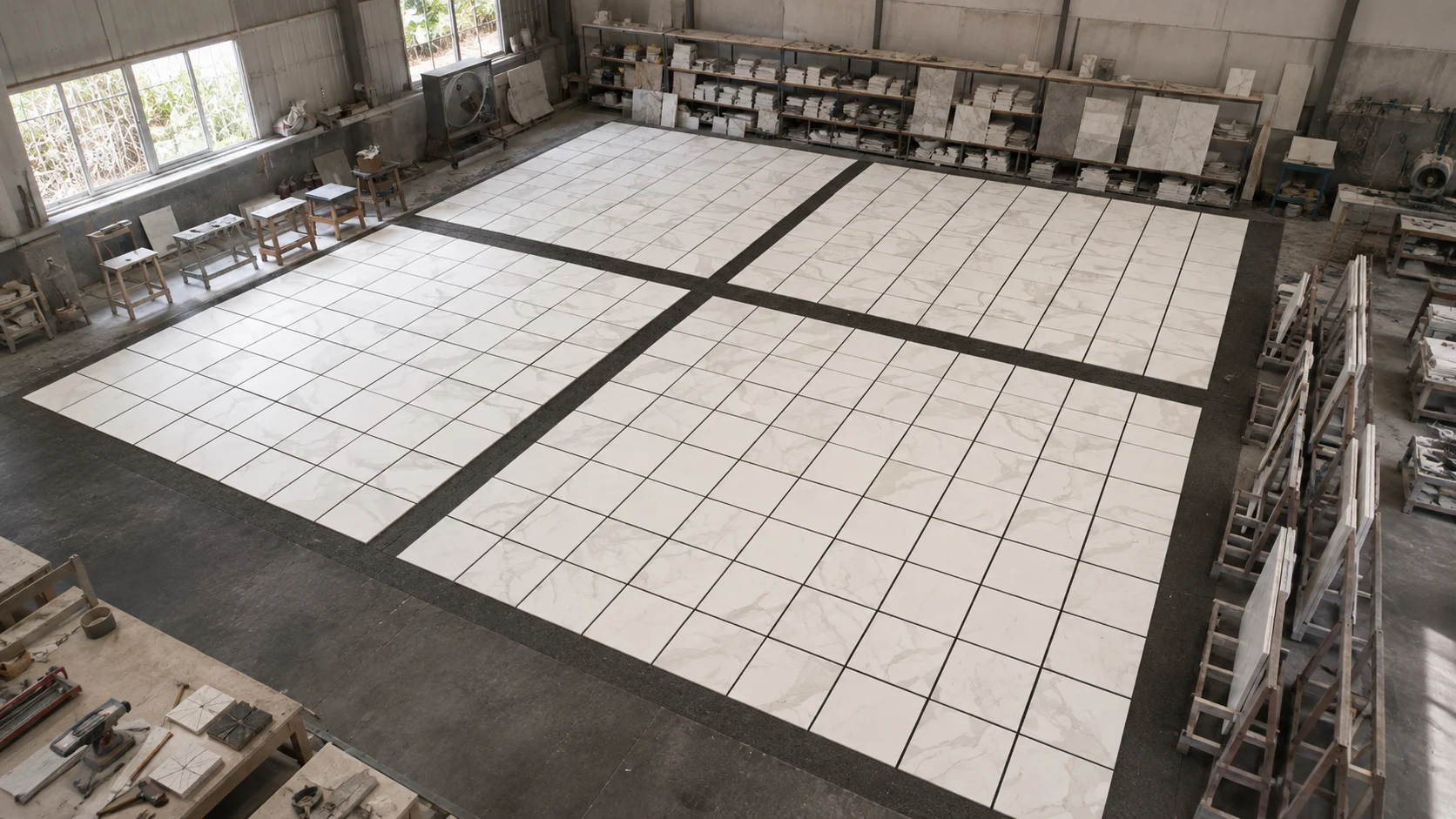
During dry-lay inspection, the team can review:
- Colour transitions
- Vein direction
- Pattern balance
- Tile dimensions
- Finish consistency
- Border relationships
- Piece sequence
Dry lay does not mean eliminating all natural variation. Its purpose is to organise the variation so the finished floor looks deliberate rather than accidental.
Piece Numbering and Installation Sequence
For custom hotel flooring layouts, numbering can help connect the finished stone with shop drawings and site installation.
A numbering system may identify:
- Hotel floor
- Lobby or corridor area
- Room number
- Tile or panel sequence
- Row and column
- Border location
The same references can also appear on packing lists and crate labels so the installer can locate material more efficiently.
Large-Area Stone Flooring and Visual Continuity
Large continuous floors need stronger visual coordination because inconsistencies become more noticeable across wide open spaces.
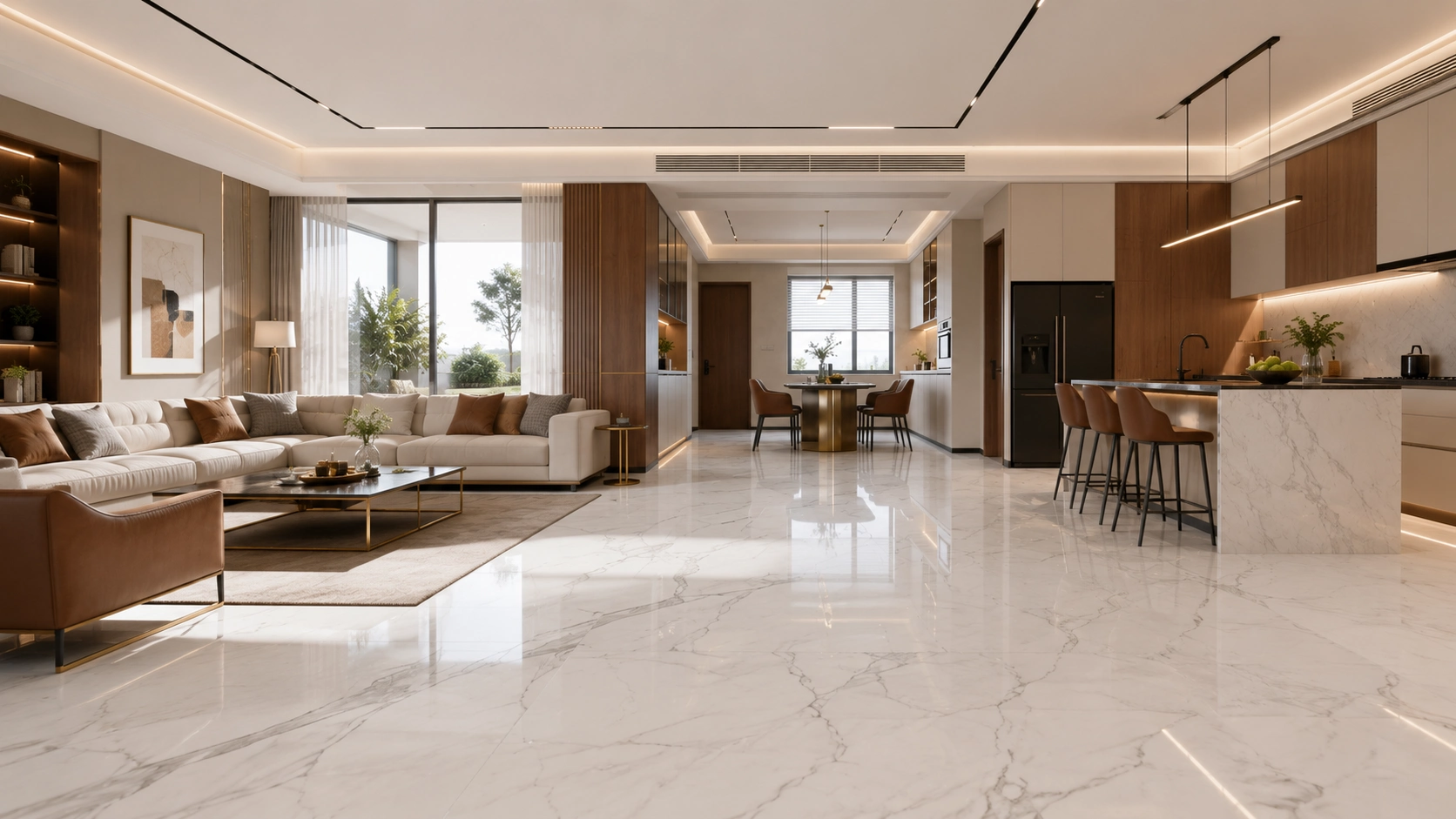
Although this image shows a residential-scale interior, the same planning principles apply to hotel lobbies, lounges and open public spaces: large areas make shade relationships, joint lines and directional movement more visible.
Installation Planning
Natural stone flooring for hotels should be installed according to approved project specifications and site conditions.
Before installation, the project team should confirm:
- Substrate condition
- Approved fixing or bedding system
- Tile or panel sequence
- Joint width
- Movement-joint requirements
- Threshold details
- Floor levels
- Drainage where applicable
- Local code requirements
Factory numbering and dry-lay records should be available to the installer when the design relies on specific piece positions or pattern relationships.
Maintenance and Care
Natural stone flooring can provide long-term value when the maintenance programme matches the stone, finish and hotel operating environment.
General care considerations include:
- Use cleaning products suitable for natural stone.
- Remove spills promptly.
- Avoid harsh chemicals unless specifically approved for the material.
- Use appropriate entrance-matting strategies in high-traffic areas.
- Follow supplier, installer and maintenance-consultant recommendations.
- Review sealing requirements according to the actual material and finish.
- Keep spare material where practical for future replacement or maintenance.
For independent industry information on natural stone specification and maintenance, project teams can also review the Natural Stone Institute resources for design professionals.
Technical Specification Guidelines
| Specification | Typical Project Option | Project Notes |
|---|---|---|
| Materials | Marble / Travertine / Limestone / Granite / Quartzite | Select according to hotel area, design and project requirements. |
| Size | Standard tiles / Custom cut-to-size | Custom formats available according to drawings. |
| Thickness | 18mm / 20mm | Other thicknesses available by custom order. |
| Finish | Polished / Honed / Brushed / Tumbled / Flamed / Leathered | Finish availability and suitability depend on the selected stone and project area. |
| Slip Resistance | Project-specific | Confirm according to project area, local code and approved test data. |
| Material Approval | Full-slab photo / video / batch review | Supports remote selection and colour-range control. |
| Digital Planning | Digital slab scanning / cutting layout | Useful for directional stone and custom flooring layouts. |
| Quality Control | Batch coordination / Dry lay / Piece numbering | Recommended for repeated or visually sensitive hotel areas. |
| MOQ | 1 pc | Suitable for custom replacement pieces and larger project supply. |
| Lead Time | Approximately 4 weeks | Depends on material approval, quantity and fabrication scope. |
| Packing | Foam + export wooden crates | Crate and piece references can follow installation zones. |
Common Mistakes When Buying Hotel Stone Flooring
Choosing Only by Material Name
Natural stone varies by slab and batch, so buyers should review the actual material rather than relying only on a commercial name.
Using One Finish for Every Hotel Area
Lobbies, bathrooms, restaurants and corridors can have different operational and safety requirements. Finish selection should be area-specific.
Ignoring Batch Variation
Large hotel floors can make uncontrolled colour variation highly visible. Batch allocation should be planned before installation.
Skipping Dry Lay for Visually Sensitive Areas
Dry lay provides an opportunity to coordinate shade and pattern before the stone reaches the site.
Assuming a Slip Rating Without Approved Test Data
Slip requirements vary by project and jurisdiction. Buyers should rely on applicable standards and approved project-specific test data rather than generic assumptions.
Not Ordering Spare Material
Hotels may need replacement pieces years after opening. Retaining suitable spare material can simplify future maintenance.
Buyer Checklist Before Ordering
- Hotel Area: Define lobby, corridor, lift lobby, restaurant, bathroom, guestroom or another application.
- Material: Confirm the exact natural stone and current production availability.
- Colour Range: Review the acceptable shade and pattern variation.
- Size: Confirm standard tile or custom cut-to-size dimensions.
- Thickness: Confirm 18mm, 20mm or another approved custom thickness.
- Finish: Confirm polished, honed, brushed, tumbled, flamed or leathered finish where suitable.
- Slip Requirement: Confirm according to the hotel area, local code and approved test data.
- Batch Coordination: Organise material by floor, area or installation zone.
- Digital Layout: Review directional patterns where required.
- Dry Lay: Approve visually sensitive floor areas before packing.
- Numbering: Connect pieces and crates with the installation drawings.
- Spare Material: Consider future replacement requirements.
- Packing: Confirm foam protection and export wooden crates.
- Lead Time: Coordinate approvals, production and shipment with the hotel programme.
Frequently Asked Questions
What is the best natural stone flooring for hotels?
There is no single best stone for every hotel area. Marble, travertine, limestone, granite and quartzite can all be suitable depending on the design, traffic, finish, maintenance expectations and project requirements.
Is marble suitable for hotel lobby flooring?
Yes. Marble is widely used in luxury hotel lobbies because it can provide a refined appearance and strong natural stone character, provided the material, finish and project requirements are properly specified.
Can travertine be used for hotel flooring?
Yes. Travertine can be used in hospitality interiors and is available in finishes including polished, honed, filled and honed, brushed, tumbled and unfilled depending on the project design.
What thickness is commonly used for hotel stone flooring?
18mm and 20mm are common project thicknesses, while other thicknesses can be produced by custom order according to the design and installation requirements.
What finishes are available for natural stone hotel flooring?
Depending on the selected stone, available finishes can include polished, honed, brushed, tumbled, flamed and leathered surfaces.
What slip rating should natural stone hotel flooring have?
There is no universal slip rating that applies to every natural stone, finish and hotel area. Slip-resistance requirements should be confirmed according to the specific application, local code and approved test data.
Why is dry lay important for hotel flooring?
Dry lay allows the supplier and project team to review shade range, pattern relationships, dimensions and installation sequence before the finished stone is packed and shipped.
Can hotel flooring tiles be numbered for installation?
Yes. Custom or visually sensitive flooring pieces can be numbered by floor, room, area, row, column or installation sequence and coordinated with project drawings and crate references.
Should natural stone flooring be selected from actual slabs or batches?
Yes. Reviewing actual slabs or production batches helps buyers understand colour, pattern, natural variation and available quantities before fabrication or tile production.
What information should I send before requesting a hotel flooring quotation?
Provide the preferred stone, hotel area, approximate quantity, tile or panel dimensions, thickness, finish, drawings where available, project requirements, delivery schedule and destination.
Why Hotel Project Buyers Work With Show Stone
Show Stone supports architects, designers, contractors, hotel developers and stone importers sourcing natural stone flooring for hotels with material selection, fabrication planning, quality control and export coordination.
Our project workflow can include:
- Natural stone sourcing
- Actual slab and batch selection
- Full-slab photography and video approval
- Batch and colour coordination
- Digital slab scanning
- Digital cutting layouts
- Standard tile and custom cut-to-size production
- Dry-lay inspection
- Piece numbering
- Quality-control documentation
- Foam protection and export wooden-crate packing
- International shipment coordination
Hotel project buyers can compare materials such as Volakas Marble, Crema Marfil Marble, Italian Silver Travertine, German Beige Limestone, Alaska White Granite and Taj Mahal Quartzite according to the design direction of the project.
For related technical planning, also see our guide to Bookmatched Marble Walls: Slab Selection, Layout, Fabrication & Installation.
More information about hotel and custom project support is available through our natural stone solutions, About Show Stone and the Show Stone blog.
Final Recommendation
Natural stone flooring for hotels should be treated as a coordinated project system rather than a simple tile purchase. The material, finish, thickness, colour range, layout, slip-resistance requirement, dry lay and installation sequence all need to work together.
For luxury lobbies, corridors, lift areas, restaurants, bathrooms and guestrooms, the strongest results usually come from reviewing the actual stone, approving the acceptable batch range and organising the finished pieces before shipment.
To discuss natural stone flooring for a hotel, resort or hospitality project, please contact Show Stone with your preferred materials, project areas, dimensions, thickness, finish, approximate quantity, drawings and delivery destination.